
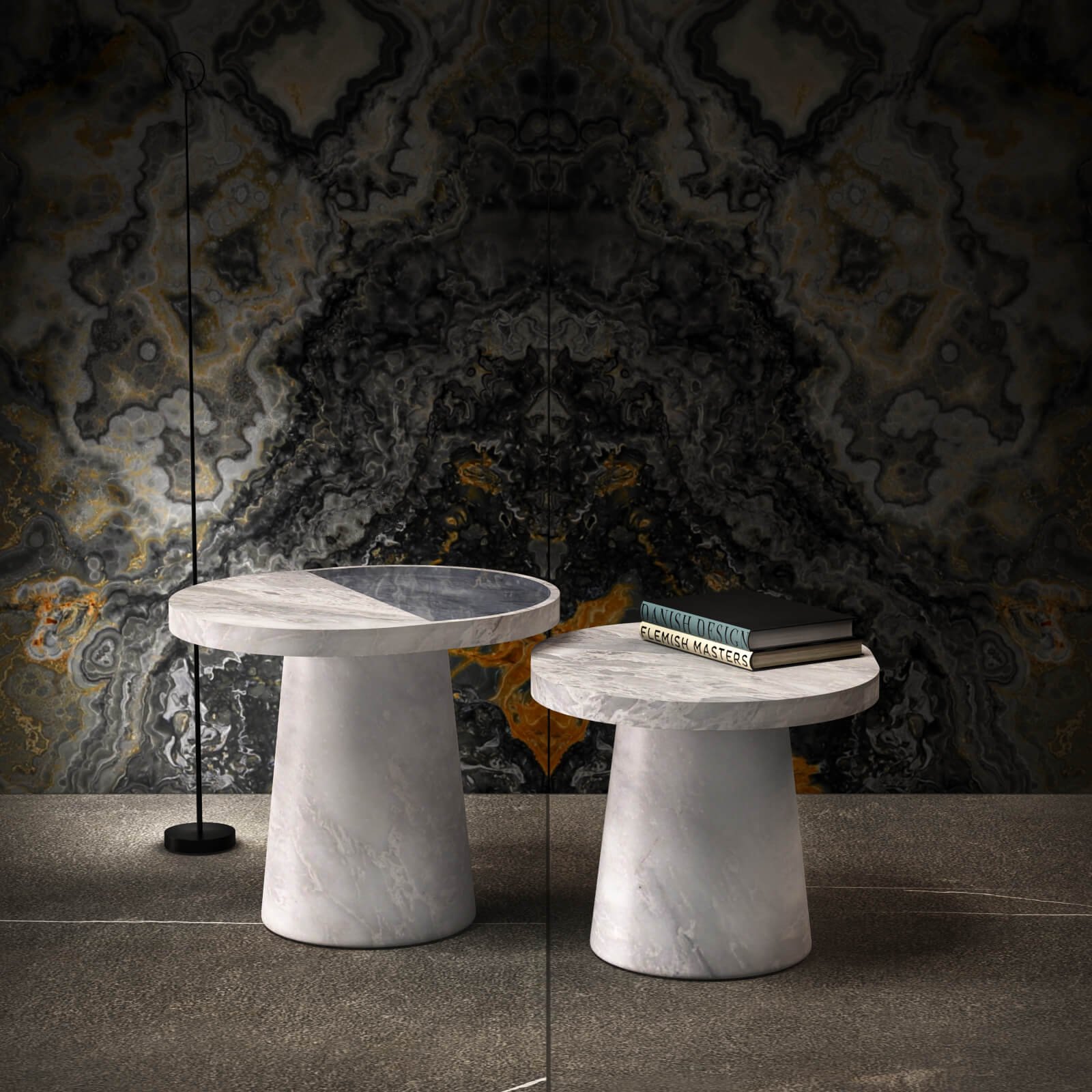
Marble is rarely used alone for long. Within a week of installing it, you start to ask what should sit next to it: what the floor should be, what the taps should be made of, whether the wood should be darker. The stone does not decide these things for you. It only makes the wrong choices easier to see.
Pairing marble with other materials is less about taste than about a handful of habits: matching temperature, contrasting texture, limiting the number of finishes in a room and letting one surface lead. This guide sets out those principles and then walks through the four pairings we are asked about most: wood, metal, glass and other stones. It ends with proportions and the mistakes we see most often.
The principles of pairing marble
Choose a lead. Every room needs one surface that carries the eye. If the marble is the lead, everything else supports it. If the marble is a supporting player, as in a pale floor, then the lead is somewhere else. A room with two leads feels tense, and it usually means one of them should be quieter than it is.
Match the temperature, then contrast the texture. Marble comes in warm stones (creams, beiges, golds) and cool stones (greys, blue-whites, blacks). Materials that share its temperature feel calm and cohesive. Materials with a different texture, such as rough oak against polished stone, give the room interest without clashing. Colour agrees, surface disagrees: that is the shortcut for most rooms.
Read the undertone of the vein. A white marble is never just white. The veins lean warm (gold, brown, burgundy) or cool (grey, blue, black), and that decides which metals and woods will look right next to it. Our guide to Calacatta Viola and the comparison of Carrara vs Statuario both show how much the vein changes the room around it.
Limit the list. Three or four materials in a room is comfortable. Six starts to look like a showroom. If you want more, repeat what you have, so the same wood or the same metal appears more than once.
Judge the pairing in the room. Showroom lights flatter everything. Put the samples together, in the light they will live in, at different times of day, and look at them from a distance, not just up close.
Marble and wood
It is the pairing that works in most houses, and for a good reason. Wood is warm, soft to the touch and visibly alive, while marble is cool, dense and still. Each fixes what the other lacks. A kitchen with a marble island and an oak floor, a bathroom with a walnut vanity under a stone wall or a dining room with a stone table and timber chairs all follow the same logic.
The rule we use is simple. Warm stones take warmer, lighter woods such as oak and ash, and cool or dark stones take darker, richer woods such as walnut. A pale marble with strong grey veining on a walnut cabinet looks deliberate. A cream marble with a cherry-red timber looks like a mistake. Finish matters as well: oiled and matt timber suits honed marble, and a lacquered timber with polished marble tends to look like furniture from a hotel lobby. In our black marble interiors guide, mid and dark woods are described as the most forgiving pairing there is.
Marble and metal
Metal is the accent. Marble is quiet, and a thin line of metal draws attention to its shape, in a tap, a handle, the rim of a tray or the edge of a shelf. The choice of metal follows the vein.
Brass and bronze. Warm metals suit cream and golden stones and anything with a warm vein. Unlacquered brass is a good choice because it dulls and warms as it ages, and a surface that changes over time sits comfortably next to a stone that does the same.
Steel, nickel and chrome. Cool metals follow the grey in a cool white or a black stone, and they look sharper and more contemporary. Brushed finishes are calmer than mirror polish, which can compete with a polished stone.
Blackened metal. A thin frame in dark steel against a pale marble gives the strongest graphic effect, and works well with large panels, such as those in a marble wall cladding scheme.
Keep the metals to small things and keep them consistent. One metal repeated four times looks like a decision. Three different metals look like an accident. And remember that metal finishes need their own cleaning products, which should never be used on the stone, since many cleaners that suit metal etch marble.
Marble and glass
Glass is the quiet partner. It adds light and gives marble more presence by being nearly invisible next to it. A glass shelf against a marble wall, a glass tabletop on a stone base or a glass lamp beside a stone table makes the stone look heavier and the glass lighter, and each emphasises the other.
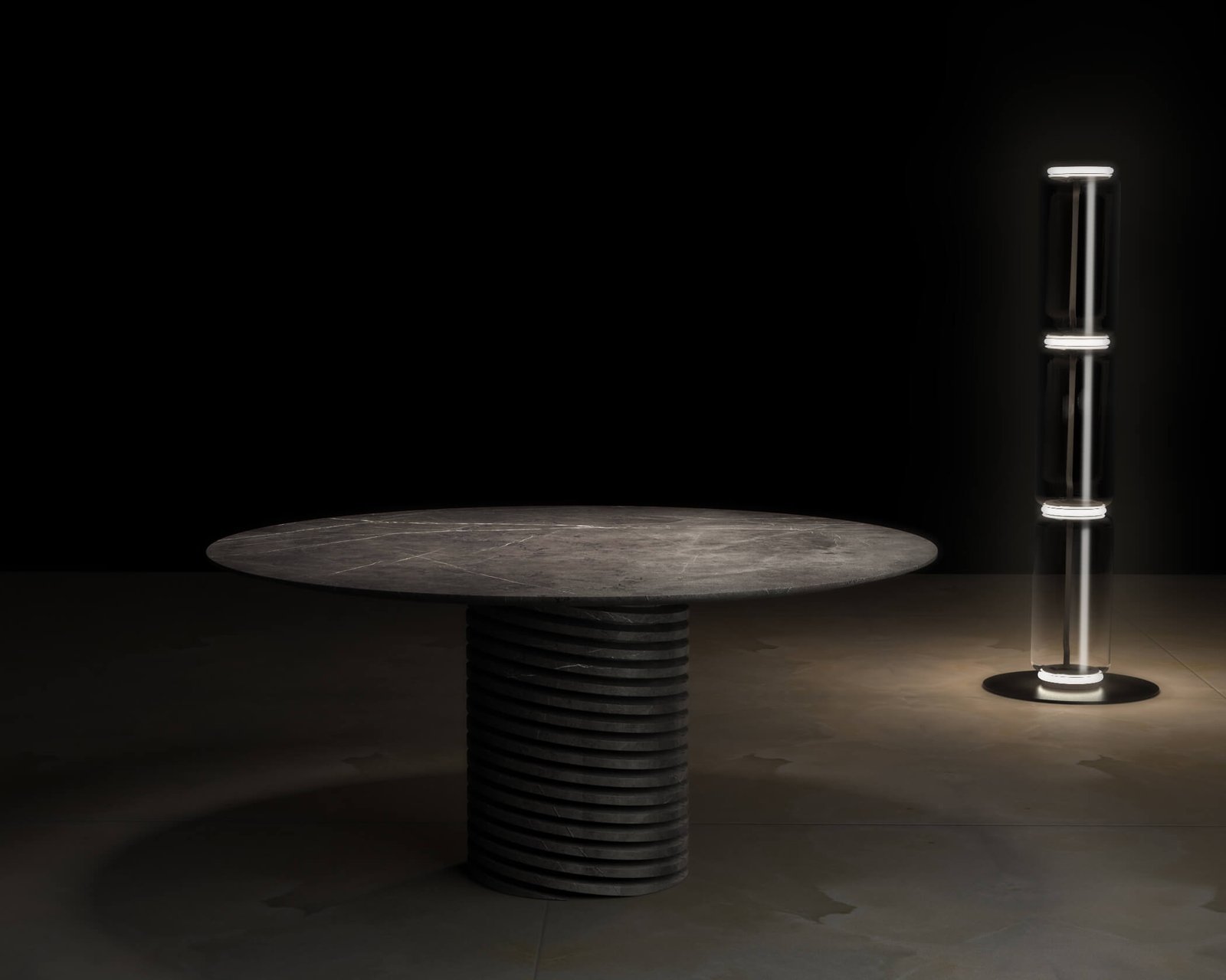
Our Tato coffee table in the New Era collection is built on exactly this idea: the solidity of stone set against the lightness of glass, in a cluster of different heights. The photo of the Groove table above shows the same relationship at room scale, with a glass lamp doing the work.
Marble and other stones
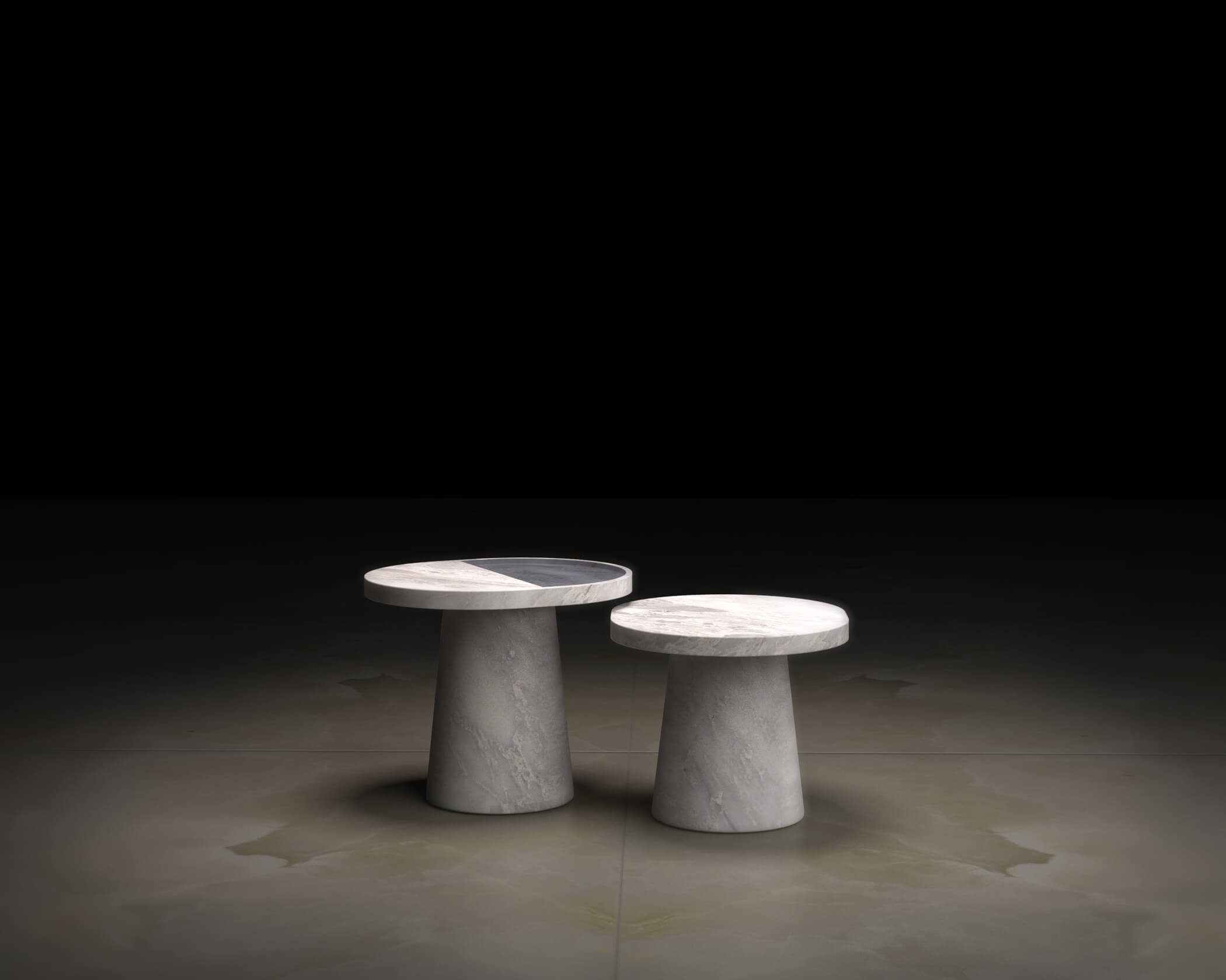
Not every pairing is with a different material. Many of the best interiors use marble with a second stone. A white marble wall with a dark stone floor, or a travertine floor with a marble basin, creates contrast without leaving the family of natural materials.
Two things keep it working. First, keep the same finish on both stones, or at least a deliberate difference: honed with honed, or honed on the floor and polished on the walls. Second, vary the scale of the pattern. A strongly veined stone next to another strongly veined stone fights. A veined stone next to a plain or finely patterned one, such as travertine, or a quiet white like Bianco delle Alpi, works. If you want to go further with colour, our guide to coloured marble shows how to use a strong stone in a small area.
Palette and proportions
A pairing that works on a sample board can fail in a room if the proportions are wrong. These are the ratios we start with:
Roughly sixty, thirty, ten. A calm base for most of the space (walls, floors, large furniture), a second material for about a third, and an accent of strong colour, metal or stone for the rest. Marble can be any of the three. As an accent, a tabletop or a basin gives the pattern room to breathe. As the base, it should be a calm stone.
Keep the pattern in one place. If the stone has a bold vein, keep the surfaces around it plain: warm plaster, off-white paint, quiet timber. Our overview of marble interiors goes through how to spread pattern and calm from room to room.
Vary the finish. Polished marble on a wall, honed on a worktop, brushed on a floor. Matching every finish makes a room flat. Our guide to marble flooring explains why the floor is almost always the place for the quieter finish.
Mistakes to avoid
Too many veined surfaces. The stone is the pattern. Let it be the only one in the room.
Ignoring the undertone. Cool stone with warm wood works only if one of them is clearly the lead. When the two are equally strong and disagree, the room feels off without anyone being able to say why.
Gloss on gloss. A polished stone with a lacquered cabinet and a mirror-finish tap reads as shiny rather than luxurious. Pick one gloss and let the rest be matt.
Choosing from a photo. Photographs flatten colour and make every surface look more even than it is. Always check the real slab with the real wood and metal in the real light.
Forgetting the care. Every pairing has maintenance consequences. Metals need their own products, timber needs oil or wax, and none of those products should touch the stone. Our guide on marble durability covers what the stone itself needs.
Working with Purapietra on your palette
We often start from a drawing, a photo of the room and a few samples of the materials already chosen. From there we can show which stones sit well with them and which do not, and we make bespoke pieces that carry the pairing into the details: a basin, a table, a tray. You can see the options in the materials catalogue and read more about our approach to custom work in bespoke marble. Send us a plan or a photo, and we will tell you what we would pair with it.
Frequently asked questions about pairing marble with other materials
What goes well with marble?
Wood, metal, glass and other natural stones all pair well with marble. Match the temperature of the stone with the material, contrast the texture and keep the number of materials in a room to three or four.
What wood goes best with marble?
Warm, light woods such as oak and ash suit warm stones. Darker woods such as walnut suit cool or dark stones. Oiled or matt timber pairs especially well with honed marble.
Which metal should I choose with marble?
Follow the vein. Brass and bronze suit warm stones, and unlacquered brass ages well beside marble. Steel, nickel and chrome suit cool white and black stones. Brushed finishes are calmer than mirror-polished ones.
Can I use two different stones in the same room?
Yes. Keep the finish consistent or make the difference deliberate, and vary the scale of the pattern: a strongly veined marble pairs well with a plain or finely patterned stone such as travertine.
How many materials should a room have?
Three or four is comfortable. If you want more, repeat what you already have so the same wood or the same metal appears more than once.
Does glass work with marble?
Yes. Glass adds light and makes stone look more solid by contrast. A stone base with a glass top, or a glass lamp beside a stone table, are simple ways to use it.