
Most marble in most homes is chosen, not designed: a slab picked from a catalogue, cut to a standard basin or a standard worktop. Bespoke marble is the other route, where the piece starts from a brief rather than a product sheet. It costs more, it takes longer, and it is not the right answer for every room. This is a guide to what “bespoke” actually means with natural stone, how a custom piece gets made, when the extra effort is worth it, and what the process looks like in practice.
What “bespoke” actually means in stone
The word gets used loosely, so it is worth being precise. A bespoke marble piece is one designed for a specific space, a specific client, or a specific idea, from the ground up, rather than selected from an existing range and adapted at the edges. That can mean a basin carved to a dimension no catalogue offers, a table shaped around a column nobody else has to work around, or an entire bathroom conceived as one continuous gesture in a single block of stone.
It is a different proposition from customisation, which is choosing a finish, a size or a colour from a set of existing options. Customisation adjusts a product. Bespoke work starts with no product at all, only a brief, and the object that comes out the other end usually cannot be repeated, because the brief that produced it will not repeat either.
This is also why bespoke marble sits naturally with the material itself. Every block of natural stone is already unique before anyone touches it: the veining, the fragment pattern of a breccia, the exact grey of a slab are one-off facts of geology. A bespoke approach simply extends that uniqueness from the raw material into the finished piece, instead of cutting a standard shape out of a non-standard block and treating the two as unrelated.
From brief to object: how a bespoke piece gets made
The process starts with the room, not the stone. A designer or client brings a space, a use, and a set of constraints, sometimes a fixed footprint, sometimes an existing material palette, sometimes a single reference image that captures a feeling rather than a shape. Purapietra’s role at this stage is closer to listening than selling: understanding what the piece needs to do before proposing what it should be made from.
Material selection comes next, and it is rarely a simple colour choice. The right stone for a bespoke piece depends on the scale of the object, how it will be worked (a sink basin needs a stone that carves cleanly without fracturing at a thin edge; a large table top needs a block with enough consistent material to avoid a visible joint), and how it will live day to day. A stone chosen for a showpiece in a hallway can behave very differently from one chosen for a basin that gets used every morning.
Design and modelling follow, usually as sketches refined into a scale drawing or a 3D model, so that proportions, thickness and transitions can be agreed before a single cut is made into the block. This is the stage where a bespoke piece earns its cost: correcting a proportion on paper is free, correcting it in a carved slab is not.
Fabrication is where the craft becomes physical. CNC roughing gets a block close to its final form efficiently, but the character of a Purapietra piece, the rounded, sculptural edges the brand is known for, comes from hand finishing afterward: an artisan working the surface until the transitions read as continuous curves rather than machined facets. It is slower than a fully automated process, and it is also the part that cannot be substituted.
When bespoke marble is worth it, and when it isn’t
Bespoke work makes the most sense in a few recurring situations. A non-standard space, an awkward alcove, an unusual sink footprint, a specific ceiling height, is one, because a standard product either won’t fit or will fit badly. A signature moment in a project, the one piece a designer wants a client to remember, is another: a sculptural basin or a single carved table does more for a room’s identity than a matched suite of catalogue pieces ever will. And a genuinely rare material, a slab too small, too unusually patterned, or too precious to cut into standard sizes, often only makes sense as one deliberate object rather than several ordinary ones.
It is not always the right call. A guest bathroom, a rental property, or any space with a short-to-medium ownership horizon rarely justifies the cost and lead time of a bespoke piece when a well-chosen standard product will do the job at a fraction of the price and the wait. Bespoke marble rewards spaces where the piece is meant to last decades and where the extra investment compounds over that time, not spaces designed to be refreshed in five years.
Timelines and process: the practical side
A bespoke piece takes longer than a catalogue order at every stage, and it is worth planning for that rather than discovering it mid-project. Design and material selection typically run several weeks on their own, longer if the brief involves an unusual stone that needs sourcing. Fabrication, particularly the hand-finishing stage, adds real time on top of any CNC work: a rounded, sculptural edge cannot be rushed without it showing in the final surface.
Shipping and installation logistics matter more with bespoke pieces than with standard ones, because a one-off object often cannot simply be reordered if something goes wrong in transit or on site. For international projects, this usually means building extra lead time into the schedule specifically for the object’s journey, and confirming installation access, doorways, lift dimensions, stair turns, before a piece this heavy and this singular ever leaves the workshop.
Purapietra examples: bespoke work in practice
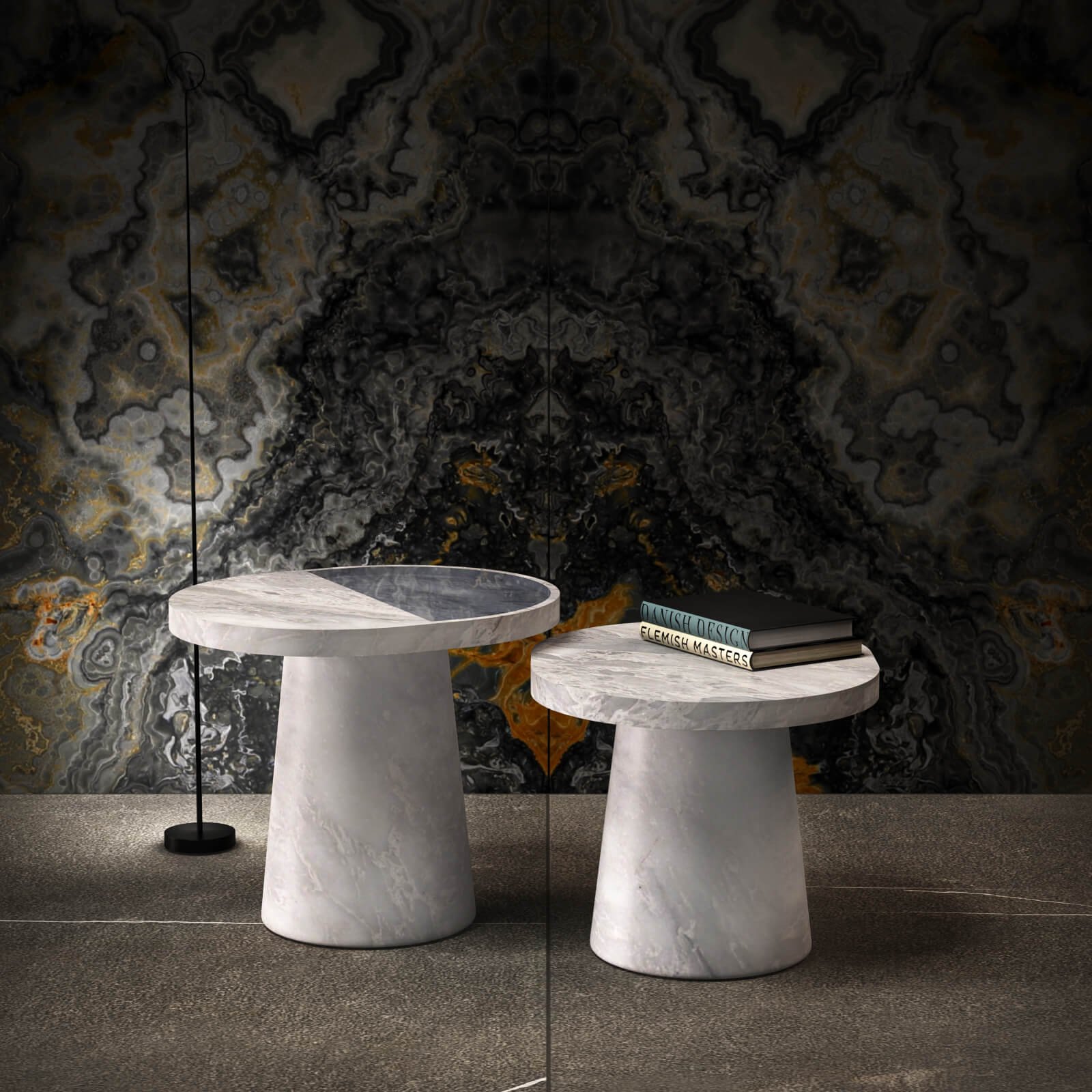
Purapietra’s own catalogue exists partly to show what a bespoke process can produce as a repeatable idea. Pieces like the Unit freestanding basin and the Linear wall-mounted basin started as one-off design exercises before becoming part of the New Era collection, and the same sculptural language, rounded, carved from a single block, drives every genuinely custom commission that follows.
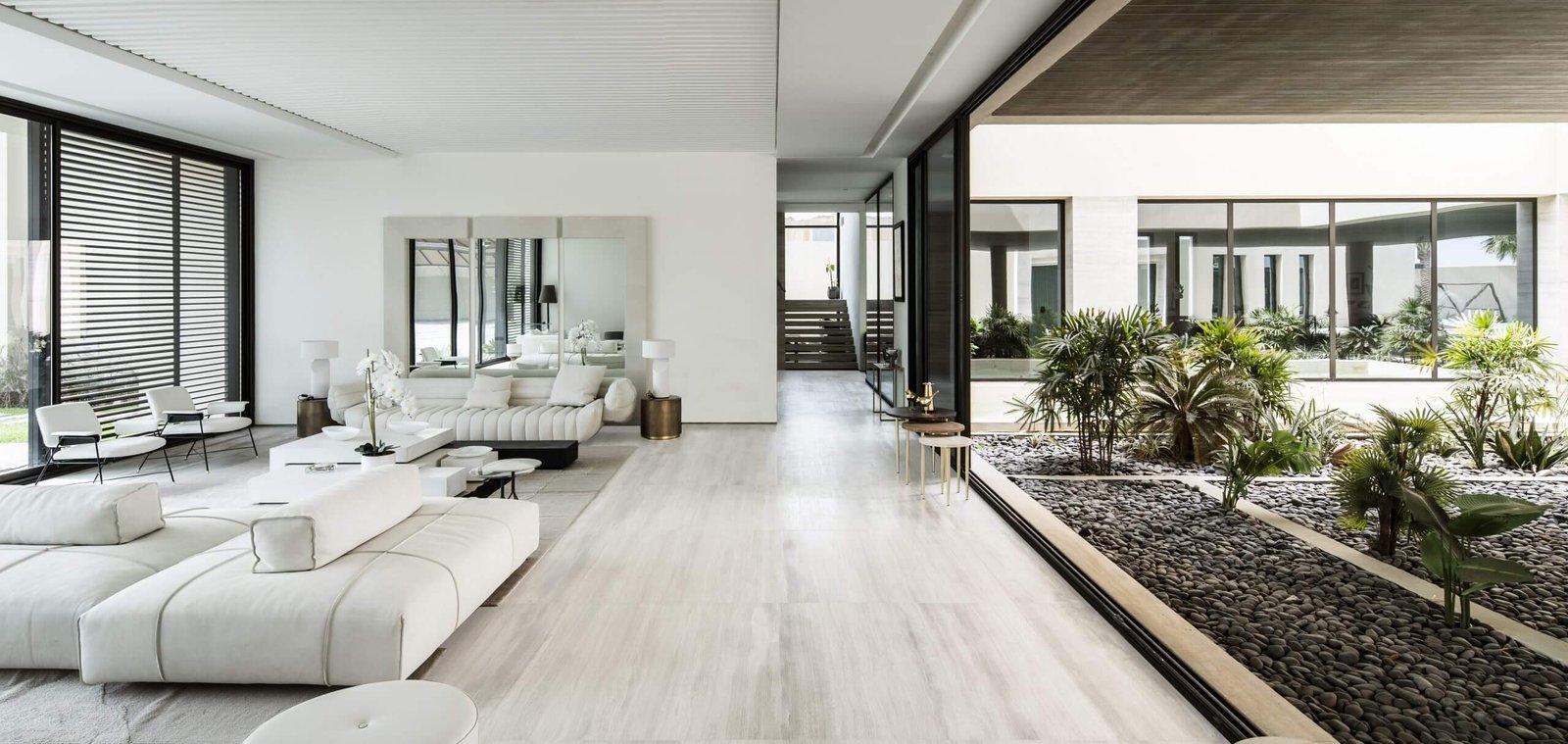
Residential projects show the same thinking at a larger scale. At Desert Chalet, Mina Abdullah Beach in Kuwait, stone was worked into the architecture itself rather than added as a finishing touch, a bespoke approach applied across an entire house rather than a single object. The full portfolio, from private villas to an Apple Store, is on our projects page, and every one of them started the same way this article describes: with a brief, not a product.
Working with a bespoke commission
A few practical points make a bespoke process go smoothly on the client side. Bring constraints early rather than late, footprint, budget, structural limits, because a design built around real constraints from day one avoids expensive revisions later. Ask to see the actual block or slab being proposed, not a generic sample, since the entire value of a bespoke piece rests on the specific stone it comes from. And build in the extra time bespoke work genuinely needs: rushing the hand-finishing stage is the single most common way a custom piece ends up looking machine-made after all.
If you are considering a bespoke piece, whether it is a single sculptural object or stonework across a whole project, we are happy to talk through the brief before anything is committed. Write to info@purapietra.it, or browse the full range of materials and finished pieces on our materials page.
Frequently asked questions about bespoke marble
What does “bespoke marble” mean?
Bespoke marble refers to a stone piece designed from a specific brief, space or idea rather than selected and adapted from an existing product range. It is different from customisation, which changes an existing product’s finish or size but starts from a template.
How long does a bespoke marble piece take to make?
Design and material selection typically take several weeks, followed by fabrication that includes hand-finishing time on top of any machine work. International projects should also plan additional time for shipping and installation logistics specific to a one-off, heavy object.
Is bespoke marble more expensive than a catalogue piece?
Yes, generally. The cost reflects design time, a dedicated block or slab selection, and hand-finishing rather than repeatable production. It tends to make financial sense for spaces meant to last many years, less so for short-term or frequently refreshed interiors.
When does a bespoke marble piece make sense over a standard product?
It makes the most sense for non-standard spaces a catalogue product won’t fit, for a signature piece meant to define a room, or when working with a rare slab too unusual or precious to cut into standard sizes.
What is the process for commissioning a bespoke marble piece?
It typically moves through a design brief, material and slab selection, a scale drawing or 3D model for approval, CNC roughing, hand-finishing by an artisan, and finally shipping and installation, with the hand-finishing and logistics stages usually taking the longest.
Can any type of marble be used for a bespoke piece?
Most can, but the right stone depends on how the piece will be worked and used. A thin carved edge needs a stone that holds its shape without fracturing, while a large tabletop needs enough consistent material from one block to avoid a visible joint, so material selection is matched to the design rather than chosen first.
Keep exploring the Purapietra magazine. See also our guides to how to identify quality marble and marble durability, or browse the full materials collection.