
Carrara vs Statuario is one of the oldest questions in Italian design, and one people get wrong all the time. The two stones come out of the same mountains and share the same white heart, yet you cannot simply swap one for the other. One is the everyday poetry of Tuscan marble. The other is its rarest, most wanted version. Here is how to tell them apart, why one gets so much reverence, and how to choose between them for your project.
Both are quarried in the Apuan Alps above the town of Carrara, in northern Tuscany. It is the same range that has fed sculptors and architects since Roman times, and where Michelangelo picked his blocks. That shared origin is why a small sample can fool you. Put a full slab in front of you and the difference is obvious.
There is more on the geology on Wikipedia’s Carrara marble page. What follows is the practical version. For the wider family, see our guide to the types of Italian marble.
Common origin, different souls
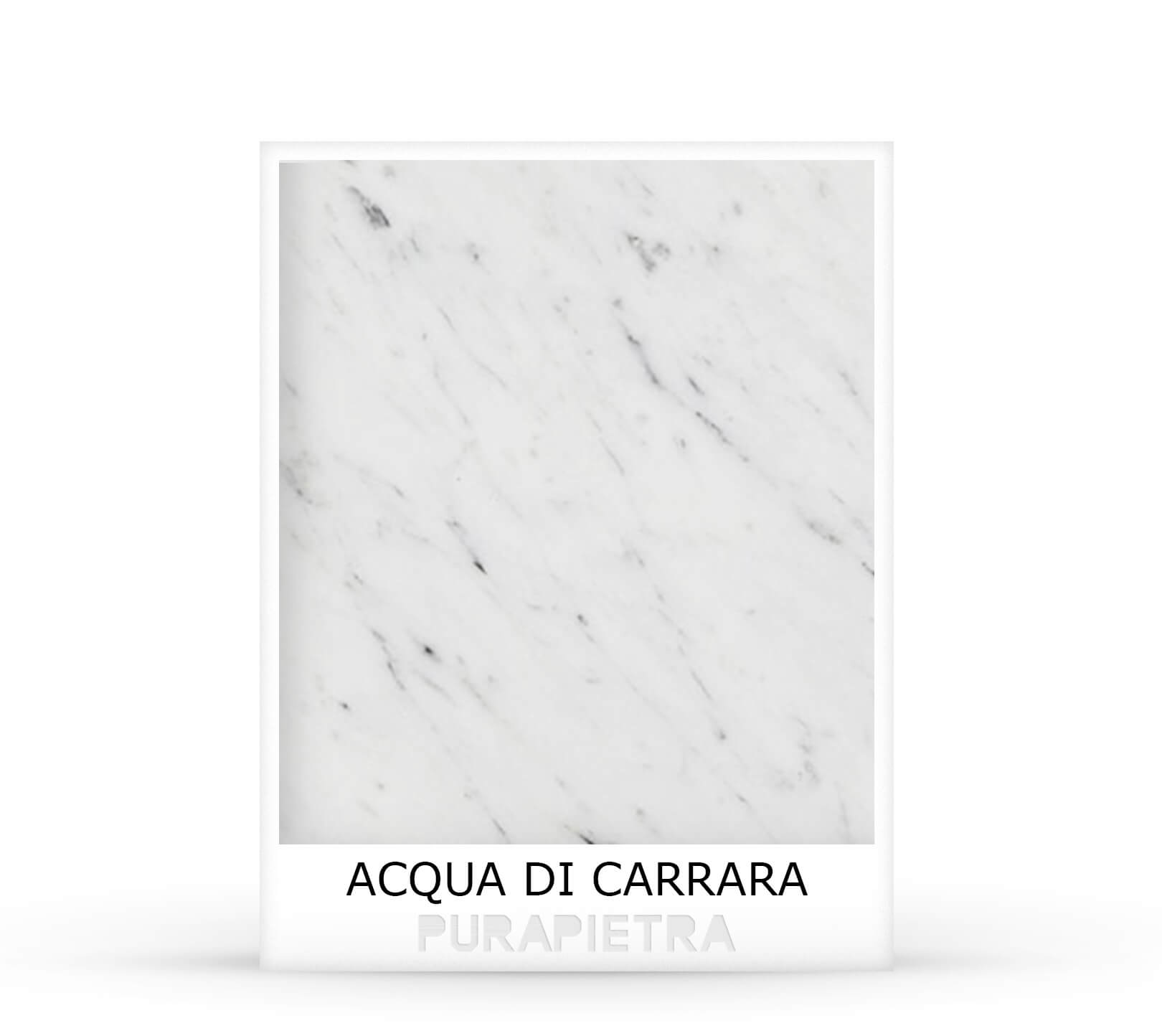
“Carrara” is a place and, loosely, a category. When people say Carrara marble, they usually mean the classic greyish white stone with soft, feathery veining that has become shorthand for Italian marble everywhere. Purapietra’s Acqua di Carrara is a refined example: a cool, luminous white with a delicate, watery grey movement, which is where the name comes from.
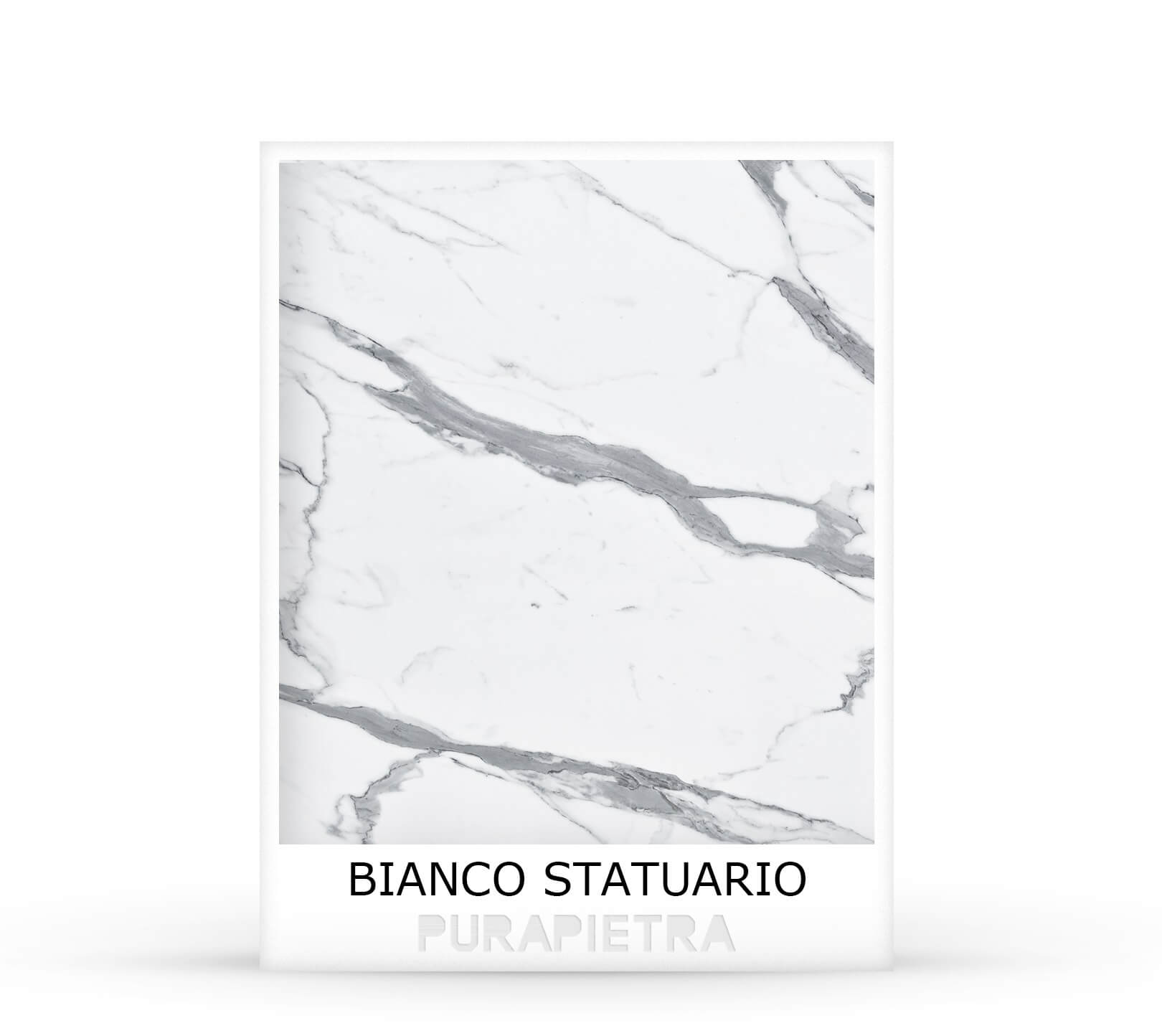
Statuario comes from specific, much scarcer veins in the same district. Bianco Statuario, literally the sculptor’s white, was prized because its ground is whiter and its veining more defined, giving carvers a cleaner canvas.
Carrara whispers; Statuario speaks up. That is the heart of the Carrara vs Statuario question, and that scarcity and that clarity explain everything that follows.
Appearance and veining compared
The quickest way to read the difference is background against vein.
Carrara has a soft, slightly cooler greyish white background. Its veins are fine and feathery, often described as cloudy or watery. The effect is gentle and even, a stone that fills a room with quiet light rather than asking for attention. Because the pattern is fairly regular, Carrara is forgiving over long runs and easy to match from slab to slab.
Statuario reads brighter and cleaner. The background is a purer white, and the veining stands against it with real confidence: bolder, more linear, sometimes carrying a warm gold or grey undertone. You notice Statuario. Bookmatched across a wall or a big island, its veins make the kind of sculptural surface that ends up in magazines and stays in people’s memory.
Prestige and rarity
Statuario has always been the more wanted of the two, and the reason is simply supply. The whitest, cleanest blocks that count as true Statuario are a small share of what the quarries produce, and that purity is what made them the choice of sculptors from Michelangelo onward. Carrara comes out in far greater volume, which keeps it easy to find without taking anything away from how it looks.
It helps to be clear about what that rarity means. Statuario’s prestige comes from scarcity and drama, not from being tougher. Both are calcite marbles with similar hardness and the same care. If your surface is a background rather than a hero, the everyday elegance of Carrara is usually the smarter call. If the surface is the whole point of the room, Statuario earns its reputation.
Where to use each one
Think of it as a question of role. Carrara is the natural pick for surfaces that should feel calm and consistent: bathroom floors and walls, a full run of cladding, a kitchen you want to read as timeless rather than theatrical. Its even pattern also makes it the easier option when you need several slabs to match.
Statuario belongs on the one surface you want to become the focal point: a bookmatched feature wall, a single block of an island, a fireplace surround, a vanity that carries the whole bathroom. Used sparingly and lit well, it does more for a room than any amount of decoration.
A common and elegant move is to use both, with Carrara across the quiet surfaces and one Statuario gesture where the eye should land.
Both stones sit at the heart of our white marble family, and you can see them next to the full range, from Calacatta to Ivory Onix, on our materials page. If a sculptural white object appeals more than a surface, the same marbles are carved into our design collection and hand finished vases, or shaped into a freestanding basin that becomes the centrepiece of a bathroom.
Carrara vs Statuario: the short version
If you only remember one thing about Carrara vs Statuario: Carrara is the calm, cooler, evenly veined white that suits large everyday surfaces and matches easily from slab to slab. Statuario is the brighter, rarer white with bolder veining, best saved for the one surface you want people to look at.
Care: the same discipline for both
Whichever you choose, the upkeep is the same. Both are calcite marbles, so both etch when they meet acid. Lemon, vinegar, wine and plenty of household cleaners will dull a surface that has not been sealed. Seal it on installation, seal it again from time to time, wipe up spills quickly, and use a gentle cleaner rather than an acidic one.
On a bright white like Statuario, etching and patina show a little more readily than on grey veined Carrara, so a honed finish and a careful hand pay off. Cared for properly, both stones do what marble has always done. They get more beautiful, and more personal, with time.
A note on finishes and light
Because Statuario is all about that bright, clean ground, the finish matters even more than it does with Carrara. Polished, a Statuario surface pushes the contrast between white field and dark vein and throws light around the room.
It looks spectacular on a feature wall, though it will also show fingerprints and etching sooner. Honed, the drama softens a little and the stone is far more forgiving day to day, which is why we tend to suggest it for surfaces that get used rather than only admired.
Carrara, with its softer grey ground, hides wear well either way. Whichever you land on, look at the slab under the actual light of your room. White marble moves more than any other colour between the cool of a north facing room and the warmth of afternoon sun, and a stone that looked grey in the showroom can read almost cream at home.
So, which should you choose?
Choose Carrara if you want quiet, timeless elegance, a consistent look across large areas, or the comfort of a stone that matches easily from slab to slab. Choose Statuario if you want a rare, luminous white with dramatic veining for a surface meant to be admired, and the project calls for a real moment of drama. And there is no rule against having both. The most considered interiors often let Carrara set the calm and let Statuario provide the crescendo.
The real decision, as always with natural stone, happens in front of the slab. See both in the light of your own space before you commit. You can explore them on our materials page, and ask for a sample once you have narrowed the choice.
Related reading
Continue through the Purapietra magazine: the family-wide white marble pillar, our guide to the types of Italian marble, and the warmer beige marble, characterful grey marble and dramatic black marble families. See every slab on the materials page, or bring the stone home through our design collection and hand finished vases. See also our guide to green marble and the comparison of Italian vs imported marble.
Frequently asked questions
What is the difference between Carrara and Statuario marble?
Both are white marbles from the Carrara district of Tuscany. Carrara has a softer greyish white background with fine, feathery veining. Statuario has a brighter, purer white background with bolder, more defined veins. Statuario is rarer and more sought after; Carrara is easier to find and more understated.
Why is Statuario marble considered so precious?
Statuario comes from limited veins that yield very white, clean blocks, and that scarcity, together with centuries of admiration from sculptors and architects, makes it the most sought after of the Carrara whites. Its prestige comes from rarity and appearance, not from being more durable.
Is Statuario stronger than Carrara?
No. Both are calcite marbles with similar hardness, porosity and care needs. Statuario’s prestige is about its rarer, whiter, more dramatic look, not extra strength. Both should be sealed and cleaned with gentle, non acidic products.
Can I use Carrara and Statuario together?
Yes, and it is a classic approach. Carrara across large, calm surfaces and Statuario on a single feature, like a bookmatched wall or island, lets you enjoy the drama of Statuario while keeping the whole scheme calm and balanced.
Which is better for a bathroom, Carrara or Statuario?
Carrara is the more practical everyday choice for bathroom floors and walls thanks to its even pattern and easy matching. Statuario is the one to pick when you want the bathroom to feel like a showpiece, say on a feature wall or a striking vanity. Both need sealing and gentle, non acidic cleaning.