
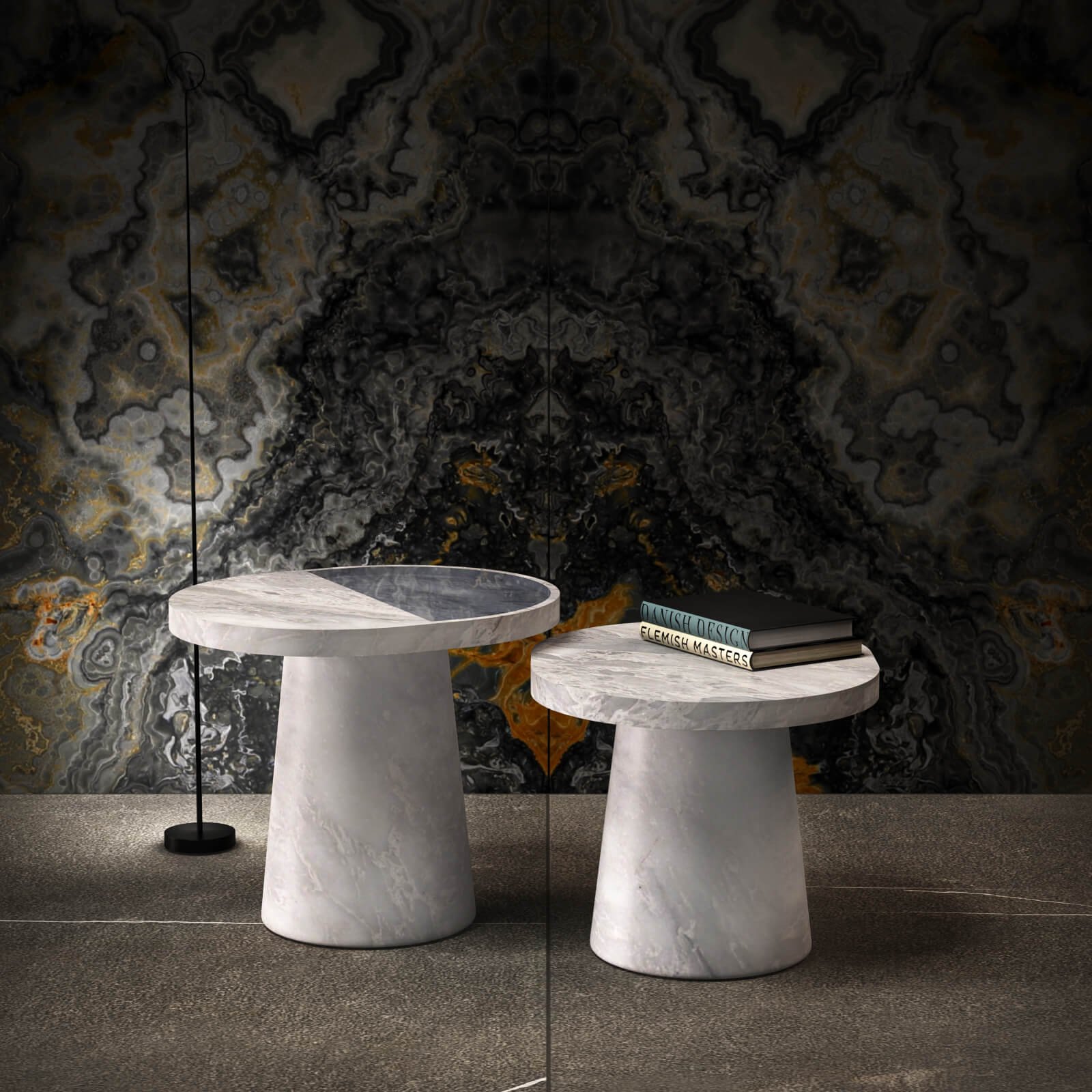
“Italian marble” is the most repeated phrase in the stone trade and one of the least examined. It is used as a synonym for quality, which is convenient for anyone selling it and unhelpful for anyone buying. So here is the honest version of Italian marble vs imported marble: what actually differs, where the difference is real, where it is marketing, and when the imported slab is the better answer.
Marble comes out of the ground in more than fifty countries. Turkey, Greece, Spain, India, Brazil, China and Iran all export it in volume, and several of them ship more tonnage than Italy does. Italy has not been the largest producer for years. What it still has is something narrower and harder to replicate: a handful of geologically exceptional deposits, and roughly seven hundred years of accumulated knowledge about how to get stone out of them and work it.
Italian marble vs imported marble: what “Italian marble” actually means
The phrase is not a legal designation and not a quality grade. It is an origin claim, and a loose one. Strictly, it means the block was quarried in Italy: most often from the Apuan Alps above Carrara, but also from Vagli, Bolgheri, the Alps and a scattering of smaller Italian sites. Loosely, and this is where buyers get caught, it sometimes means only that the stone was finished in Italy while the block arrived from somewhere else entirely.
Both statements can be true at once, and only one of them tells you about the stone. A slab quarried in Turkey and polished near Verona is a good slab, possibly an excellent one, but it is Turkish marble with Italian fabrication. There is nothing wrong with that as long as it is described accurately and priced accordingly. The problem is when “Italian” is used to mean “expensive and good” rather than “from Italy”, because at that point the word has stopped carrying information.
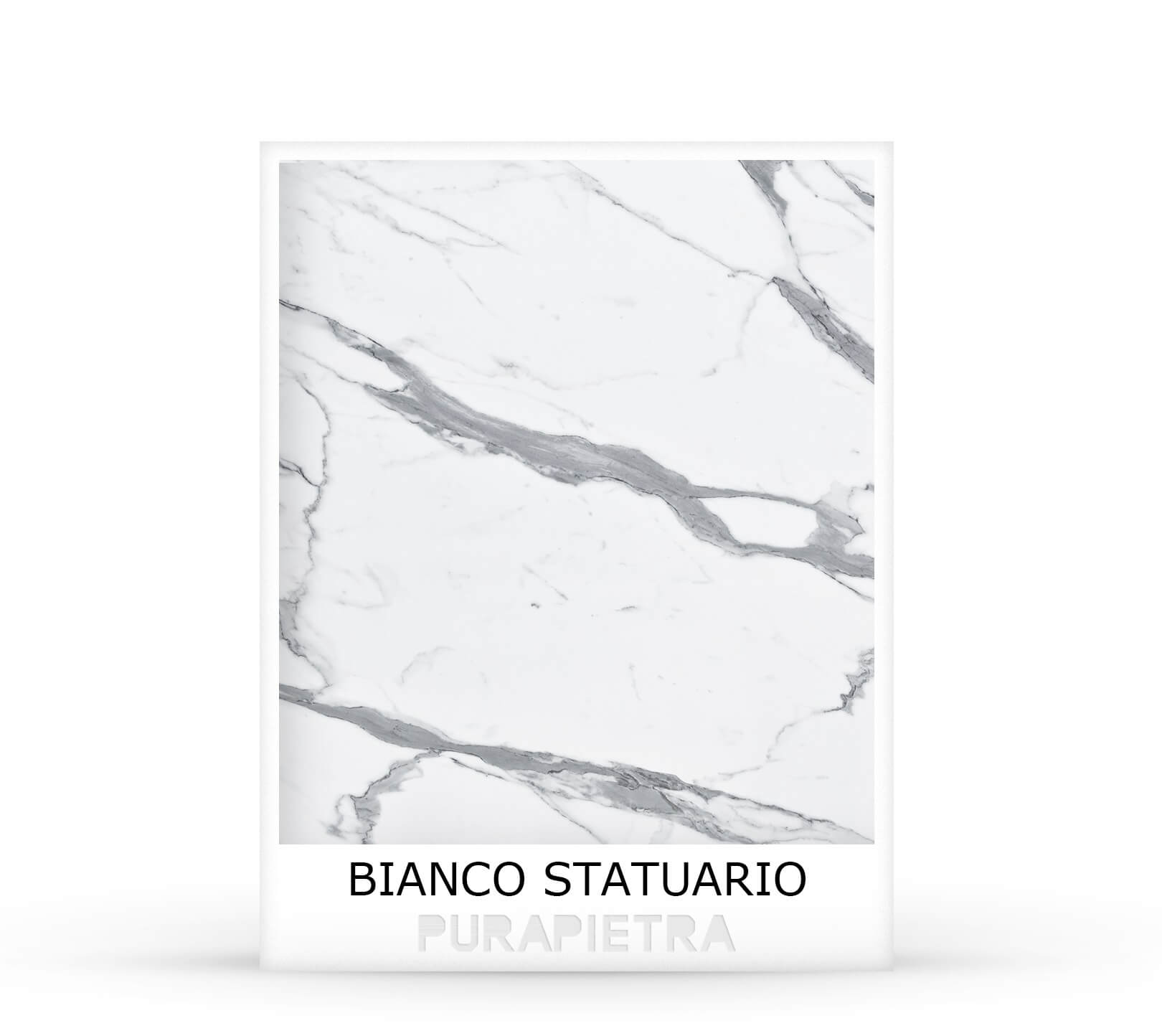
The names help, if you know them. Carrara, Statuario, Calacatta, Arabescato and Bardiglio are Apuan stones with genuine geographic meaning. Names constructed to sound Italian without being tied to a place are worth a second question. If you want the map of the real ones, our guide to the types of Italian marble lays them out.
Geological quality: where the difference is real
Some of the Italian advantage is not narrative. It is in the rock.
The Apuan deposits produce marble with an unusually fine and even crystal structure. Practically, that means a denser stone, lower porosity, a surface that takes a mirror polish without micro-pitting, and better behaviour under carving. It is why Renaissance sculptors went to Carrara rather than anywhere closer, and why Statuario still commands prices that look irrational on a spreadsheet. A coarse-grained marble can be perfectly good as a floor and still fall apart under a chisel.
The second real difference is consistency within the deposit. A well-run Apuan quarry produces blocks whose colour and veining stay recognisable across a large order. That matters enormously when you are cladding a lobby or bookmatching a wall, and it is the reason a specifier will pay a premium for a stone they have used before. Some imported deposits are equally consistent; many are not, and the variance shows up as waste on site.
What is not a real difference: hardness, strength and durability as generic categories. A good Turkish or Greek marble will outperform a mediocre Italian one on every technical test that matters. Marble is calcite wherever it comes from, and it etches with acid in Carrara exactly as it does in Rajasthan. Anyone telling you Italian marble does not stain is selling, not explaining.
Quarrying and fabrication: the part nobody photographs
The stone is half the story. What happens to it afterwards decides how it looks in your house.
Italian quarries have largely moved to diamond wire cutting, which extracts squarer blocks with fewer internal fractures and less waste than blasting or older mechanical methods. Fewer fractures means fewer slabs that crack during processing, and fewer slabs that develop a hairline a year after installation.
In fabrication, the Apuan district has an unusual concentration of workshops running current CNC alongside hand finishing, with technicians who have seen enough stone to know when a block should be cut against its natural direction and when it should not.
That judgement is the genuinely scarce resource, and it is why we work the way we do. Every piece in our New Era collection is CNC-shaped and then finished by hand in Italy, because a machine can hold a tolerance but it cannot decide how a curve should feel. The same applies to our vases and trays: small objects where every square centimetre is visible and there is nowhere for a rushed finish to hide.
None of this is exclusive to Italy, and it is where the Italian marble vs imported marble question gets genuinely interesting. There are excellent fabricators in Turkey, Spain and increasingly in India. But the density of them per square kilometre around Carrara is genuinely unusual, and it shortens the distance between a block and a finished piece.
Traceability, quarries and what you can actually verify
The most useful practical difference between Italian and imported marble has little to do with the stone and a lot to do with paperwork.
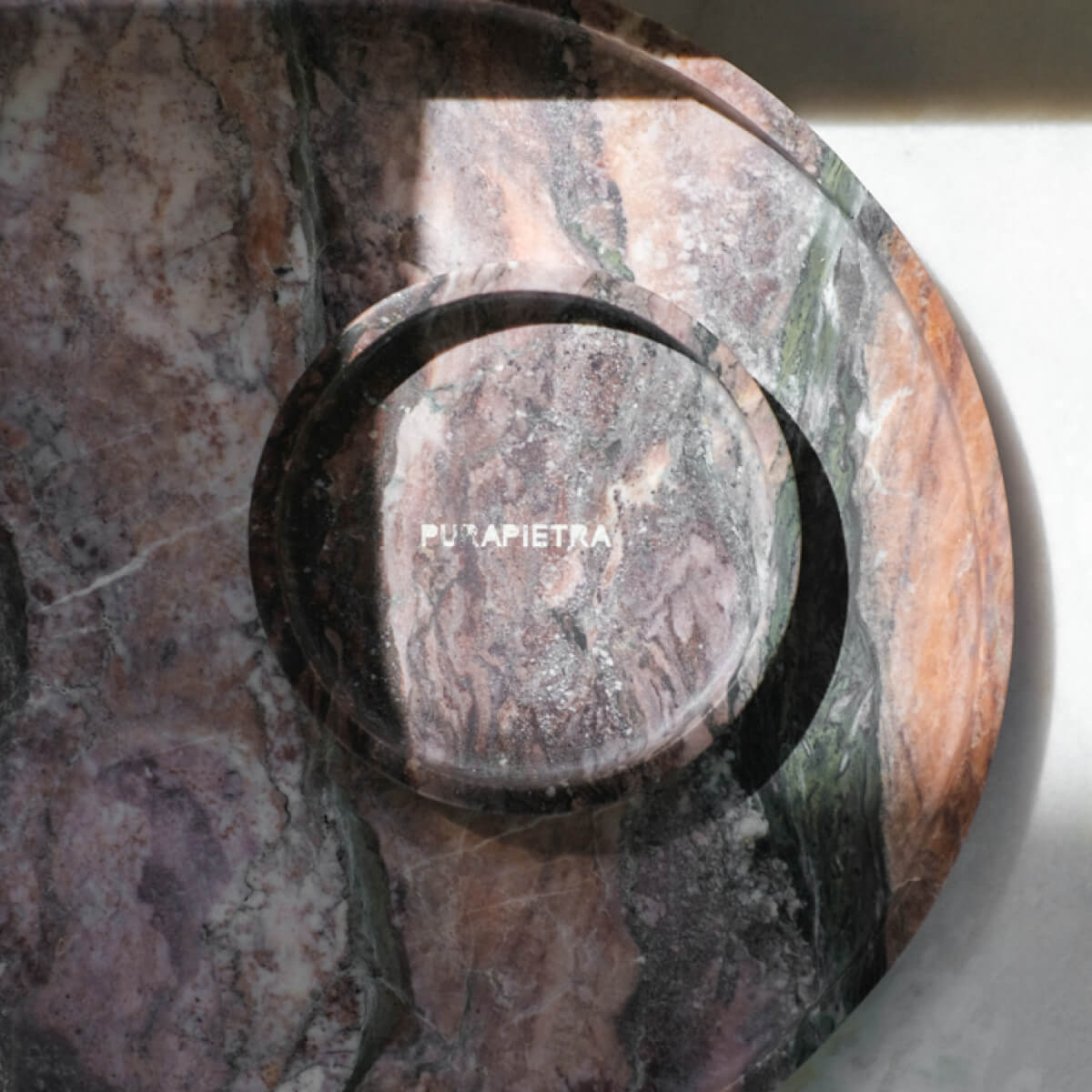
Italian quarries are documented, regulated and, in the Apuan case, watched closely by everyone from the regional government to environmental groups. That scrutiny is inconvenient for operators and excellent for buyers, because it means a block can usually be traced to a named quarry, with an extraction date and a batch. If you need to match material in two years for a phase two, that record is what makes it possible.
Traceability also covers the questions that increasingly appear in specifications: working conditions, environmental compliance, the carbon cost of transport. A block from Carrara arriving in Northern Europe has a shorter and better-documented journey than one crossing an ocean. If a project is being certified, that documentation is not a nicety, it is a requirement.
What to ask, regardless of origin: which quarry, which block number, what date, can I see the other slabs from the same block. A serious supplier answers all four without hesitating. A supplier who answers “it’s Italian” has told you nothing. Every stone on our materials page is selected slab by slab for exactly this reason.
When imported marble is the right choice
There are good reasons to buy imported stone, and pretending otherwise would be dishonest.
Some colours simply do not exist in Italy. The deepest blues come from Brazilian and Bolivian sodalite. Several greens come from India and Greece. The most saturated onyxes come from Iran, Turkey and Pakistan. If the design needs that colour, origin is not a choice you get to make. Our own blue marble and black marble families both include stones from outside Italy for precisely this reason, and they are in the collection because they are the best available, not because they are the cheapest.
Budget is the second honest reason. A Turkish white in place of Statuario can halve a material cost with a difference most people would not identify in a finished room. On a large project, that gap can be the difference between marble and a printed porcelain imitation, and real stone from Turkey beats fake stone from anywhere.
Scale is the third. Some imported deposits produce very large, very uniform blocks in quantities the Apuan quarries cannot match. For a big commercial floor where consistency across a thousand square metres matters more than the pedigree of the name, imported is often the technically better answer.
The value of made in Italy
So what is left, once the marketing is stripped out?
A few deposits whose crystal structure is measurably superior for carving and polishing. A supply chain you can audit. A fabrication culture that still has enough hand skill to make decisions a machine cannot. And a body of reference, seven centuries of buildings and sculpture, that tells you exactly how these stones age, because we have watched them do it.
That is a real premium, and it is worth paying when the piece is going to be looked at closely and kept for a long time: a sculpted basin, a bookmatched wall, an object someone will inherit. It is worth less when the stone is a service floor in a building that will be refitted in fifteen years. Knowing which situation you are in is the actual skill, and it is a more useful question than the usual Italian marble vs imported marble debate.
Related reading
Keep exploring the Purapietra magazine: the complete guide to the types of Italian marble, our pillar guides to white marble, black marble, grey marble and beige marble, and the head-to-head on Carrara vs Statuario. Browse every stone we select on the materials page. See also our guide to green marble.
Frequently asked questions
Is Italian marble really better than imported marble?
For specific deposits and specific uses, yes. The Apuan marbles have a finer, more even crystal structure that polishes and carves better than most alternatives, and Italian supply chains are more traceable. But “Italian” is an origin, not a quality grade: a good Turkish or Greek marble easily outperforms a mediocre Italian one. Judge the individual stone, not the flag.
How can I tell if marble is genuinely Italian?
Ask for the quarry name, the block number and the extraction date, and ask to see other slabs from the same block. Legitimate Italian material carries that documentation. Be careful with the distinction between quarried in Italy and finished in Italy, since both are sometimes described as Italian marble.
Why is Italian marble more expensive?
Limited deposits, higher extraction and labour costs, stricter environmental regulation, and higher selection standards that reject more material. You are also paying for consistency and traceability, which reduce risk and waste on site.
Does imported marble stain more easily than Italian marble?
Not because of origin. All marble is calcite based and reacts to acids wherever it was quarried. Porosity varies between deposits rather than between countries, and some imported marbles are denser than some Italian ones. Sealing and pH-neutral cleaning matter far more than the passport.
When should I choose imported marble instead?
When the colour does not exist in Italy, such as deep blues, many greens and the most saturated onyxes; when the budget will otherwise force a switch to imitation materials; and when a very large project needs uniform blocks in quantities the Italian quarries cannot supply.