
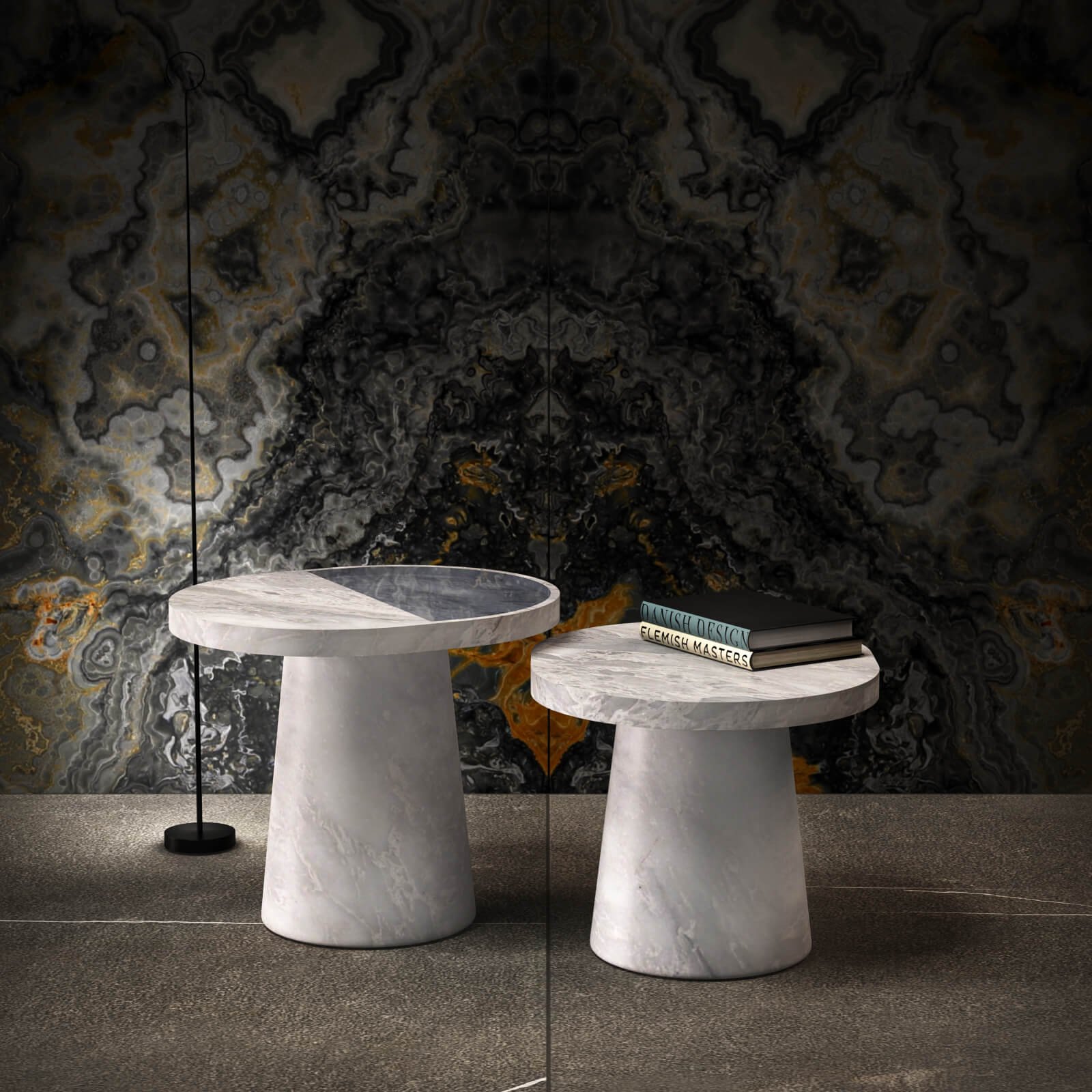
Not many materials feel as warm as beige marble. It never shouts, and it never chills a room. Instead it settles everything into a soft, sunlit calm, which is why we keep coming back to it. This is a guide to the beige marbles we work with at Purapietra: what each one looks like, where it belongs, and how to pick the right stone for your space.
White marble can feel crisp, even a little clinical. Beige reads warmer and more lived in. The colours run through ivory, sand, honey and a soft greige, usually with gentle veining or a cloudy movement across the slab. That variety is the appeal. One family of stone can carry a calm bathroom, a big kitchen island or a whole wall of cladding without ever looking samey.
The character of beige marble
Geologically, beige marble is the same crystalline limestone as its whiter cousins, recrystallised over millions of years under heat and pressure. The colour shifts toward beige when clay and iron minerals are present as the stone forms. There is a fuller primer on how marble forms on Wikipedia’s marble page. For interiors the point is simpler: beige carries warmth into a room and copes with daily life more gracefully than pure white. If you want to see where it sits among the other Italian stones, we cover the whole range in our guide to the types of marble.
The family splits into a few personalities. Some slabs are almost uniform and calm, the kind you want when the marble should stay in the background and let the furniture talk. Others have big veining or fossil movement and become the thing you look at. Knowing which is which is the first real decision, and that is where the individual stones come in.
The beige marble varieties at Purapietra
Our beige selection runs from restrained to expressive. We choose each slab for its grain, its consistency and the way it takes a hand finish.
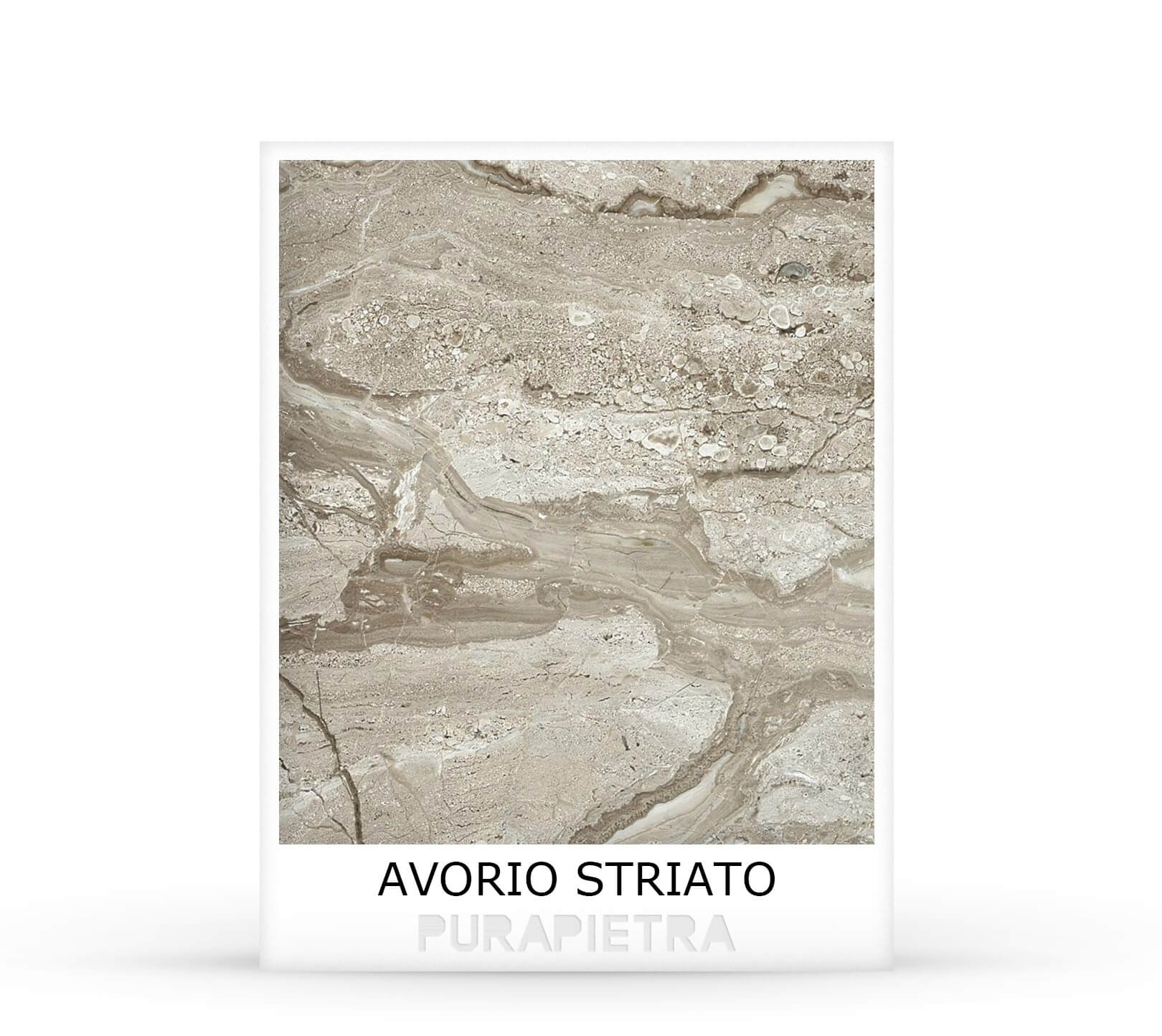
Avorio Striato
An ivory ground with fine, linear striations. Avorio Striato is the quietest of the group and the most architectural. Set it vertically and it adds height and rhythm to a wall; lay it flat and it reads almost like raw silk. A good choice when you want structure without any noise.
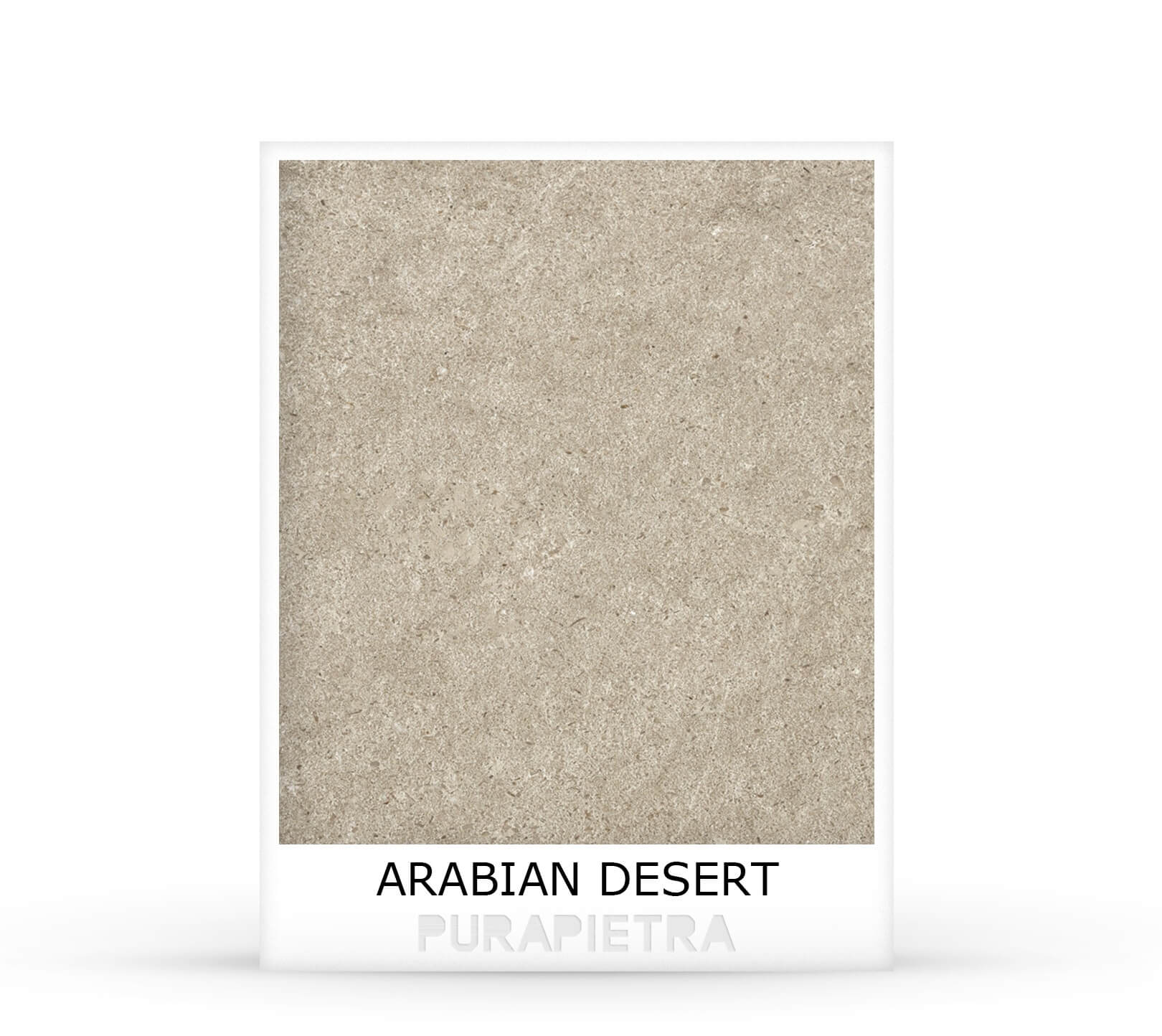
Arabian Desert
Warmer and sandier, Arabian Desert looks the way it sounds, like dunes in low light. The tone shifts softly across the slab instead of breaking into sharp veins, so it holds up well over big surfaces like floors and tall cladding.
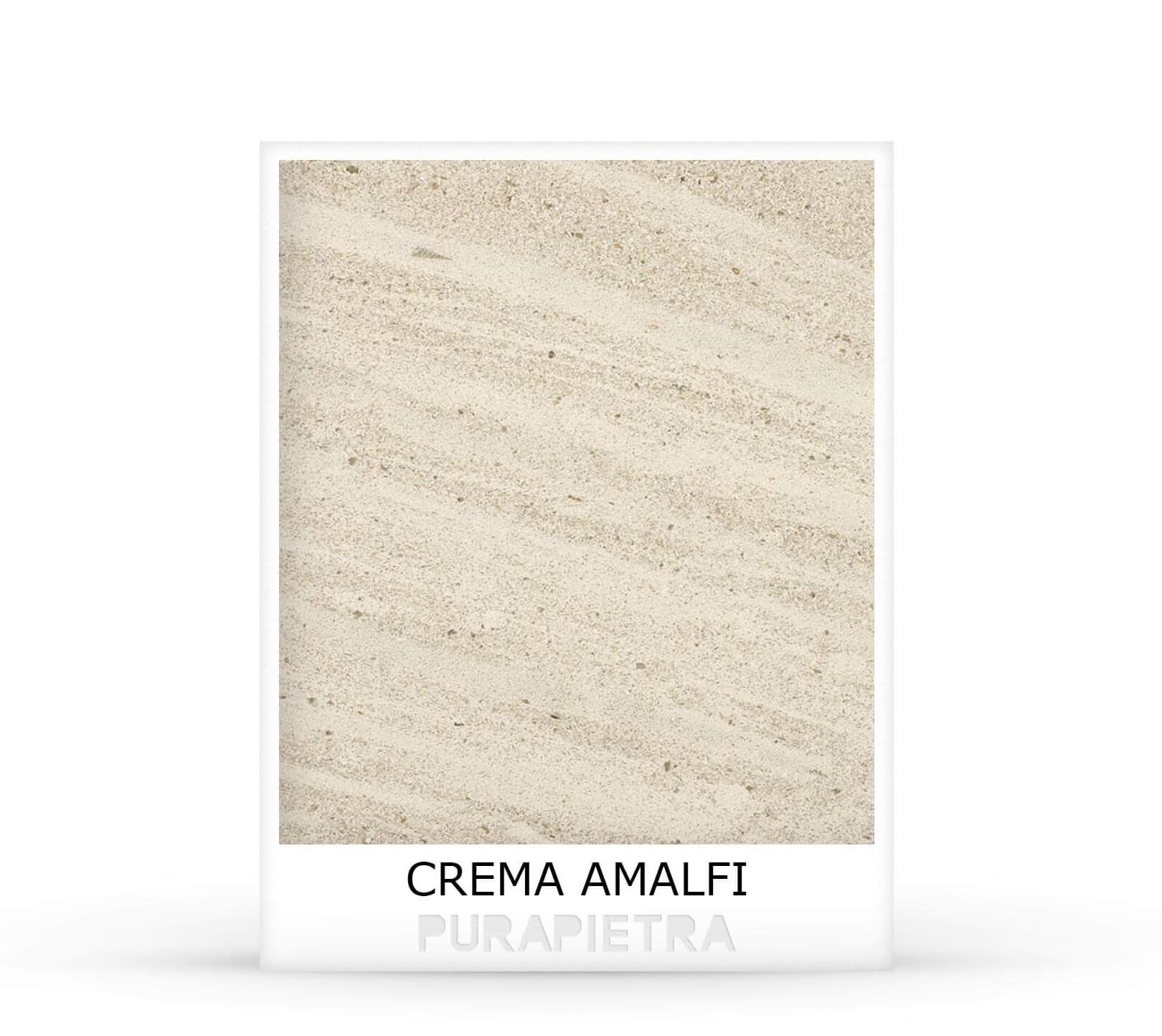
Crema Amalfi
A classic Italian cream with a subtle, cloudy movement. Crema Amalfi gets along with almost everything, from brass to warm woods to matte plaster, and it has been a steady favourite for bathroom vanities and wet rooms that should feel like a spa.
Crema Palladio
A little deeper in tone than Crema Amalfi, with a fine mineral fleck that gives it depth up close. Crema Palladio sits between beige and greige, which makes it easy to place in rooms that mix warm and cool notes.

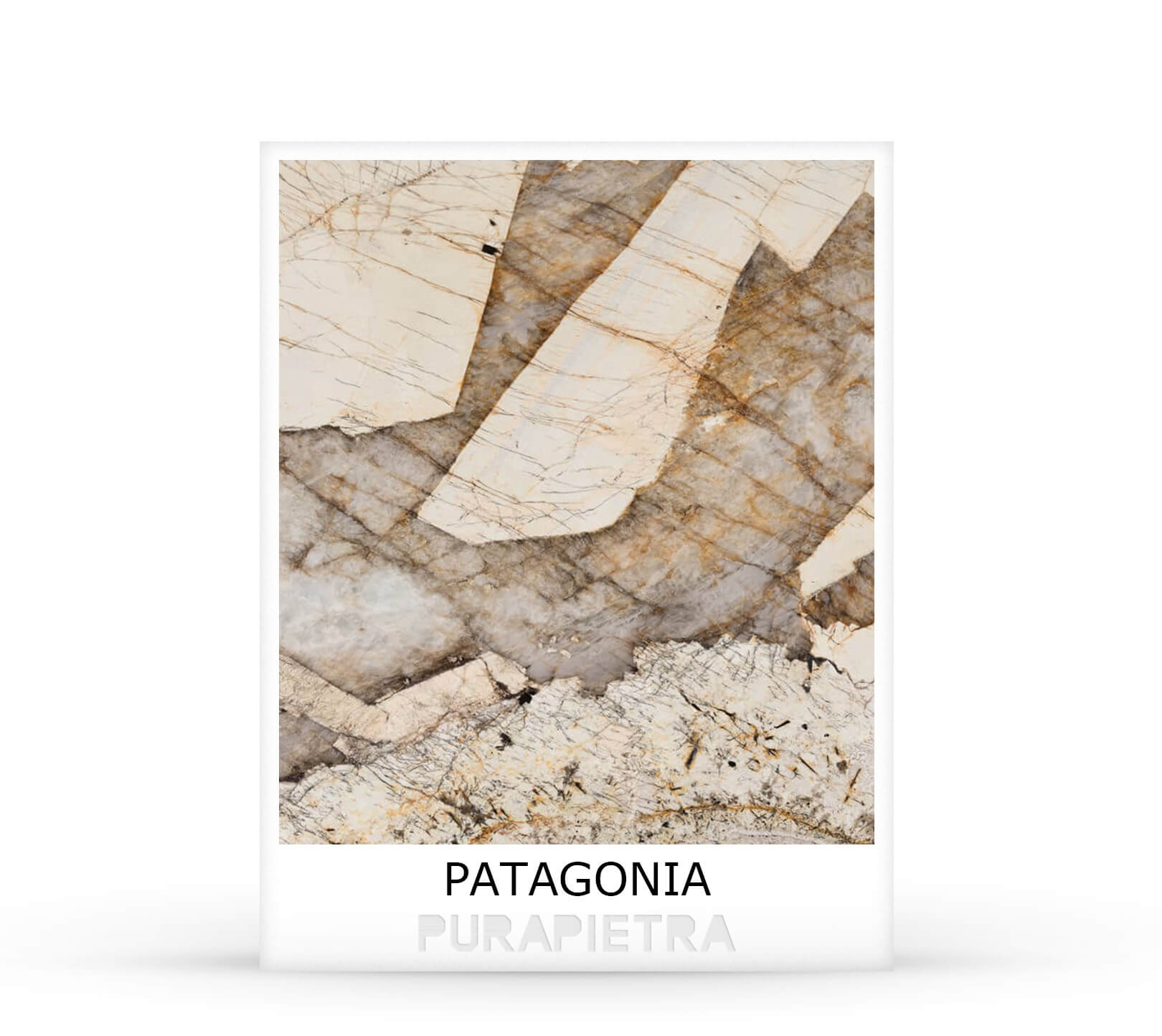
Patagonia
The statement stone of the family. Patagonia has bold, organic veining and pockets of translucency that light up when it is backlit. This is the beige you reach for when you want a single dramatic surface: a bookmatched wall, a sculptural island, or a lit shower panel that ends up defining the whole room.
White Moon
The lightest of our beiges, White Moon floats between soft ivory and pale sand. It gives you the calm of white marble with a touch more warmth, which makes it the answer for clients who love the idea of white but find it too cold.

Where to use beige marble in interiors
Beige marble flatters warm light and skin tones, so it works almost everywhere in the home.
In the bathroom, beige gives you that enveloping, hotel feeling people ask for more than anything else. Crema Amalfi or White Moon on the walls, with a carved stone basin, turns an ordinary room into somewhere you want to linger. If you would rather the room felt soft than shiny, a honed matte finish takes the glare off the light.
In the kitchen, beige works hard and hides more. Sealed properly, a beige worktop swallows the everyday marks that would jump out on stark white. The warmth also sits naturally next to timber cabinets and unlacquered brass.
For cladding and floors, the calmer stones like Arabian Desert and Avorio Striato hold large areas together without tiring the eye. Save the dramatic ones, Patagonia especially, for the single surface you actually want people to notice.
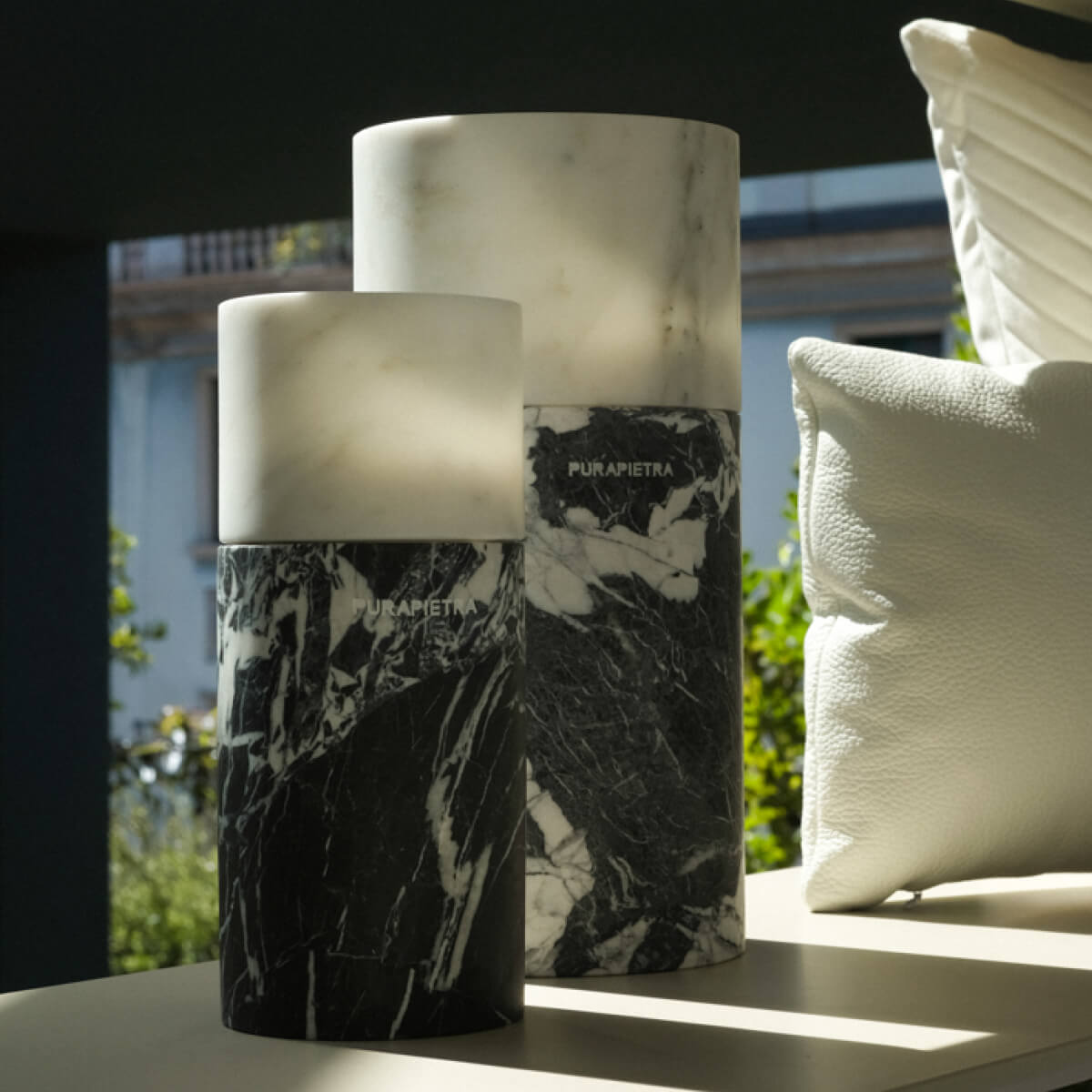
Beige marble also becomes design objects. Our vases and trays bring the same stone into a room at a smaller, more personal scale, and a freestanding basin can carry a whole bathroom on its own.
Pairing beige marble
Beige is a connector colour, which is what makes a palette easy to build around it. Warm metals like brass, bronze and aged gold look almost inevitable against it. Natural woods, from pale oak to dark walnut, share the same warmth. And when you want contrast, beige is the perfect base for something darker: a beige bathroom picks up real drama from one wall or vanity in a deep stone. If that contrast is where you are heading, our guide to black marble is a good companion, and the wider white marble pillar shows how the lighter end behaves.
Care and durability
Like every marble, beige is calcite based, so it reacts to acids. Citrus, wine and some cleaning products can etch a surface that has not been sealed. The upside is that beige hides etching and everyday patina far better than white, which is exactly why it ages so well. Seal it when it goes in, seal it again now and then, wipe up spills quickly, and clean it with something gentle rather than acidic. Looked after this way, beige marble ages beautifully and takes on the soft, lived in character that made natural stone worth choosing.
Finishes: how the surface changes the colour
The same beige slab can feel like two different stones depending on the finish. Polished, the colour deepens and gains a reflective shine, which suits a feature wall you want to catch the light. Honed, or matte, the shine drops away and the stone reads softer and more modern. That is the finish we usually suggest for beige bathrooms and floors, because it hides etching and feels warmer underfoot. A leathered or brushed finish adds a light texture that works well in kitchens, giving a bit of grip and a more hand worked look. Decide the finish alongside the variety, not after it. The two together, not the colour on its own, decide how the marble actually behaves in your room.
How to choose the right beige marble
Start with the job the stone has to do. If it is a background, a floor, a big wall, a run of cladding, pick a calm variety like Avorio Striato, Arabian Desert or Crema Amalfi and let the veining stay quiet. If the stone is meant to be the star, Patagonia earns the attention. Match the tone to your light too. Rooms that face north take the warmest beiges well, while a room full of sun can carry the cooler, greige end.
Then go and see it. A slab on a screen is never the slab in your hands, and beige in particular changes with the light of the room it will live in. You can look through the whole family on our materials page, and once you have narrowed it down, ask for a sample so you can live with the colour before you commit.
Related reading
Keep exploring the Purapietra magazine: our pillar guide to white marble, the moody world of black marble, the versatile grey marble family, and the complete guide to the types of Italian marble. For the two most famous whites compared side by side, see Carrara vs Statuario. Browse every stone on the materials page, or bring the material home through our design collection. See also our guide to green marble and the comparison of Italian vs imported marble.
Frequently asked questions
What is beige marble?
Beige marble is natural crystalline marble that reads cream, sand or a warm greige rather than pure white. The colour comes from clay and iron minerals that were present when the stone formed. You get the elegance of marble with more warmth and a surface that forgives more.
Is beige marble good for bathrooms?
Yes. Beige is one of the most popular choices for bathrooms because the warm tone feels calm, like a spa, and it hides watermarks and etching better than white. Seal it on installation, use a honed finish if you want softer light, and clean it with gentle, non acidic products.
Which beige marble is the most hard wearing?
The calmer, denser varieties like Avorio Striato and Arabian Desert handle busy surfaces such as floors and cladding well, and their quiet pattern disguises wear. Any beige marble needs proper sealing and correct cleaning to perform at its best.
How do I choose between beige and white marble?
Choose beige if you want warmth, a cosier feel and a surface that copes better with daily use. Choose white if you want something crisper, cooler and more classical. Beige is often the answer for people who love the idea of white marble but find it too cold in their light.
Does beige marble stain easily?
Marble is porous and can stain or etch if it is left unsealed, but beige tones camouflage marks far better than white. With sealing and quick cleaning of spills, staining is rarely a real problem.