
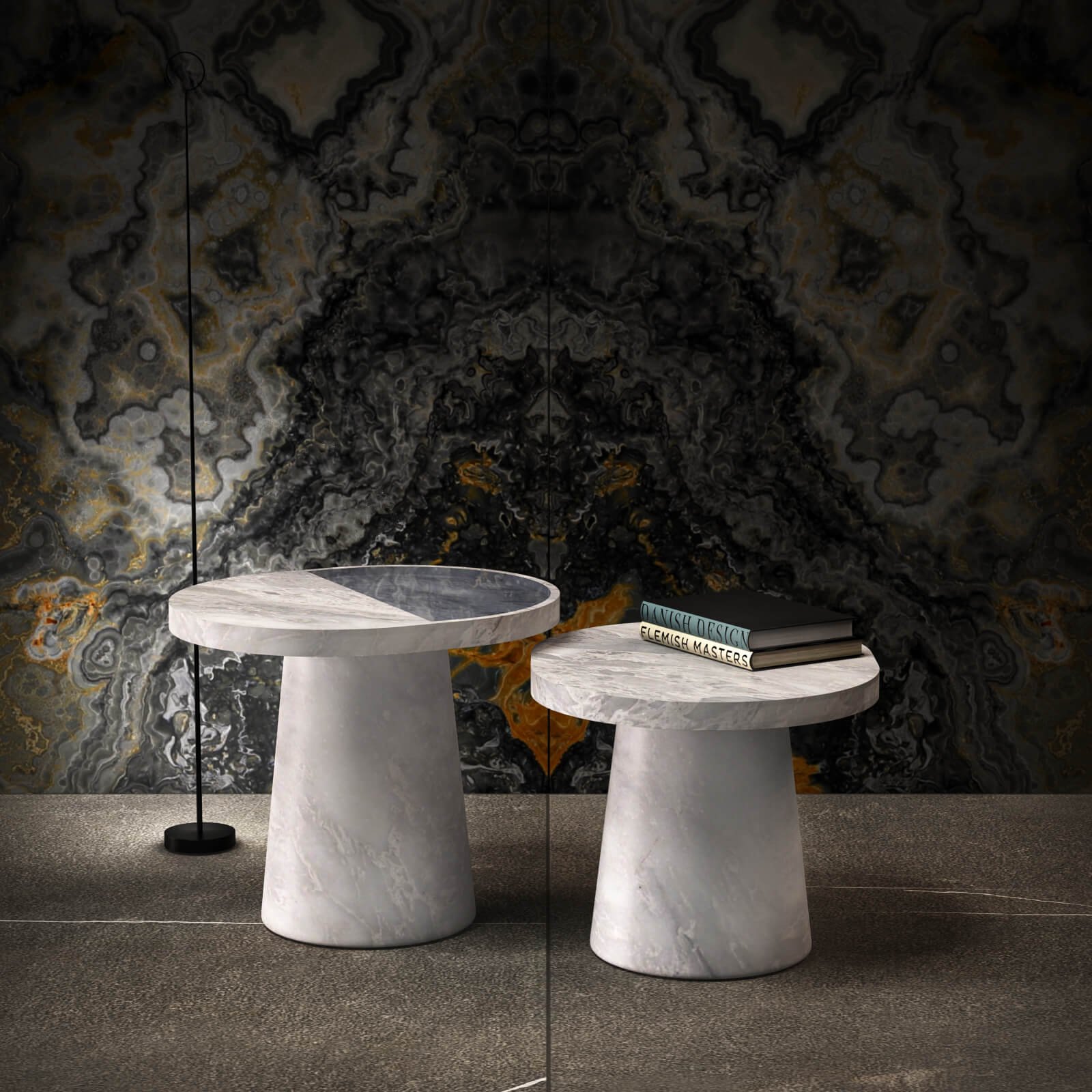
Italy has given the world its most celebrated stone. The most prized Italian marble is not simply beautiful; it is the product of specific mountains, specific veins, and centuries of knowing exactly where to cut. This is a guide to ten of them, the famous and the rare, and to what actually makes one Italian marble worth more than the slab beside it.
Ask anyone to picture marble and they will picture something Italian, whether they know it or not. The white of a Renaissance sculpture, the veined tops of a grand hotel, the floors of a cathedral: nearly all of it came out of a handful of Italian mountains. But not all Italian marble is prized, and the price gap between an ordinary slab and a rare one can be enormous.
Understanding why is the difference between buying stone and buying the right stone. This guide to the most prized Italian marble is here to make that choice clearer, one variety at a time.
What makes an Italian marble ‘prized’
A prized Italian marble earns its status for a short list of reasons, and it usually needs several of them at once. The first is scarcity: the finest stones come from small, nearly exhausted parts of a quarry, and once that seam is gone it does not come back.
The second is the quality of the white or the ground colour, its brightness, its warmth, its evenness. The third is the veining, which is where the real value lives; a clean, graphic, well-balanced vein pattern is rare, and slabs are selected one by one for it.
The fourth is workability, since the best Italian marble cuts, carves and polishes cleanly. And the fifth, quietly, is history: a stone that Michelangelo used, or that has floored churches for four hundred years, carries a value no new quarry can invent.
The most prized Italian marbles almost always tick several of these boxes at once, which is why a truly great slab commands the price it does. All of the stones below are drawn from the Purapietra catalogue, and every one is genuinely Italian. If you want to see how they sit alongside the rest of the range, our guide to the types of marble maps the whole family by colour and origin.
The ten most prized Italian marbles
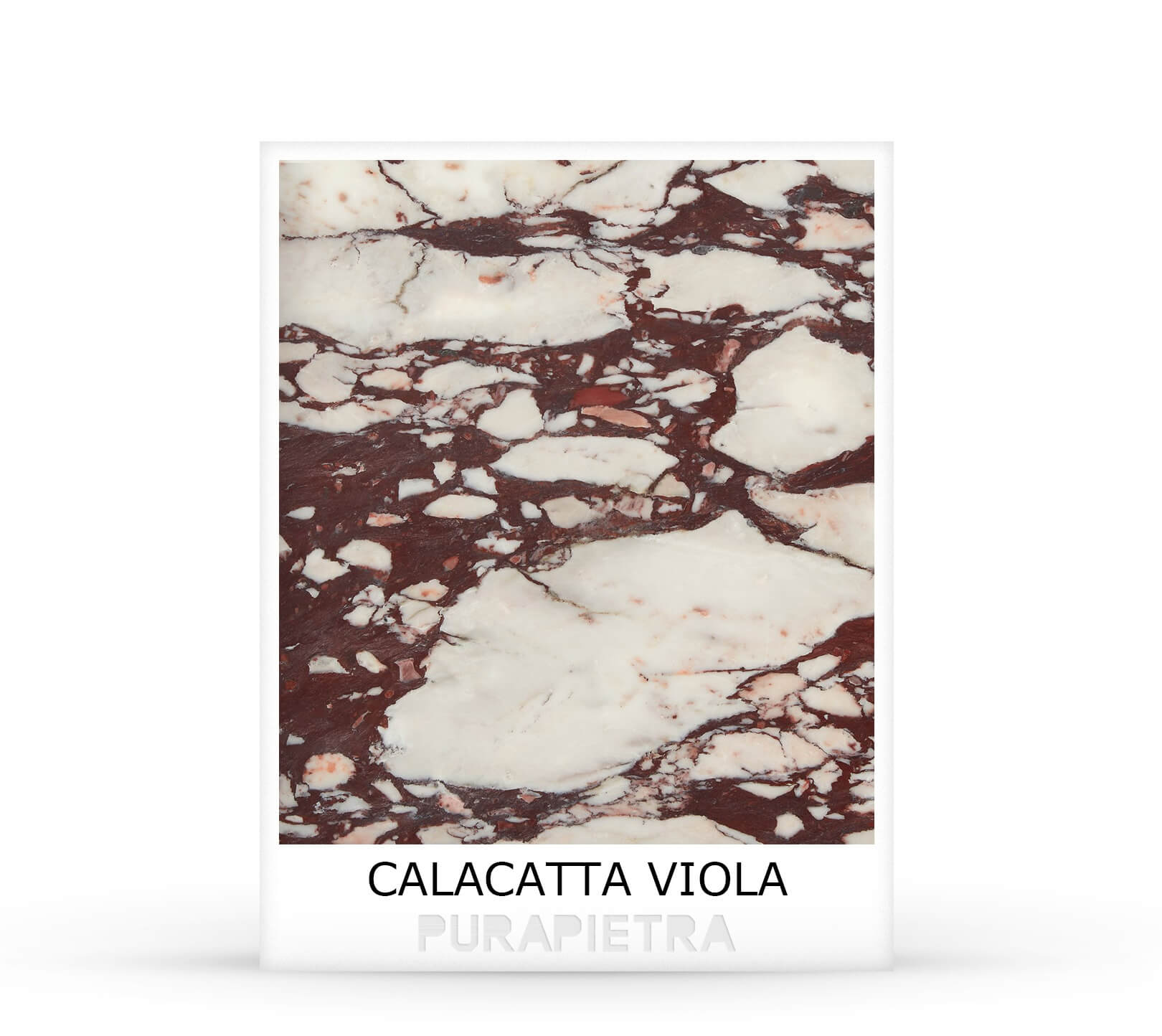
1. Bianco Statuario
The most famous white Italian marble in the world, and the one the word “statuary” is named for. Quarried above Carrara in the Apuan Alps, Statuario is prized for a warm, luminous white ground and soft, sparing grey veining. It is the stone of classical sculpture because it carves cleanly and holds fine detail, and the finest grades are now rare enough that a good slab is treated as a small event. Used flat and polished, it is the quiet definition of luxury.
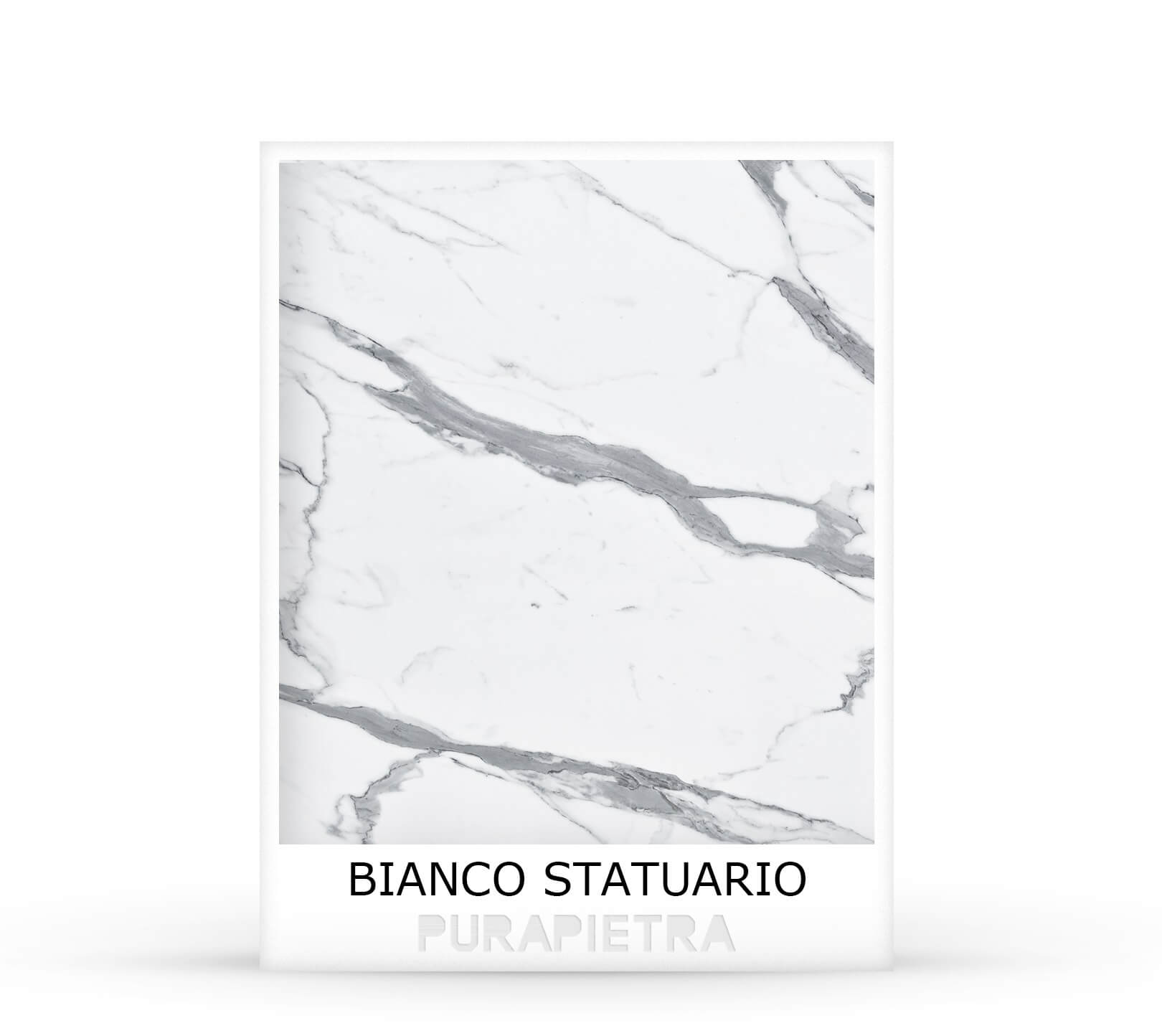
2. Calacatta Borghini
If Statuario is the quiet white, Calacatta is the loud one, and Borghini is among its most sought-after grades. This Italian marble has a brilliant white ground crossed by bold, generous veining in warm gold and grey. The contrast is what people pay for: dramatic, graphic, and beautifully suited to bookmatching, where two slabs mirror into a single symmetrical pattern. It belongs where a surface is meant to be seen, a kitchen island, a feature wall, a fireplace.
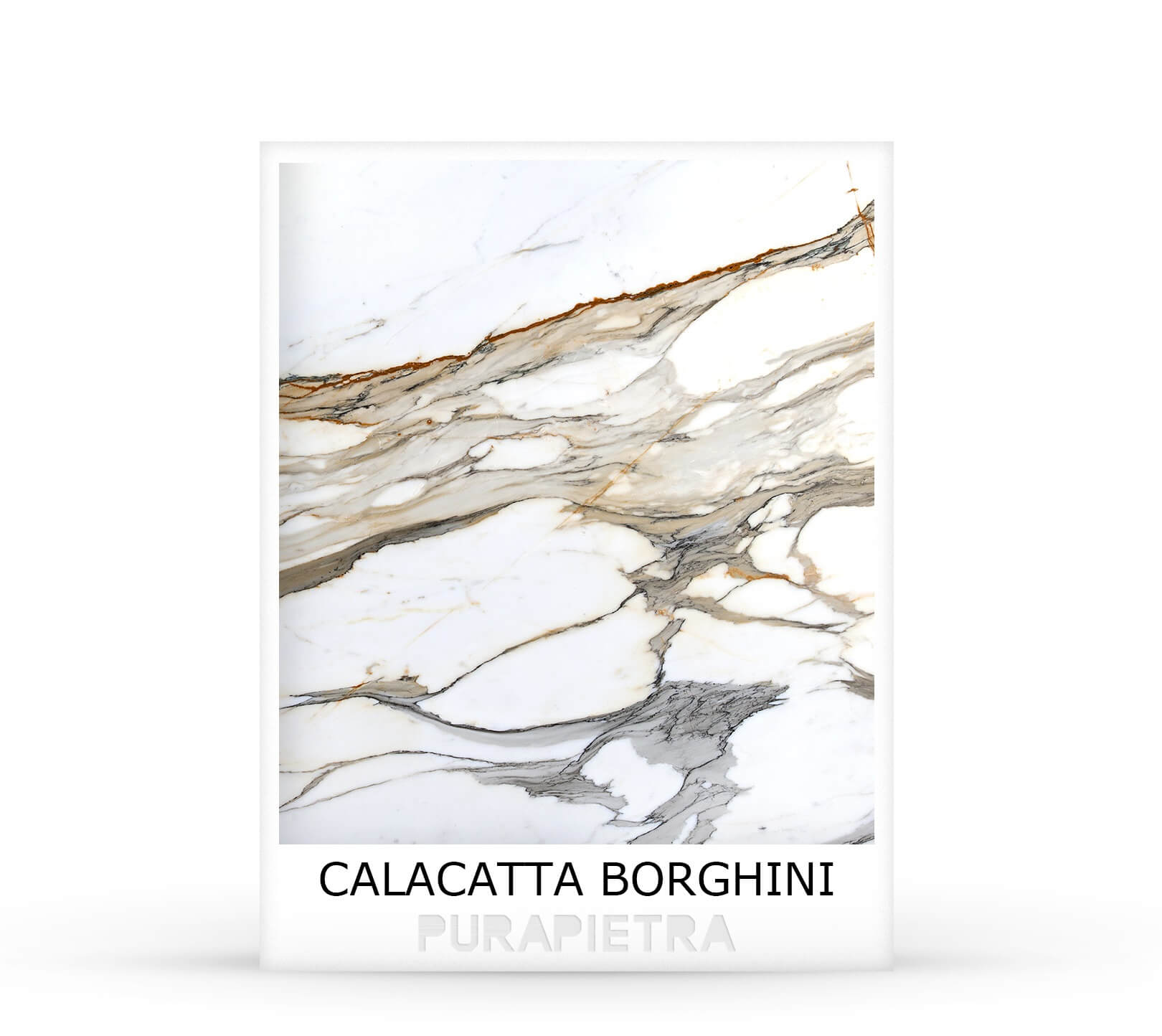
3. Calacatta Viola
One of the rarest and most theatrical types of Italian marble. Calacatta Viola carries dramatic veining in violet, burgundy and grey across a warm white ground, a colour combination that occurs in very few places on earth. It reads as art rather than architecture, and it is best used sparingly and precisely: a single tabletop, a bookmatched panel, a bathroom that is meant to stop people. Scarcity and colour together make it one of the most valuable stones on this list.
4. Acqua di Carrara
A softer, cooler white from the same Apuan mountains, Acqua di Carrara has a fresh, clear ground and delicate, watery grey veining, hence the name. It is less dramatic than Calacatta and less warm than Statuario, which makes it the versatile choice: an Italian marble that works across large areas without shouting. For interiors that want brightness and calm rather than spectacle, it is one of the most useful prestige whites Italy offers.
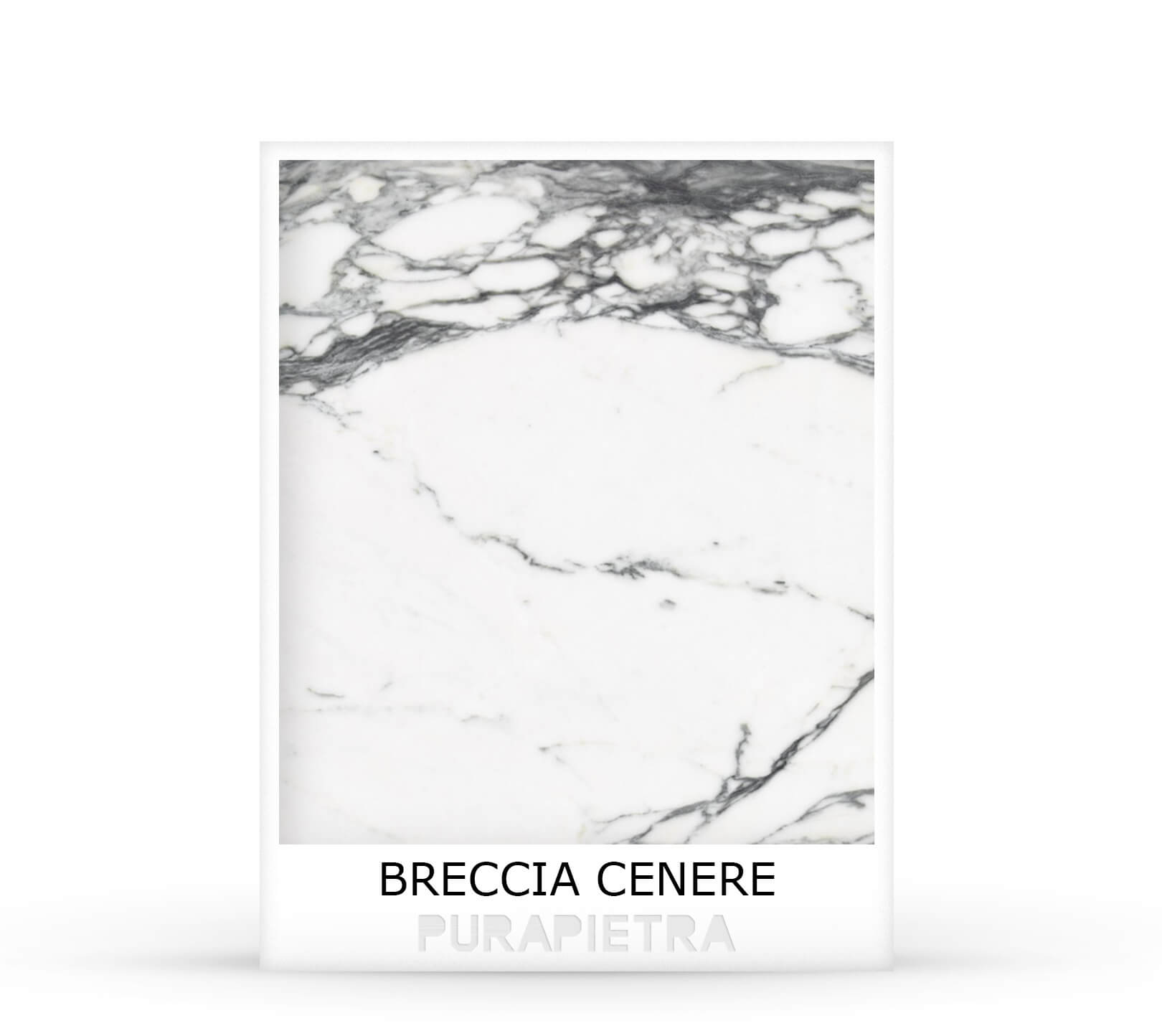
5. Breccia Cenere
A breccia is a marble made of fragments, angular pieces of older stone cemented back together over geological time, and the good ones are spectacular. Breccia Cenere sets grey and ash-toned fragments in a paler matrix, giving a slab that looks like a mosaic made by the earth. This Italian marble brings pattern and movement without strong colour, which makes it a sophisticated choice for floors, cladding and large surfaces where a plain stone would feel flat.
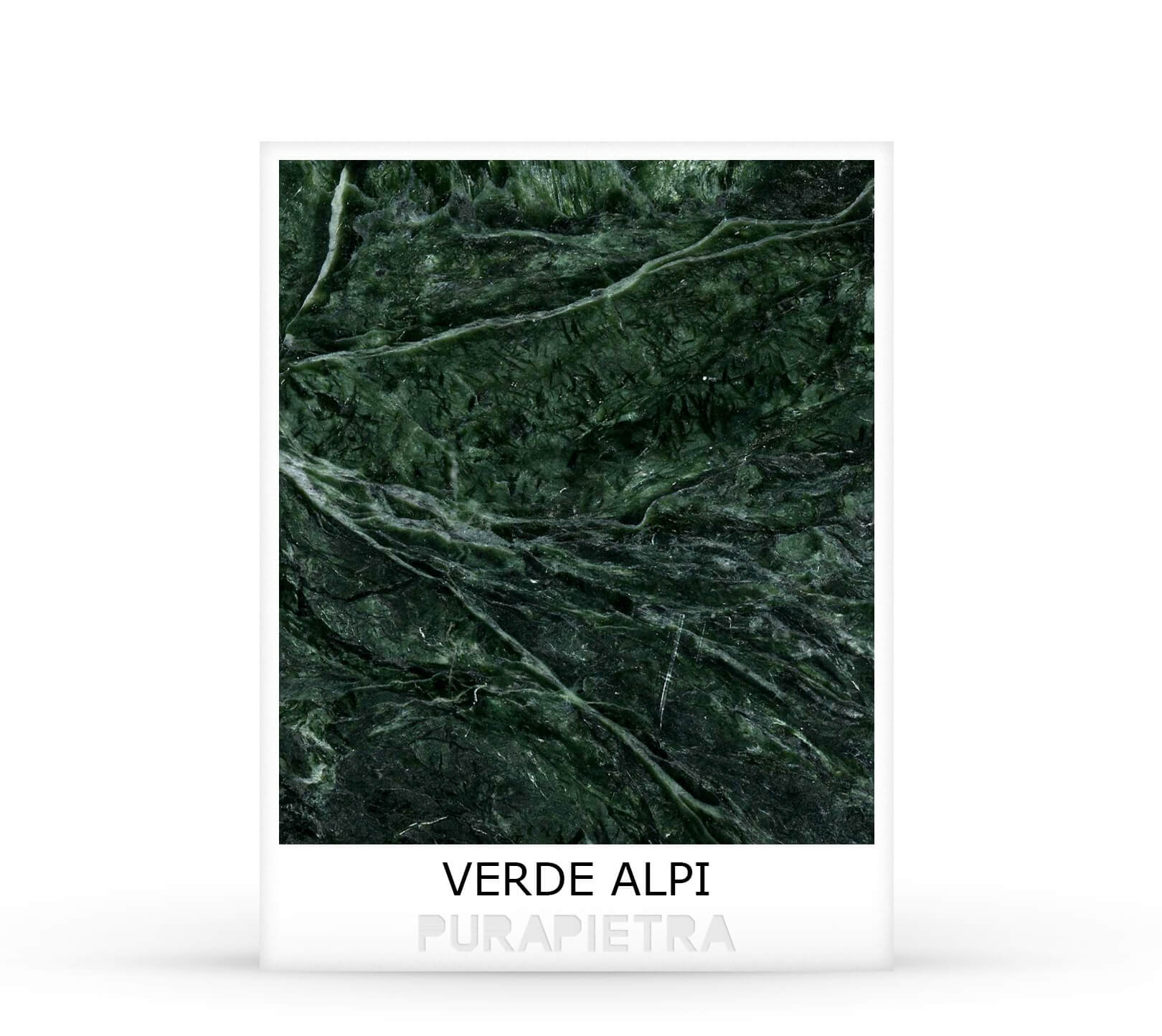
6. Verde Alpi
The classic green Italian marble, quarried in the Alpine north-west and used in Italian architecture for centuries. Verde Alpi is a deep bottle green threaded with a fine white network of veins, and because it is a serpentinite it is harder and more durable than most marbles. It has floored churches and lined the lobbies of grand mid-century buildings, and it remains one of the few strong colours that reads as timeless rather than fashionable. See our full guide to green marble for the rest of the family.
7. Grigio di Vagli
A refined grey Italian marble from Vagli in the Tuscan Apuan Alps, less famous than its white neighbours but prized by designers who know it. Grigio di Vagli has a soft, even grey ground with gentle, smoky veining, the kind of stone that gives a room depth without demanding attention. It is the sophisticated alternative to a plain grey: quiet, warm-cool in temperature, and quietly Italian in origin. Our grey marble guide places it among its relatives.
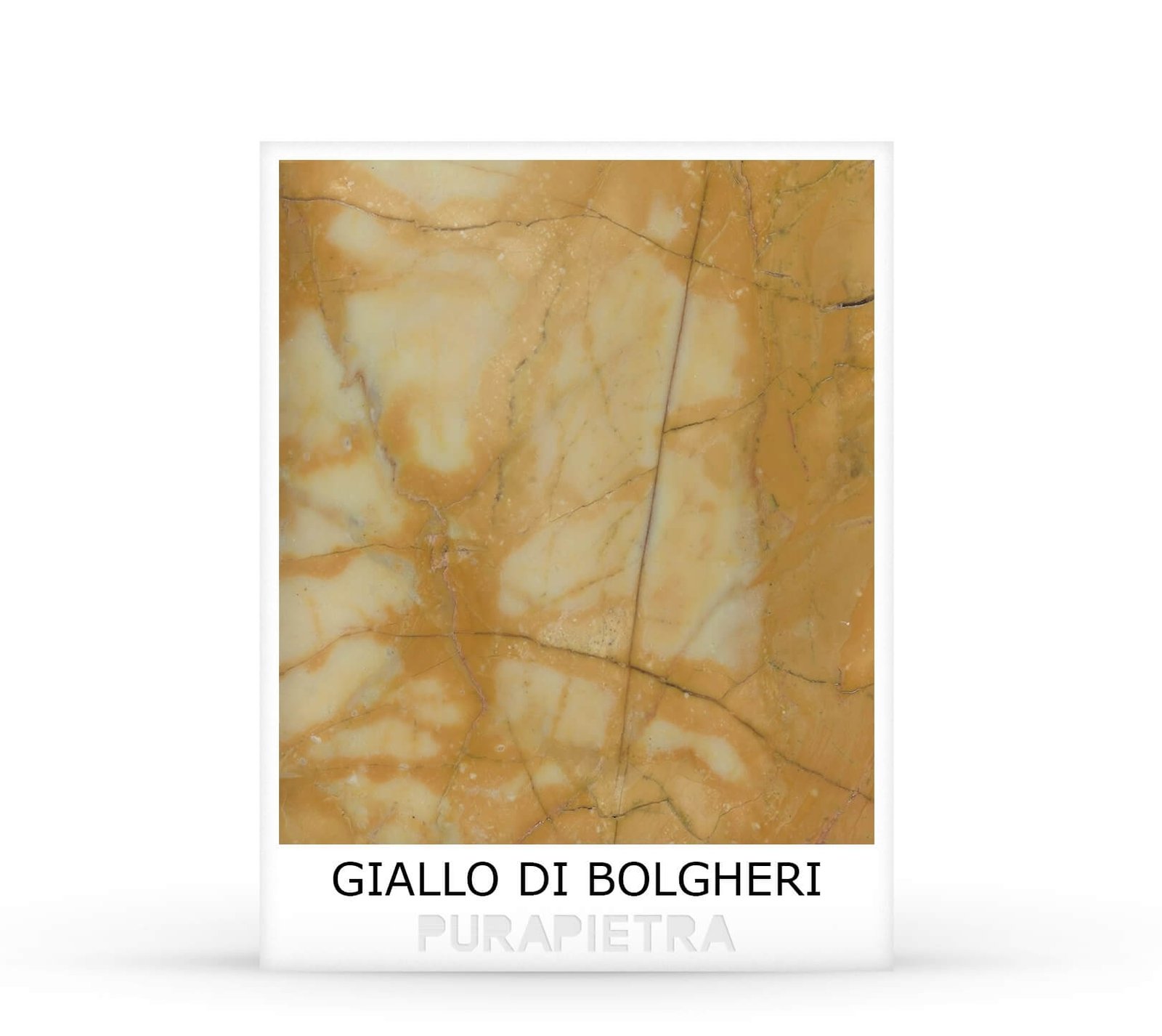
8. Giallo di Bolgheri
Yellow and gold marbles are among the rarest natural stones, and Italy’s Tuscan coast produces one of the finest. Giallo di Bolgheri carries a warm honey-to-amber ground with soft veining, a colour that turns a room golden in evening light. Because saturated yellow is so uncommon, this Italian marble is treated as a feature material: a vanity, a tabletop, an inlay, something small and warm at the centre of a cooler scheme.
9. Rosa di Venezia
Pink is another colour marble rarely delivers cleanly, which is why a good rose-toned Italian marble is prized. Rosa di Venezia has a soft, warm pink ground with delicate veining, romantic without being sweet. It flatters brass and warm timber, and it brings a gentle blush to a bathroom or a bedroom that no paint colour can match. Like all the pale, saturated stones it is best kept to the surfaces where its colour can be appreciated up close.
10. Bianco delle Alpi
A luminous white from the Italian Alps, Bianco delle Alpi closes the list where it started, on the colour Italy is most famous for. It has a bright, clean ground with fine, restrained veining, a white that feels crisp and contemporary rather than classical. For projects that want the prestige of white Italian marble in a cooler, more modern key, it is one of the most elegant choices available.
Where the prized marbles belong in design
The rarest stones reward restraint. A Calacatta Viola or a Giallo di Bolgheri does its best work as a single, deliberate gesture: one tabletop, one vanity, one bookmatched panel that the rest of the room is arranged around. Spread a spectacular Italian marble too thin and it stops feeling special; concentrate it, and a small area of extraordinary stone lifts everything near it.
Our design collection exists partly for this reason, to put remarkable material into a room at the scale of an object rather than a floor. The more even stones, Acqua di Carrara, Bianco delle Alpi, Breccia Cenere and Grigio di Vagli, can carry larger areas without becoming exhausting, which makes them the right choice for floors, cladding and worktops.
Small pieces are the most democratic way into a prized Italian marble: a set of vases or trays in Calacatta or Verde Alpi puts genuine luxury stone into a home without the cost of a full surface. It is the easiest way to live with a great material before committing to it on a larger scale.
Rarity, value and how to buy well
With a prized Italian marble, the practical advice is the same across every stone on this list. Buy the actual slab, not the name, because two blocks of Calacatta can differ enormously in the quality of their veining. Reserve the whole quantity you need at once, since a rare seam can be exhausted between one order and the next.
Check the slab dimensions against your design early, because the finest Italian marble does not always come in the largest formats. And always view a physical sample in the light of the room where it will live, at the time of day the space is actually used. A photograph flattens colour and depth that only the stone itself will show you.
The complete Purapietra collection is on our materials page, organised by colour so you can move from a family, white, black, green, grey, to the individual stone. When you have narrowed the field, ask for a sample. A photograph will tell you the pattern; only the stone in your hand will tell you the value.
Caring for a prized Italian marble
A prized stone deserves prized care, and the good news is that Italian marble is far more forgiving than its reputation suggests. Almost all of these stones are calcite based, which means acids etch them: lemon, vinegar, wine and many household cleaners will leave a dull mark on a polished surface.
The fix is simple. Seal the stone on installation, reseal it every year or two depending on use, wipe spills quickly, and clean only with pH-neutral products. Treated this way, an Italian marble surface will outlast almost everything else in the room.
Finish is part of care as much as looks. On worktops and other working surfaces, a honed finish hides etching and daily wear far better than a polish, which is why we usually recommend it for kitchens and bathrooms. Save the mirror polish for vertical panels, tabletops and objects, where the stone is admired rather than used.
Etching, when it does happen, is not damage in the structural sense: it is a surface change that a professional can often re-hone away, and that many owners come to see as part of the living patina of the material. Remember that the most prized Italian marbles were cut from mountains that have stood for millions of years. A little routine attention is a small price for a surface that will still look extraordinary long after the trends around it have gone.
From quarry to slab: how Italian marble is made
Part of what you pay for in a prized Italian marble is the sheer difficulty of getting it out of the mountain. In the Apuan Alps above Carrara, blocks are still cut from quarry faces that Michelangelo would recognise, using diamond wire and careful reading of the stone’s natural fractures. A single block can weigh twenty tonnes, and only a fraction of what comes out of the ground meets the grade for a prestige slab.
Once a block reaches the workshop, it is sawn into slabs a few centimetres thick, and this is where the character of an Italian marble is decided. The direction of the cut sets the pattern: cut one way, a stone reads as soft cloud; cut another, the same block becomes bold, directional veining. Bookmatched pairs are cut from consecutive slices so their patterns mirror, which is why bookmatching is reserved for the most dramatic stones.
Finishing is the last act. Polishing brings the colour and veining to their fullest depth; honing leaves a soft matte surface that wears better; brushing and leathering add texture. The same Italian marble can look like three different materials depending on the finish, which is why we always show a stone in the finish you intend to use rather than the one that photographs best.
Understanding this journey, from quarry face to finished surface, is the quickest way to understand why the finest stone costs what it does. It also explains why no two orders are ever quite identical: every block carries the record of the exact place and moment it was cut, and that individuality is precisely what makes a great Italian marble worth owning.
Related reading
Keep exploring the Purapietra magazine: our pillar guides to white marble, black marble, green marble and grey marble, plus the complete guide to the types of Italian marble. Browse every stone on the materials page, or bring the material home through our design collection.
Frequently asked questions
What is the most prized Italian marble?
Bianco Statuario from Carrara is usually considered the most prized Italian marble, valued for its warm luminous white and its history as the stone of classical sculpture. For colour and rarity, Calacatta Viola is among the most valuable, because its violet veining occurs in very few places on earth.
Why is some Italian marble so expensive?
Several factors combine: scarcity, since the finest grades come from small and nearly exhausted seams; the quality of the ground colour and the veining, which are selected slab by slab; workability; and history. When an Italian marble is both rare and beautifully patterned, its value rises sharply because no two slabs are the same.
What is the difference between Statuario and Calacatta?
Both are white Italian marble from the Carrara area. Statuario has a warmer white ground with soft, sparing grey veining and a restrained, classical look. Calacatta has a brighter white ground with bolder, more dramatic gold and grey veining, so it reads as a statement stone rather than a quiet one.
Are green and coloured stones also prized Italian marble?
Yes. Colour is rare in natural stone, so a fine coloured Italian marble can be as prized as a white one. Verde Alpi has centuries of use in Italian architecture, while genuinely yellow, pink and violet stones such as Giallo di Bolgheri, Rosa di Venezia and Calacatta Viola are valued precisely because those colours occur so rarely.
How do I choose a prized Italian marble for my project?
Decide first whether the stone should be a feature or a background. Rare, dramatic Italian marble works best concentrated on a single surface, while more even stones can cover larger areas. Then buy the specific slab rather than the name, reserve the full quantity at once, and view a physical sample in the light of your own room before committing.