
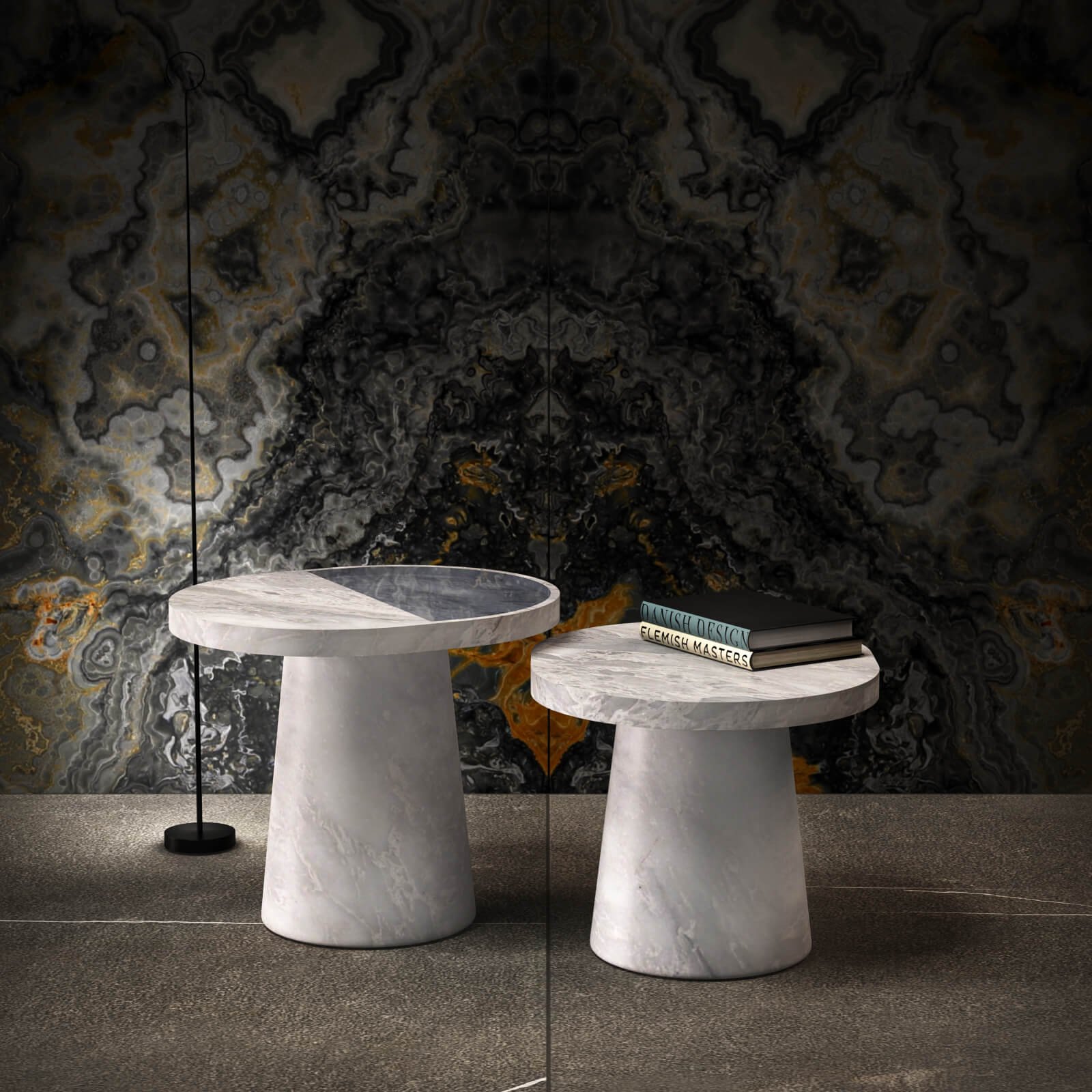
Pink marble is the warmest stone in the room. It carries the colour of dawn, of skin, of coral and old plaster, and it softens a space in a way no white or grey ever manages. This is a guide to the pink marbles we work with at Purapietra: where the colour comes from, what each stone does in an interior, and how to choose the one that belongs in yours.
Most people meet pink marble and assume it will be loud. It rarely is. Pink is a quiet colour in stone, closer to a blush than a statement, and it reads as warmth long before it reads as pink. A pink marble vanity does not shout across a bathroom; it makes the whole room feel a few degrees warmer and a little more human. That is the reason designers keep returning to it, and the reason it is worth understanding properly before you choose.
The character of pink marble
Pink marble gets its colour the same way every marble does, from the minerals that were present when the stone recrystallised. Marble is limestone that has been reworked by heat and pressure, and its tone comes from whatever was trapped in the rock during that process. Iron oxides and manganese are the usual source of pink and rose, sometimes with traces of hematite giving a deeper, redder blush. The result is a family of stones that run from the palest grey-pink through warm rose to an apricot that verges on peach. Wikipedia has a clear primer on how marble forms if you want the geology in full.
What sets pink apart from the neutral marbles is temperature. White and grey are cool by default and need warm metals or wood to soften them. Pink arrives warm, which changes how you build a scheme around it. It flatters skin and softens light, so it suits the rooms where people slow down: bedrooms, bathrooms, dressing rooms, quiet corners. It is also more forgiving of the eye than a stark white, since a small mark or a shift in tone reads as character rather than a flaw. If you want to see how it sits among the other Italian stones we work with, our guide to the types of marble maps the whole range.
The pink marble varieties at Purapietra
Our pink selection is small and chosen slab by slab. Four stones, each with a different temperature and a different job, picked for grain and for the way the colour holds under a hand finish.
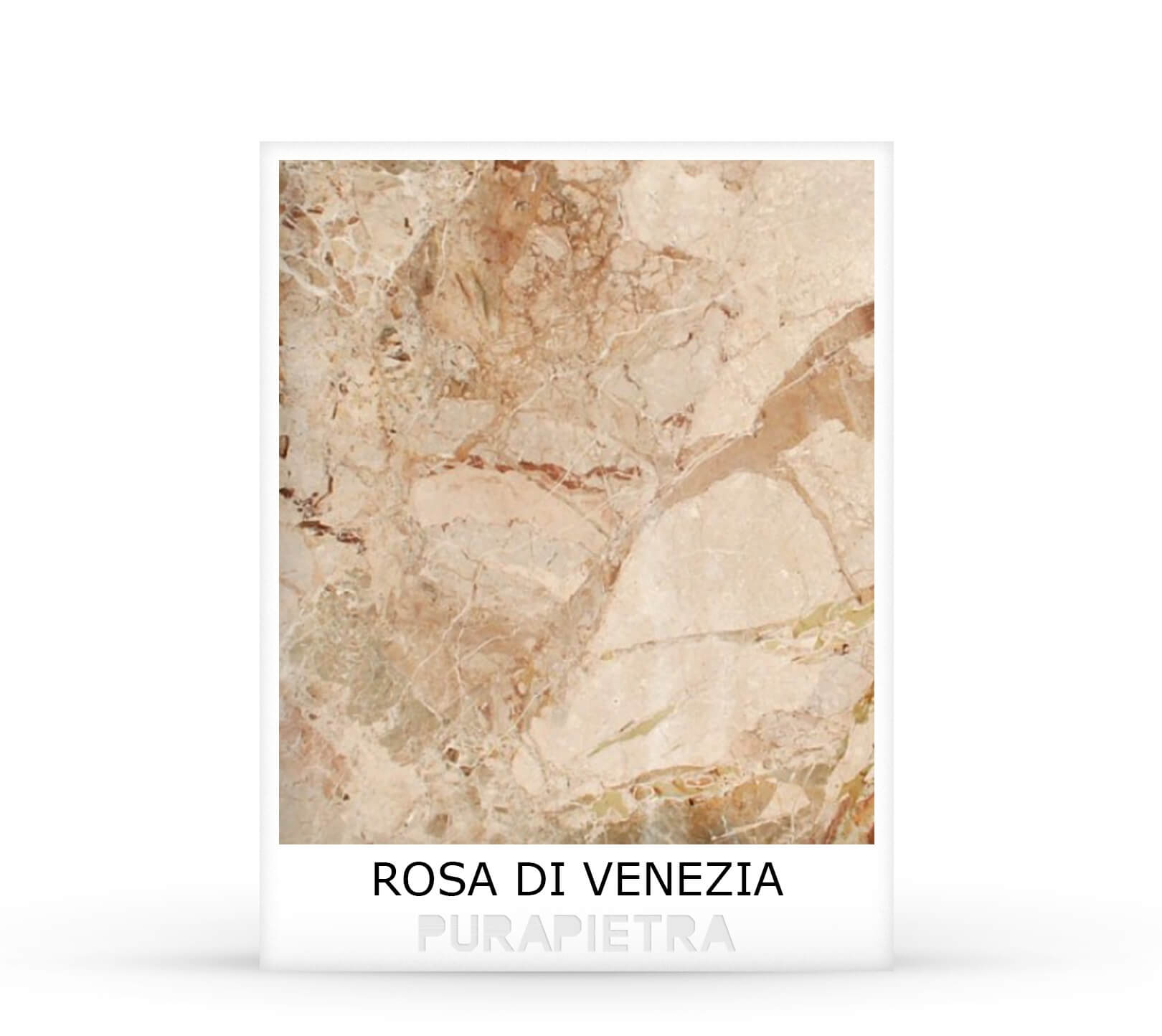
Rosa di Venezia
The most classically pink of the four. Rosa di Venezia has a warm rose ground crossed by soft, cloudy veining that keeps the surface gentle rather than busy. It is the stone to reach for when you want the room to read as unmistakably pink but still calm, since the colour is even and the movement is quiet. It behaves beautifully across a larger surface, which makes it a good choice for a vanity top, a bath surround or a run of cladding where the warmth can spread out and settle.
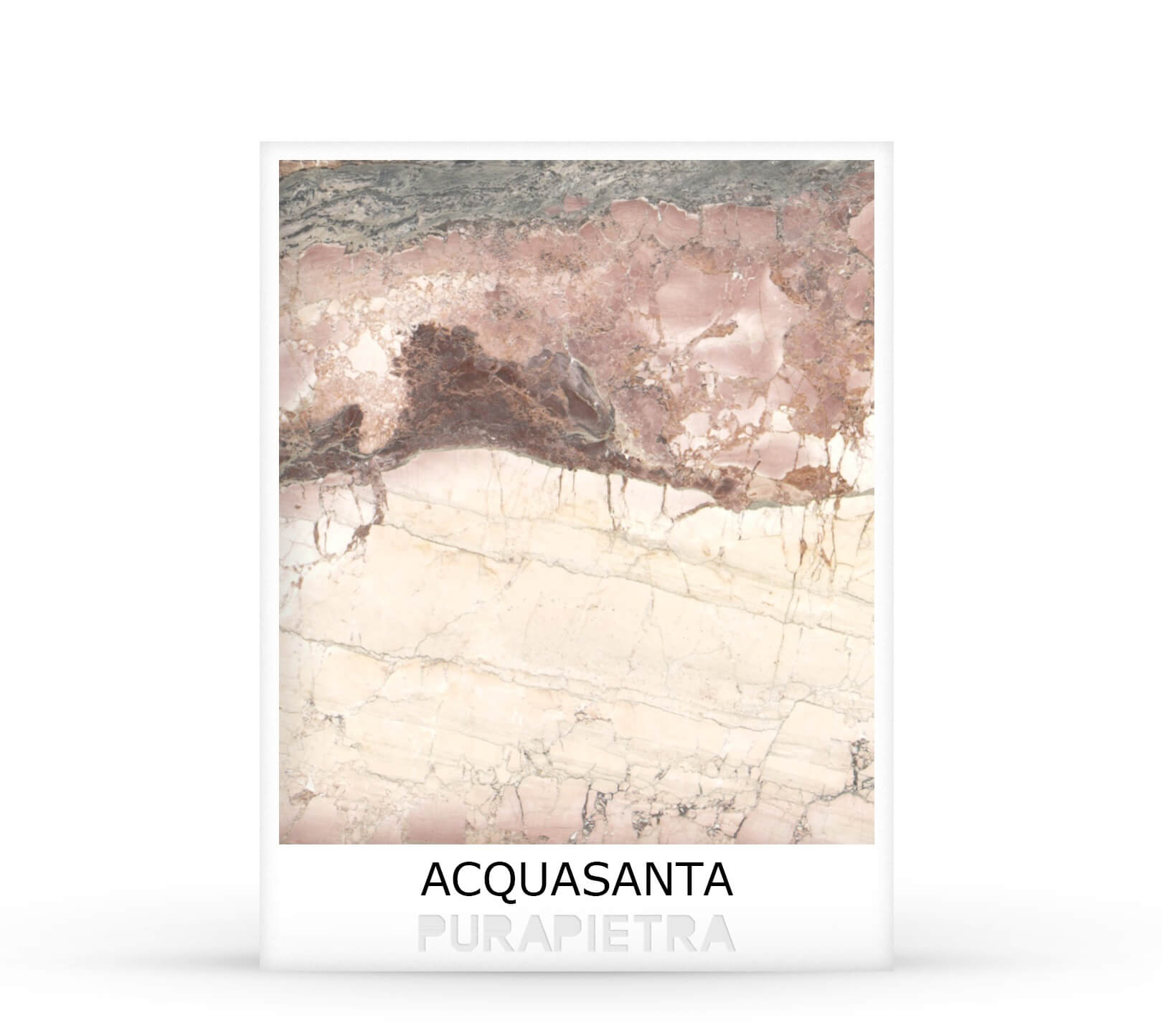
Acquasanta
A greyer, more restrained pink, and the one that reads as a neutral more than a colour. Acquasanta sits between rose and dove grey, with fine darker veining that gives it structure, and it is the pink you can use almost anywhere without committing the room to a single mood. It works where you want warmth without declaration: a kitchen surface, a fireplace surround, a floor that lifts a cool room by a degree. We know this stone well enough to have named one of our limited-edition pieces after it.
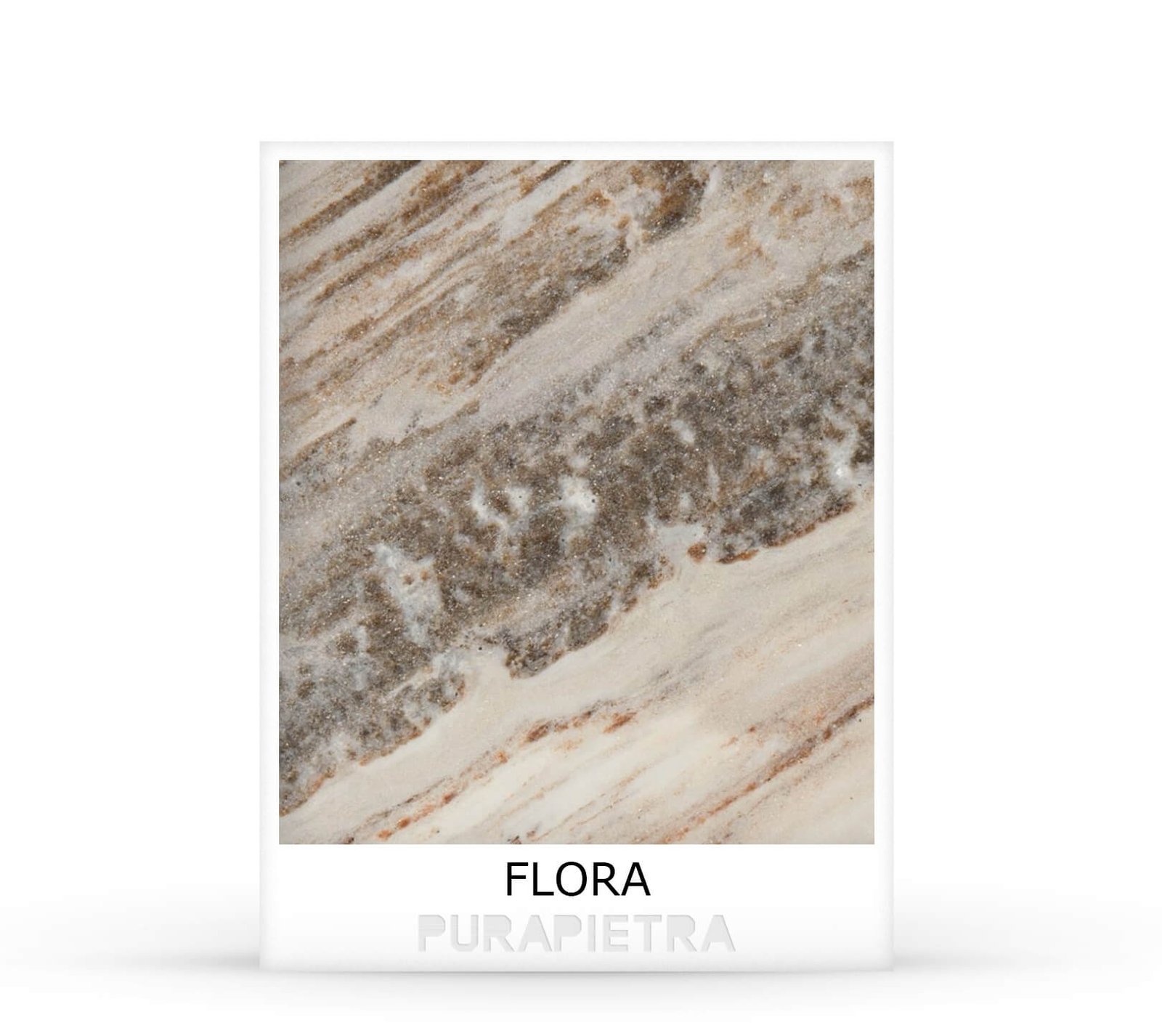
Flora
The most decorative of the pinks. Flora carries more movement and a livelier pattern, with pink threaded through warmer and cooler tones so the slab is as much pattern as colour. It is a stone to use where you want one surface to be the event: a bookmatched panel, a single tabletop, a feature wall behind a bed. Give it room to be seen and keep everything around it plain, because a busy pink next to another pattern quickly turns into noise.
Pink Onix
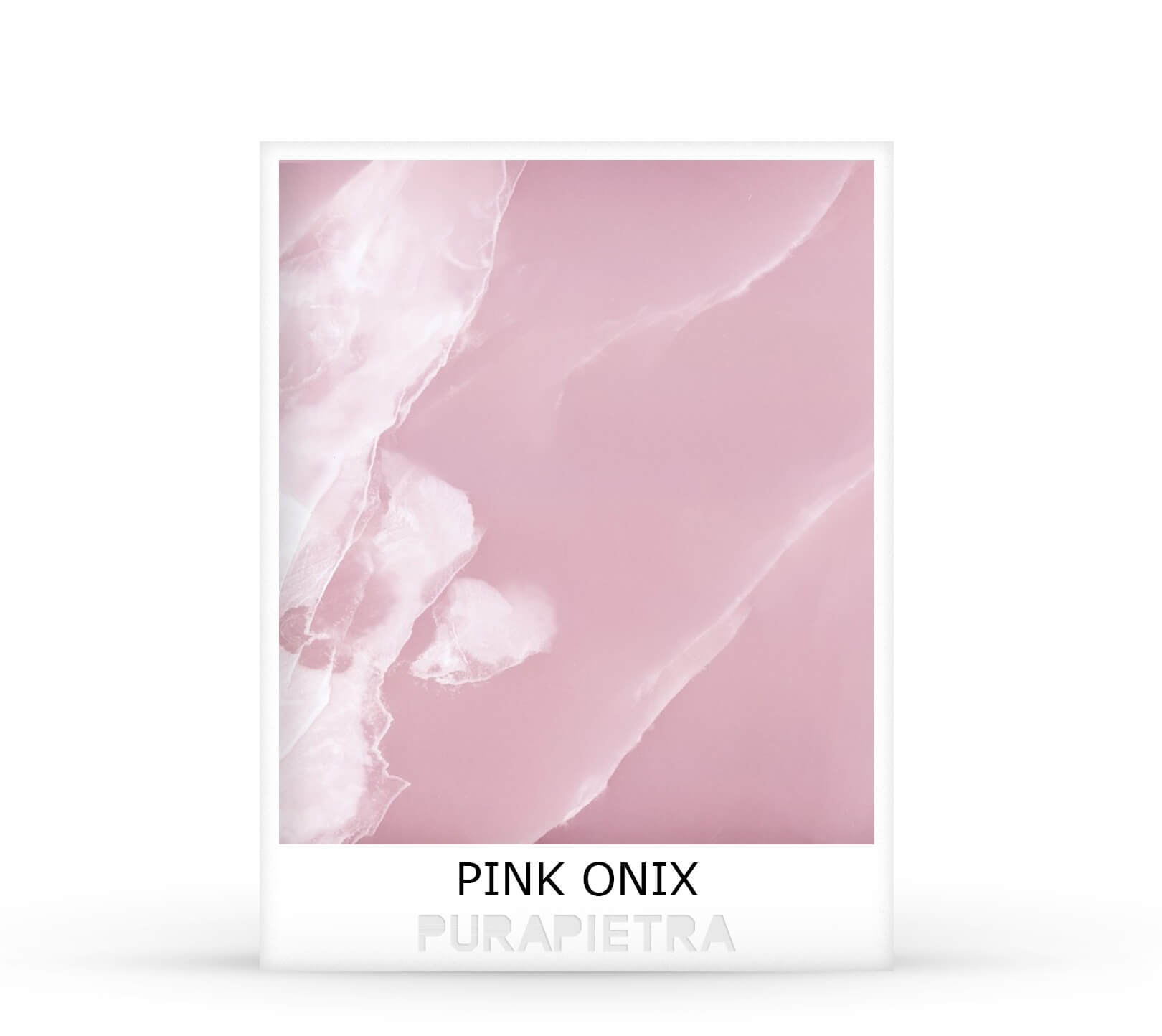
Not a marble in the strict sense but an onyx, and the jewel of the group. Pink Onix is translucent, banded in bands of rose and honey, and it does something no marble can: it glows when light passes through it. Backlit as a panel, a bar front or a basin, it turns from stone into something closer to amber. It is a precious material and best used like one, in a single dramatic place rather than spread across a room. Treat it as the centrepiece and let it earn the attention.
Where to use pink marble in interiors
Pink is the colour that makes a room feel warm and lived-in, which is why it belongs in the private, restful parts of a home. Bathrooms take it especially well. A Rosa di Venezia vanity with a carved freestanding stone basin gives you something soft and flattering without the coldness of a white bathroom, and pink light is the most forgiving light to see yourself in. Use a honed finish in wet areas and pink turns almost powdery and matte, which reads contemporary rather than dated.
In the kitchen, pink is a gentler alternative to the marble-and-brass default. An Acquasanta island looks like a warm neutral against pale timber, while a Flora splashback brings colour to a run of plain cabinetry without any need for a bold paint. The greyer pinks hold up better than a soft white under daily use, and because pink hides the faint marks of a working surface more kindly than a stark white does, it is a sensible choice as well as a beautiful one.
In living spaces, pink does its best work in furniture and objects. A coffee table in Flora, a console in Acquasanta, a shelf of vases and trays in a warm rose: small pieces carry a soft colour further than square metres of it ever could, and they let you test whether pink is right for a room before you commit a wall to it. Our design collection exists partly for this, to put remarkable stone into a room at a scale that makes sense.

Pairing pink marble
Pink is easier to pair than people fear, as long as you decide early whether you want it warm or cool. Brass, aged gold and copper push it toward the romantic and the classical, deepening the rose and making the room feel richer. Blackened steel, bronze and nickel cool it down and keep it architectural, which stops a pink bathroom from tipping into sweetness. Chrome is the most neutral choice and lets the stone speak for itself. The metal you choose matters more with pink than with almost any other colour, because it decides whether the room feels tender or sharp.
For woods, pink is happiest with pale and mid-toned timbers. Oak, ash and light walnut keep the mood fresh, while very dark woods can make pink look faded by contrast. If you are combining stones, pink wants a calm partner. It sits beautifully beside white marble for a soft, layered scheme, and it holds its own against the cool restraint of grey marble, which shares Acquasanta’s temperament. Pink against a strong second colour usually reads as busy, so let the neutrals do the supporting work.
Care and durability
Pink marble needs the same basic care as any marble. It is a calcite stone, which means it is softer than granite and sensitive to acid. Lemon, vinegar, wine and most limescale removers will etch a polished surface and leave a dull mark, and this is true of pink exactly as it is of white. Seal the stone on installation, reseal every year or two depending on use, wipe spills promptly, and clean with pH-neutral products only. Pink Onix, being an onyx, is softer still and wants the same gentle treatment with a little extra caution around impact.
Pink has one quiet advantage over white in daily life. Because the colour already carries warmth and a little tone, the small etches and watermarks that show starkly on a bright white surface are far less obvious on a rose or grey-pink stone. A honed finish makes them almost invisible, which is why we recommend honing any pink surface that will be used rather than admired. Keep polish for vertical panels, tabletops and objects, where the wear will never reach and the colour can shine.
Finishes: how the surface changes the colour
Finish changes pink more than it changes a neutral stone. Polished, the pink deepens and gains a soft sheen that makes the rose look saturated and almost luminous, which is how Flora and Pink Onix look in the images that make people want them. Honed, the same slab lightens and turns matte and powdery, closer to plaster than to stone, which reads calm and contemporary and hides wear far better. Leathered or brushed adds a fine texture that catches light unevenly and gives the surface a hand-worked, tactile character.
The consequence is that variety and finish cannot be chosen separately. A honed Rosa di Venezia and a polished Rosa di Venezia are, for design purposes, two different materials, one soft and matte, the other warm and glowing. Ask to see the same stone in both before you decide, and look at it in the light of the room where it will live rather than under a showroom’s spotlights. Pink shifts more between daylight and lamplight than most colours, which is part of its charm and part of the reason to test it properly.
How to choose the right pink marble
Start with how much colour you actually want. If the pink should sit in a scheme as a warm neutral without dominating it, Acquasanta is the answer, since it reads almost grey until the light warms it. If you want the room to be unmistakably and calmly pink, Rosa di Venezia gives you the colour with a quiet surface. If you want one surface people remember, Flora will do it, and if you want something precious and luminous, Pink Onix, used like the jewel it is.
Then check the practical constraints early. Confirm block availability before you commit to a design, because the more decorative pinks and the onyx come out of the ground in limited numbers. Confirm the slab dimensions against your layout, since figured stones are chosen for pattern and are not endlessly repeatable. And confirm the finish on a physical sample, in your own light, at the time of day the room is actually used.
The whole family is on our materials page. Once you have narrowed it to one or two, ask for a sample. Pink changes more between the photograph and the room than most people expect, and no screen has ever reproduced the way a honed Rosa di Venezia warms a bathroom at the end of the day.
How much does pink marble cost?
Pink marble sits across a wide price range, and the variety matters far more than the colour itself. The calmer pinks such as Acquasanta and Rosa di Venezia are quarried in reasonable quantities and priced in line with a mid-range Italian marble, while a heavily figured Flora climbs higher because the good blocks are chosen for pattern. Pink Onix is a different category again: as a translucent onyx selected for its banding, it is priced as a precious material and is best budgeted for a single feature rather than a whole room. As a rule, expect calm pink marble to cost around the level of a good white, with figured slabs and onyx rising sharply from there.
The honest way to budget is to treat pink marble as a feature material and price the surface rather than the square metre. A single Flora tabletop or a Rosa di Venezia vanity delivers most of the impact for a fraction of the cost of cladding a whole room, which is exactly how we tend to use it. Ask for a quotation against a specific slab rather than a generic rate, because two blocks of the same pink marble can differ in price as much as they differ in beauty. Fabrication adds to the total as well, since bookmatching, curved edges and carved basins all take time.
A short history of pink marble
Pink marble has a long and grand history in Italian building. Rose and salmon-toned stones lined the great cathedrals of the north, most famously the pink Veronese marble that gives Verona’s monuments their warm glow, and Renaissance architects used pink alongside white and green to bring warmth into churches and palaces. The colour signalled wealth and softness at once, a way to make a monumental space feel welcoming rather than cold. When you specify pink marble today you draw on that same instinct, the oldest trick in Italian design for warming stone.
Pink has never really been a trend. It has drifted in and out of fashion over the centuries but never disappeared, and a pink surface brings something indoors the cooler stones cannot: warmth, and a softness that makes a room easier to be in. In a house full of grey and white, it also tends to look like a choice about comfort rather than fashion, which is rarer than it should be. One piece of advice before you commit: sit with a sample for a few days. Pink changes more than any other colour between daylight and a lit lamp, and that change usually tells you more than a showroom ever will.
Related reading
Keep exploring the Purapietra magazine: our pillar guides to white marble, black marble, grey marble and green marble, plus the complete guide to the types of Italian marble. Browse every stone on the materials page, or bring the material home through our design collection.
Frequently asked questions
What is pink marble?
Pink marble is natural stone whose colour ranges from pale grey-pink through warm rose to apricot. The tone comes from iron oxides and manganese present when the stone formed. Some stones sold as pink marble, such as Pink Onix, are technically onyx rather than true calcite marble, which is why they can be translucent and glow when backlit.
Is pink marble suitable for a bathroom?
Yes, and bathrooms are one of its best uses. Pink is warm and flattering, it softens light, and it hides watermarks and etching more kindly than a stark white. Use a honed finish in wet areas, seal the stone on installation and reseal periodically, and clean only with pH-neutral products.
Which pink marble is best for a kitchen?
The calmer, greyer pinks such as Acquasanta work best on a working surface, since they read as a warm neutral and hide the marks of daily use. Choose a honed finish over polished for worktops, seal the stone, and keep acids such as lemon and vinegar off the surface to avoid etching.
What is the difference between pink marble and Pink Onix?
Rosa di Venezia, Acquasanta and Flora are calcite marbles, opaque stones coloured by iron and manganese. Pink Onix is an onyx: a softer, translucent stone banded in rose and honey that glows when light passes through it. Marble suits surfaces and cladding; onyx is best treated as a precious feature material and often backlit.
What colours go with pink marble?
Warm metals such as brass and copper deepen it for a romantic, classical mood, while blackened steel and nickel cool it and keep it architectural. Pale woods such as oak and ash suit it best, and among stones it sits beautifully next to white marble and grey marble. Avoid pairing pink with another strong colour unless the contrast is the whole point.