
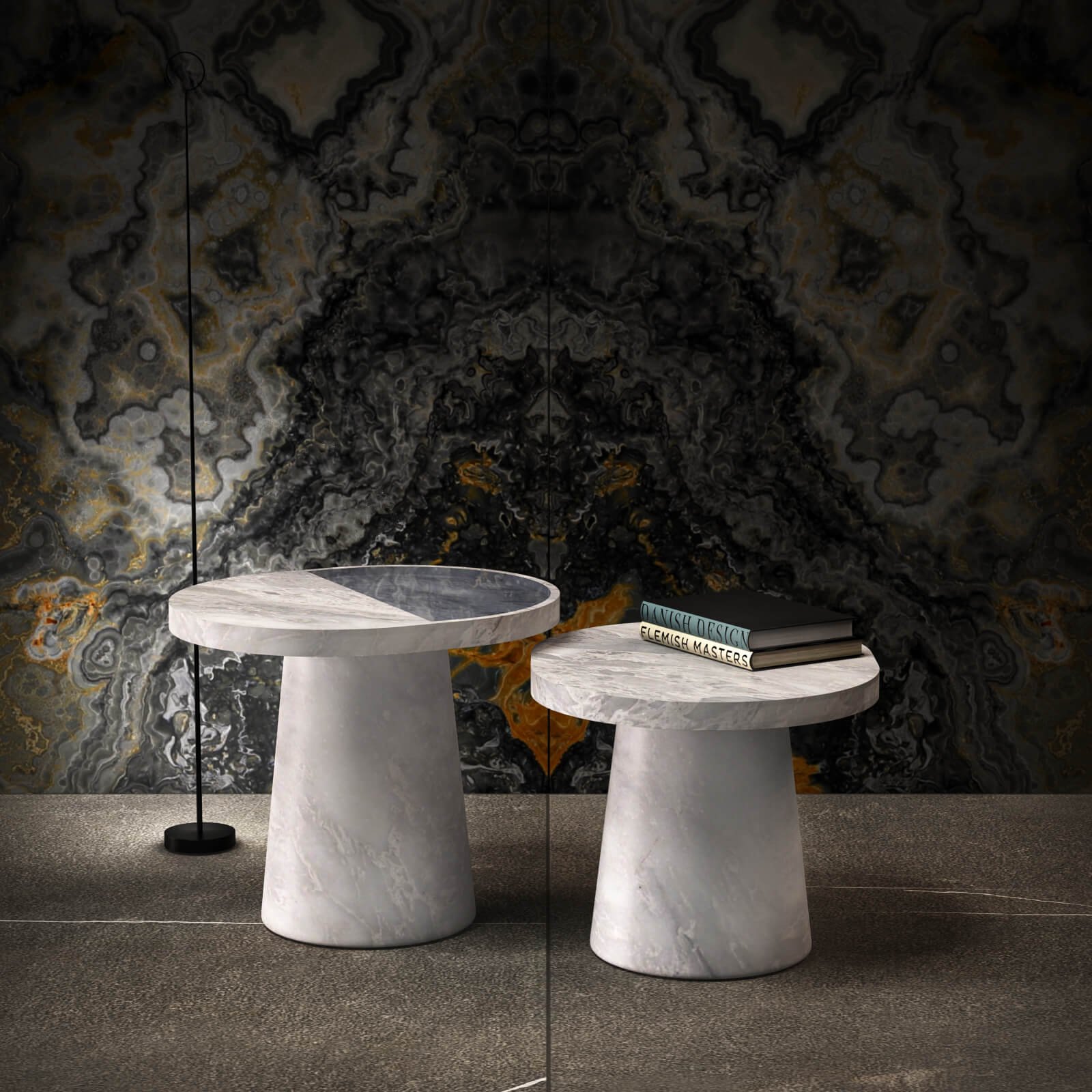
White marble is the material most people picture when they hear the word marble, and Italy has produced the finest examples for two thousand years. But “white marble” is not one stone. Carrara, Calacatta and Statuario look alike at a glance and behave very differently in a room. This guide compares the great Italian white marbles so you can tell them apart and choose the right one for your project.
Why Italian white marble sits at the top
The prestige is not marketing. The Apuan Alps above Carrara hold one of the largest and purest deposits of white marble on earth, quarried since Roman times and used by Michelangelo for the David. Centuries of quarrying and carving built a level of craft around these stones that is hard to find anywhere else, and the names have become a shorthand for quality that architects and designers trust worldwide.
White also flatters almost any scheme. It reflects light, makes small rooms feel larger, and works as easily in a minimalist space as in a classical one. That versatility is why it remains the most requested colour we work with. If you want the wider context on the colour as a whole, our pillar guide to white marble is the place to start; this article goes deeper on how the individual Italian varieties differ.
The varieties compared
The differences between the great whites come down to two things: the background colour of the stone and the character of the veining. Once you learn to read those, telling them apart becomes straightforward.
Carrara
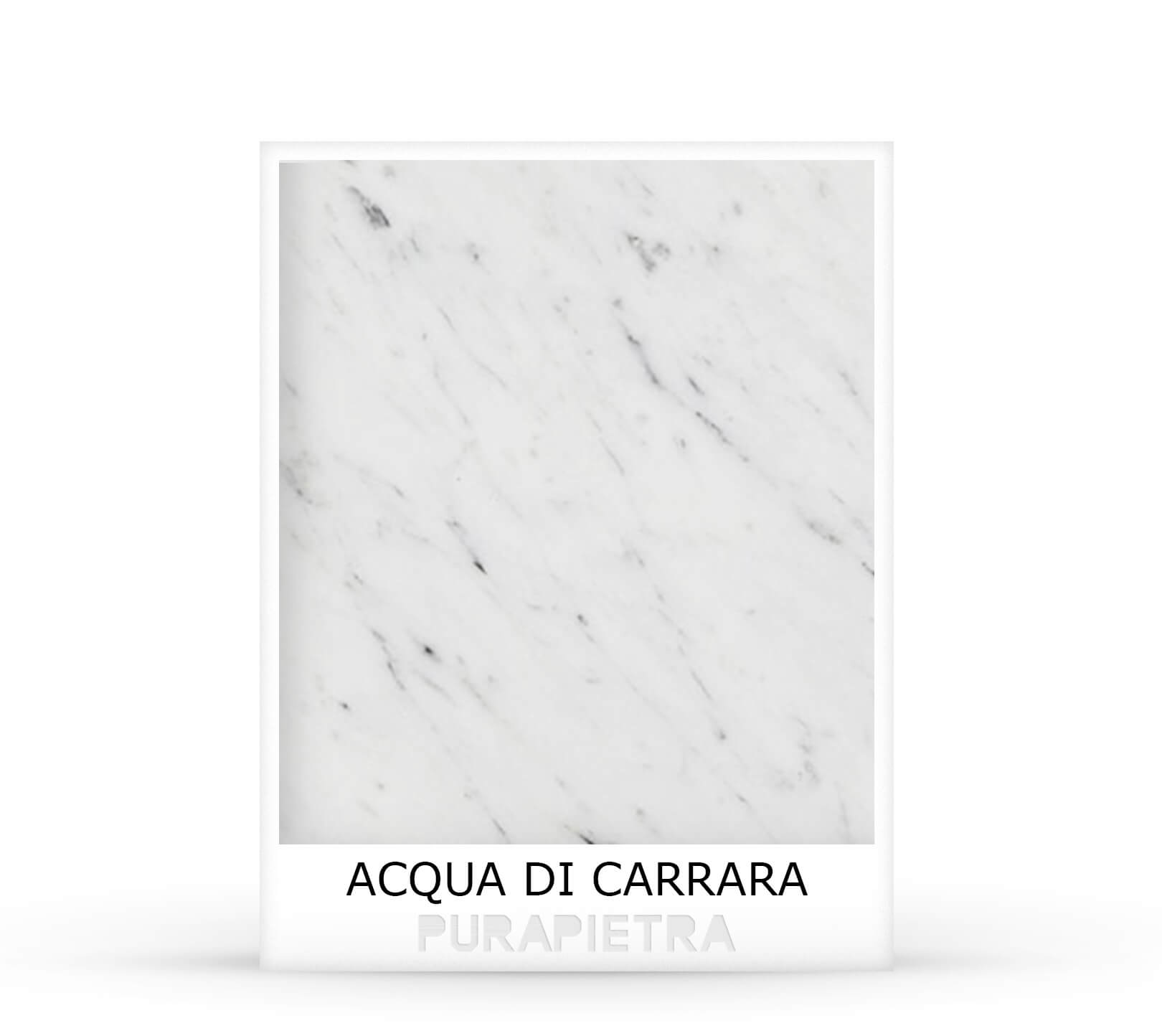
Carrara is the classic and the most widely available. Its background is a cool, slightly grey-white, and its veining is soft and feathery, often described as cloudy rather than linear. Because the pattern is gentle, Carrara reads as calm and understated, which makes it forgiving across large areas and a natural choice when you want the stone to be a quiet backdrop rather than the star. It is also the most accessible of the Italian whites, which adds to its popularity.
Calacatta
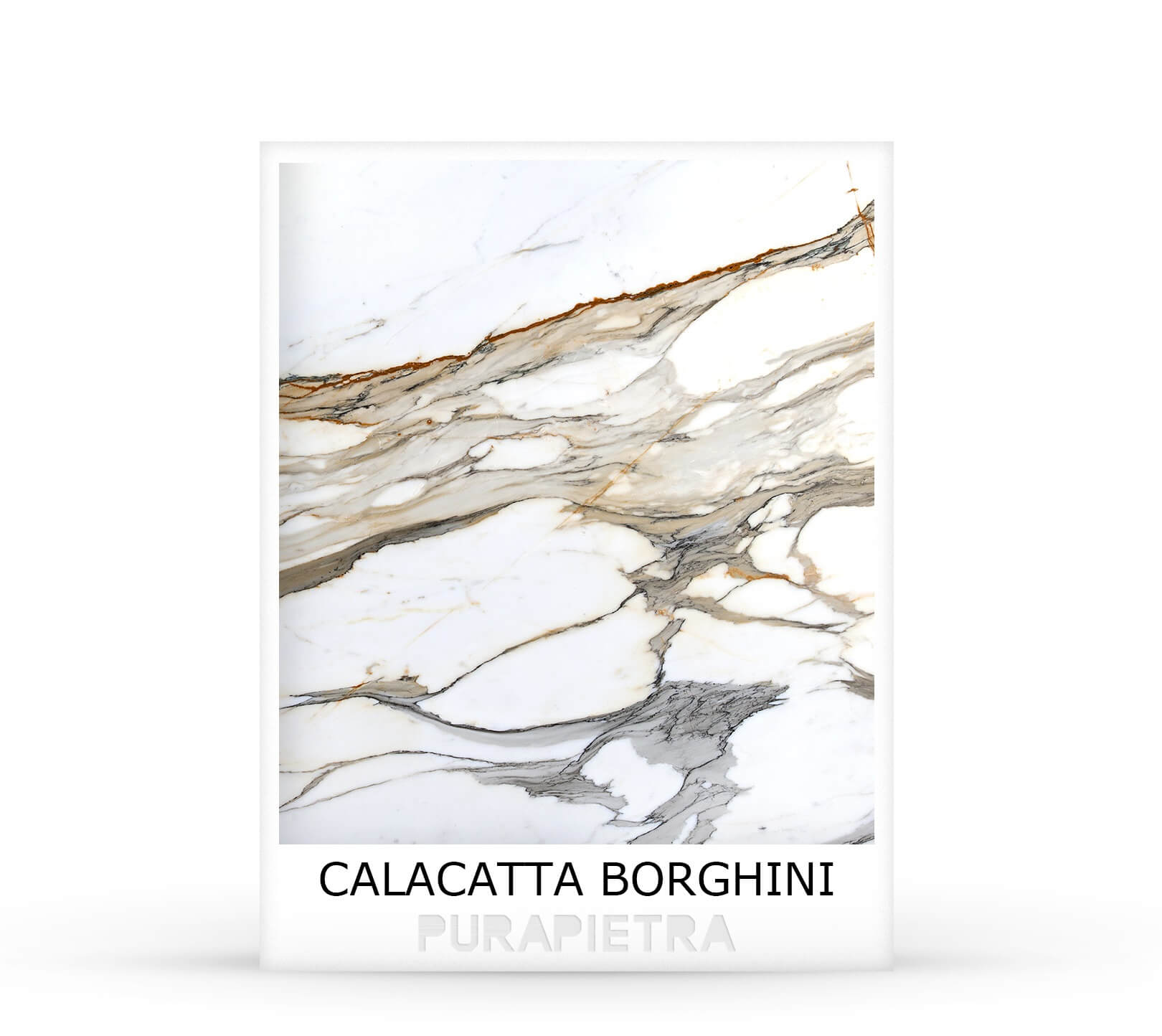
Calacatta is the dramatic one. Its background is a warmer, brighter white, and its veins are bolder, thicker and more defined, often in grey with hints of gold or beige. Where Carrara whispers, Calacatta makes a statement. It is rarer than Carrara and priced accordingly, and it rewards being used where the veining can be seen and enjoyed: a single feature panel, an island top, a sculptural object. Calacatta Borghini, shown above, is one of the most prized examples, with strong, confident movement across a clean white field.
Statuario
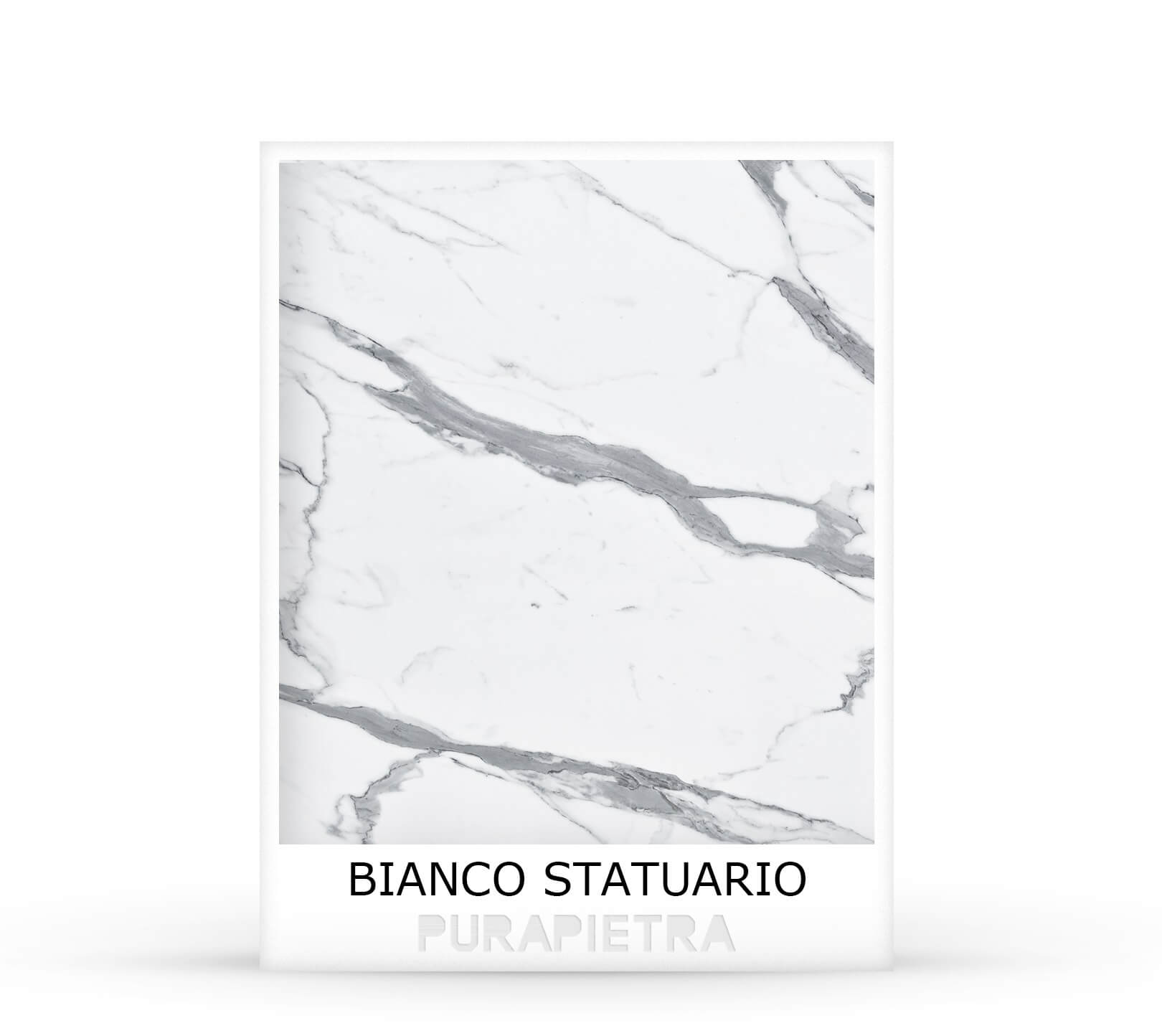
Statuario is the sculptor’s marble, the one Michelangelo favoured. It combines the brightest, most luminous white ground with fine, elegant grey veining, striking a balance between the calm of Carrara and the drama of Calacatta. Its purity and even structure make it ideal for carving, which is why it has always been the choice for statuary. It is the rarest and most expensive of the three, and a slab of good Statuario is treated almost as a work of art in its own right.
Veining and tone: how to read a slab
Beyond the named variety, every slab is individual, and learning to read one is the real skill. Look first at the base colour. Hold a sheet of white paper against the stone: a cool marble will look faintly grey next to it, a warm one faintly cream. That tells you which fixtures and finishes will sit comfortably alongside it.
Then look at the veins. Are they fine and diffuse like Carrara, or bold and linear like Calacatta? Do they run in one direction, which lets a fabricator “book-match” two slabs into a mirror image, or are they random? For a large surface, ask to see the whole slab and to mark where the cuts will fall, so the best movement lands where the eye goes first. If you want a fuller checklist, our guide on how to identify quality marble walks through what separates a good block from a poor one.
Choosing white marble by room
The right variety depends as much on where it is going as on personal taste.
For a large kitchen worktop or a whole bathroom, a calmer marble like Carrara often works best, because bold veining repeated across many square metres can become busy. Save the dramatic Calacatta for the island top or the splashback where it becomes a feature. For a statement object such as a basin, a table or a vase, the drama of Calacatta or the luminous purity of Statuario is exactly what you want, since the piece is meant to be looked at.
This is the thinking behind our own design objects: a rounded white marble basin or side table uses a small quantity of a special stone at the scale where its veining can be fully enjoyed. You can see the whole white family, and how each variety reads next to the others, on the materials page.
Living with white marble
All of these stones are calcite marbles, so the care is the same regardless of variety. White marble is durable but reactive to acid, which means lemon, wine and vinegar can leave a dull etch on an unsealed surface. Seal the stone on installation, refresh the sealant periodically, wipe spills quickly and clean with a pH-neutral product. Etching and patina are also, for some owners, part of the appeal: a white marble worktop that develops a soft, used surface over years is doing what natural stone has always done.
One honest note on colour. White marble is not pure white and was never meant to be. The grey and gold in the veins, and the faint warmth or coolness of the ground, are what give each variety its character. If you want a flawless, uniform white with no movement, an engineered surface will do that; what you give up is the depth, the light and the individuality that only a natural block carries.
How to choose between them
If you want a safe, timeless white that recedes into the background, choose Carrara. If you want a bold, luxurious statement and have the budget for it, choose Calacatta. If you want the brightest, purest white for a piece that will be carved or admired up close, choose Statuario. And whichever name you settle on, see the actual slab before you commit, because the block in front of you matters more than the label on it.
For a deeper look at the geology and history behind these stones, the Wikipedia entry on Carrara marble is a reliable starting point.
Frequently asked questions
What is the difference between Carrara and Calacatta marble?
Carrara has a cool grey-white background with soft, feathery veining, so it reads as calm and understated. Calacatta has a warmer, brighter white background with bolder, more defined grey and gold veins, so it makes a statement. Calacatta is also rarer and more expensive than Carrara.
Which Italian white marble is the most valuable?
Statuario is generally the rarest and most expensive of the classic whites, prized for its bright, luminous ground and fine veining. Top-grade Calacatta, such as Calacatta Borghini, also commands very high prices, while Carrara is the most accessible.
Is Italian white marble suitable for kitchen worktops?
Yes, though it needs care. White marble is durable but etches if acids are left on an unsealed surface, so seal it on installation, wipe spills quickly and clean with a pH-neutral product. Many owners also accept a soft patina over time as part of the character of natural stone.
Why is white marble not perfectly white?
Because the colour is natural. The grey and gold veins and the faint warmth or coolness of the ground come from minerals in the original stone. That movement is exactly what gives each variety its identity; a flawless, uniform white is only possible with an engineered surface.
How do I choose the right white marble for my project?
Match the drama of the stone to how much of it you are using and where. Use a calmer Carrara across large areas, a bold Calacatta for a feature, and a pure Statuario for objects meant to be admired up close. Always view the full slab, not a small sample, before deciding.
Keep exploring the Purapietra magazine. See also our pillar guide to white marble, our note on how to identify quality marble, and the full materials collection.