
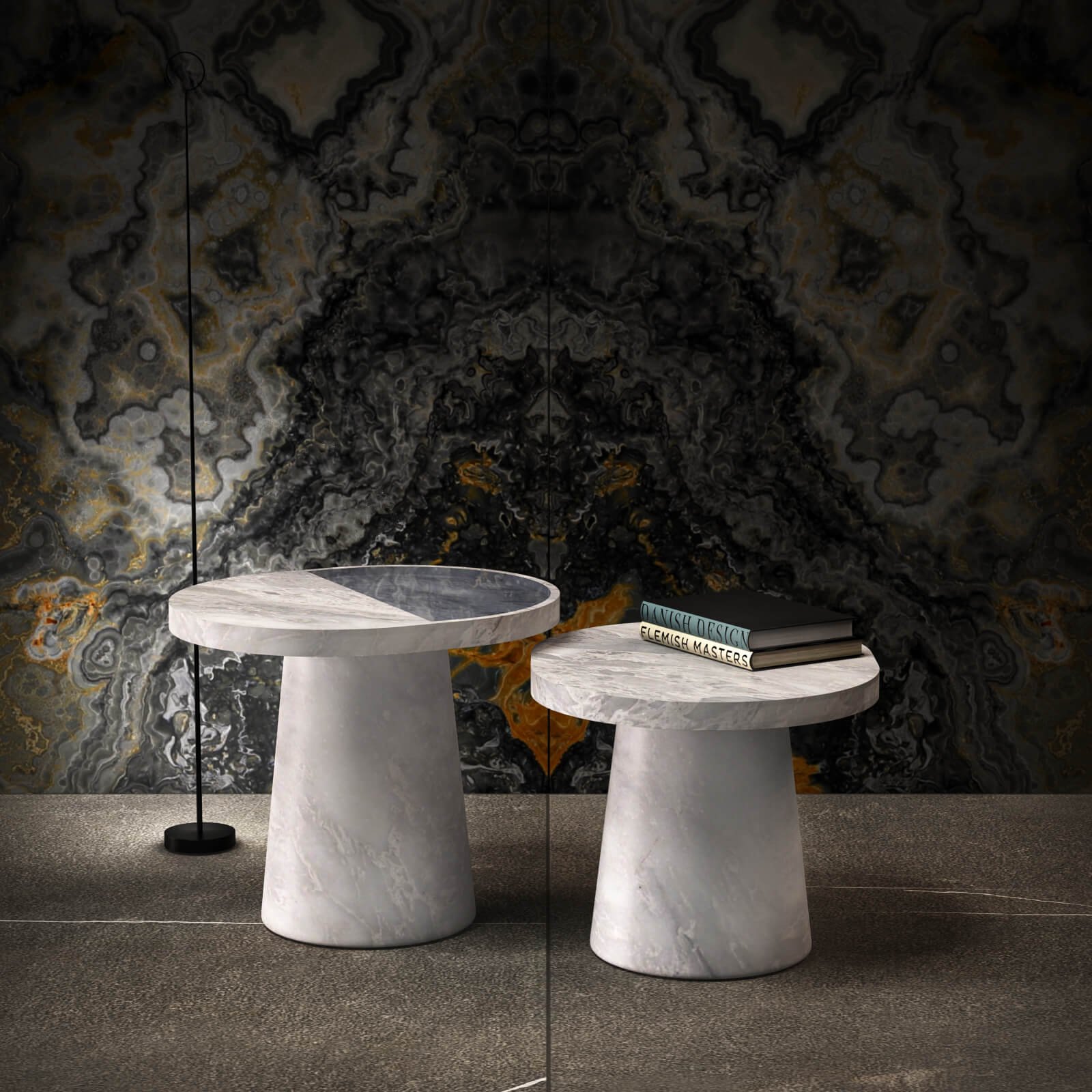
You do not need to be a geologist to buy good stone. A little knowledge of what to look for, what to touch and what to ask goes a long way, and it is usually the difference between a surface you love for decades and one you regret within a year. This is a practical guide to judging quality marble for people who are choosing it for the first time.
Marble is one of the few materials most people buy once in their lives and expect to keep forever. That makes it worth a little patience at the point of choice. The good news is that the signs of a quality slab are visible to anyone willing to slow down and look properly. You are not being asked to trust a certificate or a salesperson; you are being asked to use your eyes, your hands and a few honest questions. Here is how to read a slab the way we do.
Veining, compactness and colour
The first thing to judge in a piece of quality marble is the veining, because it tells you both how beautiful the slab is and how it was chosen. Good veining looks intentional. It has flow and balance, the lines run with a rhythm rather than scattering, and on a well-selected block the pattern reads almost like a drawing. Poor slabs often show veining that is muddy, broken or crowded into one corner, which is a sign the block was cut for yield rather than for beauty. Hold the slab upright, step back, and ask whether the pattern would look right on the wall or table you have in mind. If it fights the eye now, it will fight the room later.
Compactness is the quality you cannot see from across the room but can feel up close. Dense, well-formed marble has a tight, even grain with no visible pitting, and it feels solid and cool under the hand. Run your palm across a polished surface: it should be smooth and continuous, without small holes, soft patches or areas that seem to absorb rather than reflect light. Loose or porous stone will have been filled and resined in places to hold it together, and while filling is normal in some varieties, heavy filling across a whole slab points to a weaker block that will stain and chip more easily in use.
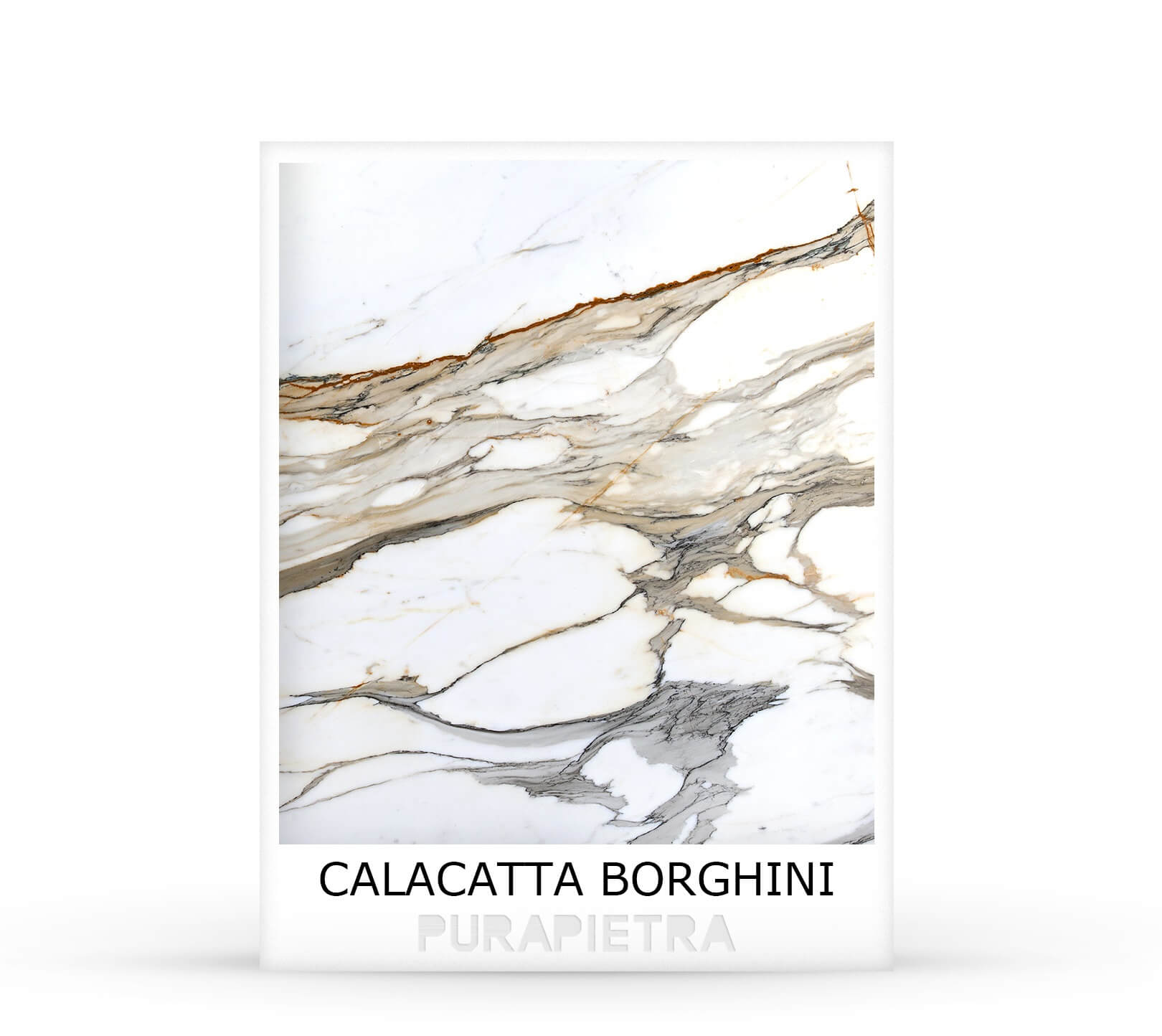
Colour is the third test, and the one people misread most often. Quality marble has a clean, consistent ground. A white should be a true white or a warm cream, not a dirty grey; a coloured marble should hold its tone across the whole slab rather than fading or blotching. Look for clarity rather than brightness: the best stones have depth, a sense that the colour goes into the surface rather than sitting on top of it. Beware slabs where the colour looks patchy, cloudy in the wrong places, or oddly uniform, since perfect uniformity can be a sign of an engineered material rather than natural stone. If you want to see how colour defines the natural families, our guide to the types of marble is a useful starting point.
Natural marble versus engineered stone
The single most useful skill for a buyer is telling real marble from a manufactured lookalike. Engineered or reconstituted stone, sometimes sold as marble-effect, is made from crushed stone bound in resin, and while it has its uses, it is not the same material and should not be sold or priced as though it were. The tells are learnable. Natural marble has irregular veining that never repeats, since no two parts of a slab are identical and no two slabs from the same block match exactly. If you see the same vein pattern echoed across several tiles or panels, you are almost certainly looking at a print or a cast, not stone.
Temperature and weight are the next clues. Natural marble stays cool to the touch and feels dense and heavy for its size, because it is solid rock. Many engineered surfaces warm quickly under the hand and can feel lighter or slightly plastic. Look at the edge and the underside too: real marble shows the same stone all the way through, while some composites reveal a different core or a suspiciously perfect, poreless back. A discreet test, with the supplier’s permission, is a drop of water on an unsealed offcut. Natural marble will slowly darken as it absorbs, because it is porous; a fully resin-bound surface will not. The geology of marble explains why the real material behaves this way, and it is worth a read before you buy.
None of this makes engineered stone bad. It makes honesty essential. If you want the qualities that only natural marble offers, the depth, the individuality, the way it ages, then you need to be sure you are buying it. Ask directly whether a material is natural stone or a composite, and expect a straight answer. A reputable supplier will tell you exactly what you are looking at and why.
Reading flaws: which matter and which do not
Every natural marble has flaws, and learning which ones matter is most of the skill. Some marks are simply the stone being itself. Fine veining, small colour shifts and the odd natural inclusion are not defects; they are the reason people choose natural material over a flawless print. A slab with a little character is often more beautiful than a sterile one, and a good fabricator will use those features rather than hide them.
Other marks are genuine weaknesses. Cracks, or fissures that go right through the slab, are the serious ones, because they threaten the structure of a finished piece. Tap gently along a slab and listen: a clear, ringing note suggests a sound stone, while a dull thud can indicate a hidden fracture. Look for stun marks, the pale bruised patches that appear where a slab has been knocked, and for large areas of resin fill that has been colour-matched to disguise a break. Small stable fissures can be perfectly acceptable in the right position and are common in many prized marbles, but they should be disclosed and placed deliberately, never hidden in a spot that will bear weight or take an edge.
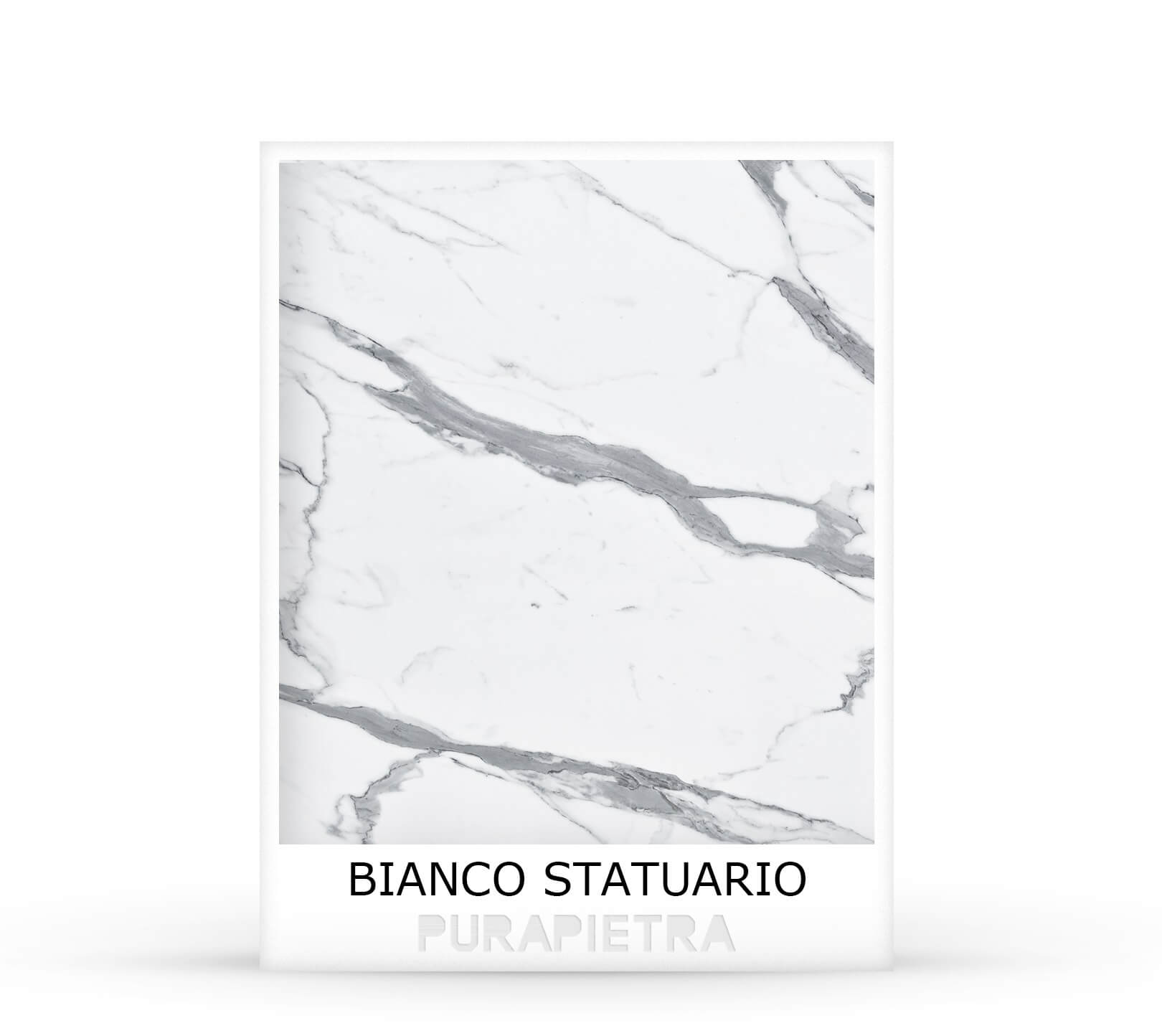
The judgement, then, is not flaw versus no flaw, since that comparison does not exist in natural stone. It is whether the flaws are honest and well-placed or hidden and structural. A quality marble slab will have its character on show and its weaknesses either absent or openly pointed out. If a supplier is reluctant to let you see the whole slab in good light, that reluctance is itself the answer.
Finish and thickness
Finish is where quality becomes tactile. A well-finished polished surface is even and mirror-clear across the whole slab, with no dull patches, swirl marks or waves when you look along it at a low angle. A honed finish should be uniformly matte, smooth and consistent, without shiny spots where the machine lingered. Run your fingertips over the surface and along the edges: quality fabrication feels crisp and clean, with edges that are true and profiles that are sharp. Rough, chipped or uneven edges are a sign of hurried work, and hurried work rarely stops at the edges.
Thickness matters more than most first-time buyers realise. Slabs are commonly supplied at around two centimetres or three centimetres, and thicker stone is generally stronger and less prone to flexing or cracking, especially over spans such as an island or a long vanity. Thin material can be perfectly sound in the right application, but it needs proper support underneath and skilled handling. Ask what thickness you are being quoted, check that it suits the use, and be wary of unusually thin stone offered at a tempting price, since the saving often reappears later as a crack. The way a stone is finished and worked is exactly where craft shows; our own design collection and pieces such as the carved stone basins exist to show what careful fabrication can do with a good block.
The questions to ask any supplier
Once you know what to look for, the right questions do the rest. Ask where the stone comes from, since a supplier who knows the quarry and the block usually knows the material. Ask whether it is natural marble or an engineered composite, and expect a clear, unhesitating answer. Ask to see the actual slab you will be buying, not a small sample or a photograph, because marble is sold slab by slab and the piece in the yard is the piece you will live with.
Ask about finish and thickness, and whether the stone has been sealed or resined and what maintenance it will need. Ask to see it in daylight rather than under showroom spotlights, which flatter every surface. Ask whether the slab has any fissures or repairs and where they sit. And ask for a written quotation tied to the specific slab, so that what you inspect is what arrives. A good supplier welcomes these questions, because they are the questions of someone who takes the material seriously, and they are exactly the conversation we have with every client. If you are weighing natural stone against the alternatives more broadly, our comparison of white marble and the wider materials collection shows what the real thing looks like across colours.
A quick checklist before you buy
When you are standing in front of a slab and trying to decide, run through the same short list every time. Look at the veining for flow and balance. Feel the surface for a tight, cool, even grain with no pitting. Check the colour for clarity and consistency across the whole slab. Confirm it is natural stone, not a resin composite, using weight, temperature and the individuality of the pattern. Inspect for cracks and disguised repairs by looking in raking light and tapping for a clear ring. Judge the finish for evenness and the edges for crispness. Confirm the thickness suits the use. And ask the questions above until you have honest answers to all of them.
Quality marble is not about perfection, and chasing a flawless slab usually means chasing an engineered one. It is about a sound, well-chosen, honestly finished piece of natural stone whose character is on show rather than hidden. Take your time, trust your hands as much as your eyes, and choose the slab you keep coming back to. The best slab is rarely the most flawless one. It is the one you cannot stop looking at.
Related reading
Keep exploring the Purapietra magazine: the complete guide to the types of Italian marble and our pillar guides to white marble, black marble and grey marble. Browse every stone on the materials page, or see how a well-chosen block becomes an object in our design collection.
Frequently asked questions
How can I tell if marble is good quality?
Look at the veining for flow and balance, feel the surface for a tight, cool, even grain with no pitting, and check that the colour is clean and consistent across the whole slab. Inspect it in daylight for cracks and disguised repairs, tap it for a clear ring, and confirm the finish is even and the edges are crisp. Quality marble shows honest character rather than perfect uniformity.
How do I tell real marble from fake?
Natural marble has irregular veining that never repeats, stays cool to the touch and feels heavy and dense, while engineered or marble-effect surfaces often show a repeating pattern, warm up quickly and can feel lighter. A drop of water on an unsealed offcut will slowly darken on natural marble because it is porous, but not on a fully resin-bound composite. Always ask the supplier directly whether it is natural stone.
Are cracks and marks in marble always a defect?
No. Fine veining, small colour shifts and natural inclusions are part of the material and often make a slab more beautiful. The marks that matter are cracks and fissures that run through the slab, stun bruises and large areas of disguised resin fill. Small stable fissures can be acceptable if they are disclosed and placed deliberately, but structural cracks and hidden repairs are genuine faults.
What thickness of marble should I choose?
Slabs are commonly supplied at around two or three centimetres. Thicker stone is generally stronger and less likely to flex or crack, especially over spans such as an island or a long vanity, while thinner material can work with proper support and skilled handling. Confirm the thickness suits the application and be cautious of unusually thin stone offered at a low price.
What should I ask a marble supplier before buying?
Ask where the stone comes from, whether it is natural marble or an engineered composite, and to see the actual slab in daylight rather than a sample. Ask about finish, thickness, sealing and any fissures or repairs and where they sit, and request a written quotation tied to the specific slab so that what you inspect is what arrives.