
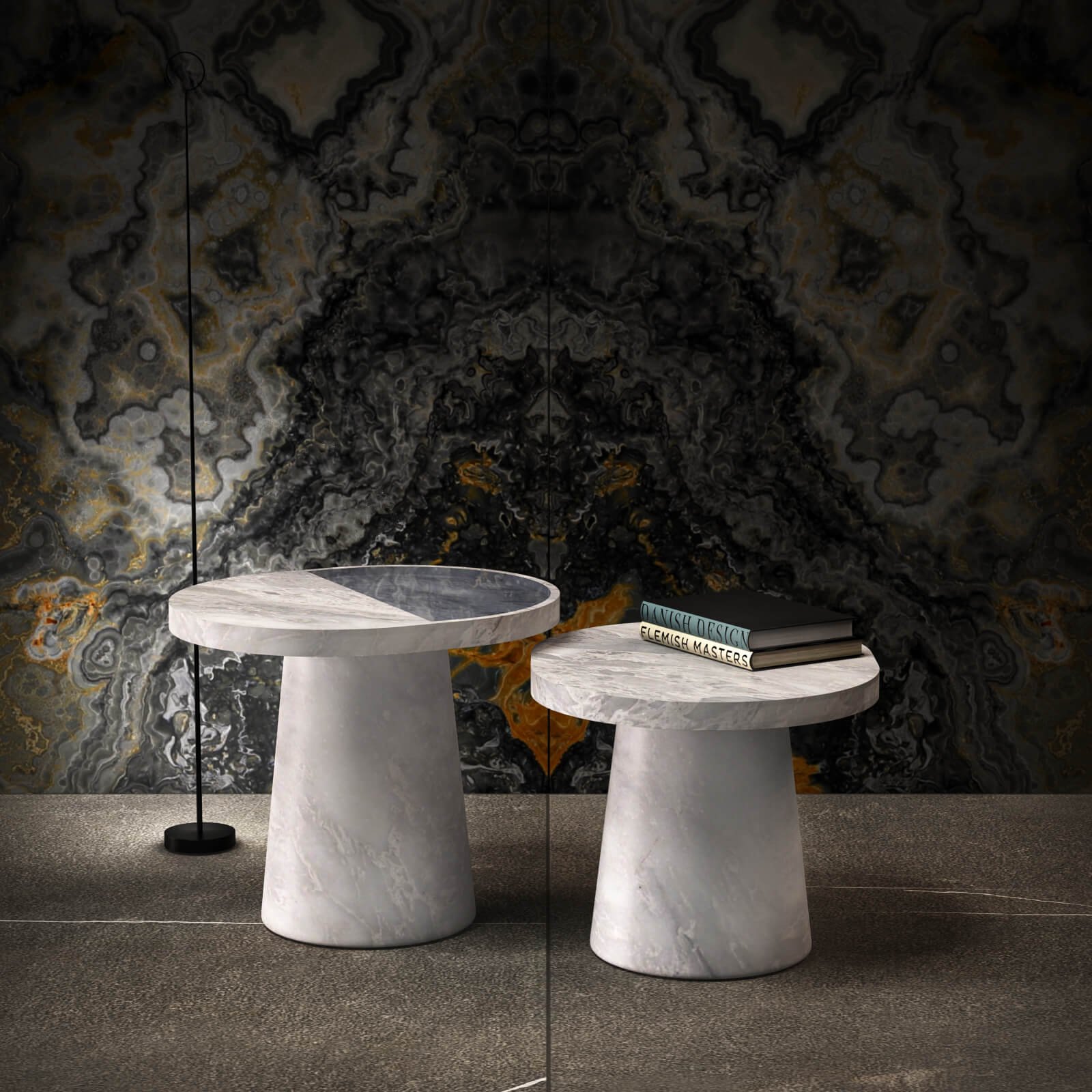
Yellow marble carries warmth the way few natural stones can. It reads as sunlight held inside rock, and in the right room it turns a cold surface into something that feels almost lived-in. This guide looks at what gives yellow marble its personality, the varieties we work with at Purapietra, where the stone belongs in an interior, and how to choose a slab you will still love in ten years.
The character of yellow marble
Yellow is the rarest of the warm marbles, and that rarity shows in the price of a good slab. The colour comes mostly from iron oxides and clay minerals trapped in the original limestone before it recrystallised, which is why the tone shifts from pale straw to deep amber depending on the quarry and even the block. No two slabs are identical, so a yellow surface always looks made rather than manufactured.
What people respond to is the feeling. Grey and white marbles are cool and architectural; yellow is domestic and generous. It bounces warm light around a room, softens hard corners, and pairs beautifully with brass, walnut and bronze. Because the colour is already saturated, a little yellow marble goes a long way. A single panel or a carved object can carry a whole room without the space tipping into pastiche.
The Purapietra yellow: Giallo di Bolgheri
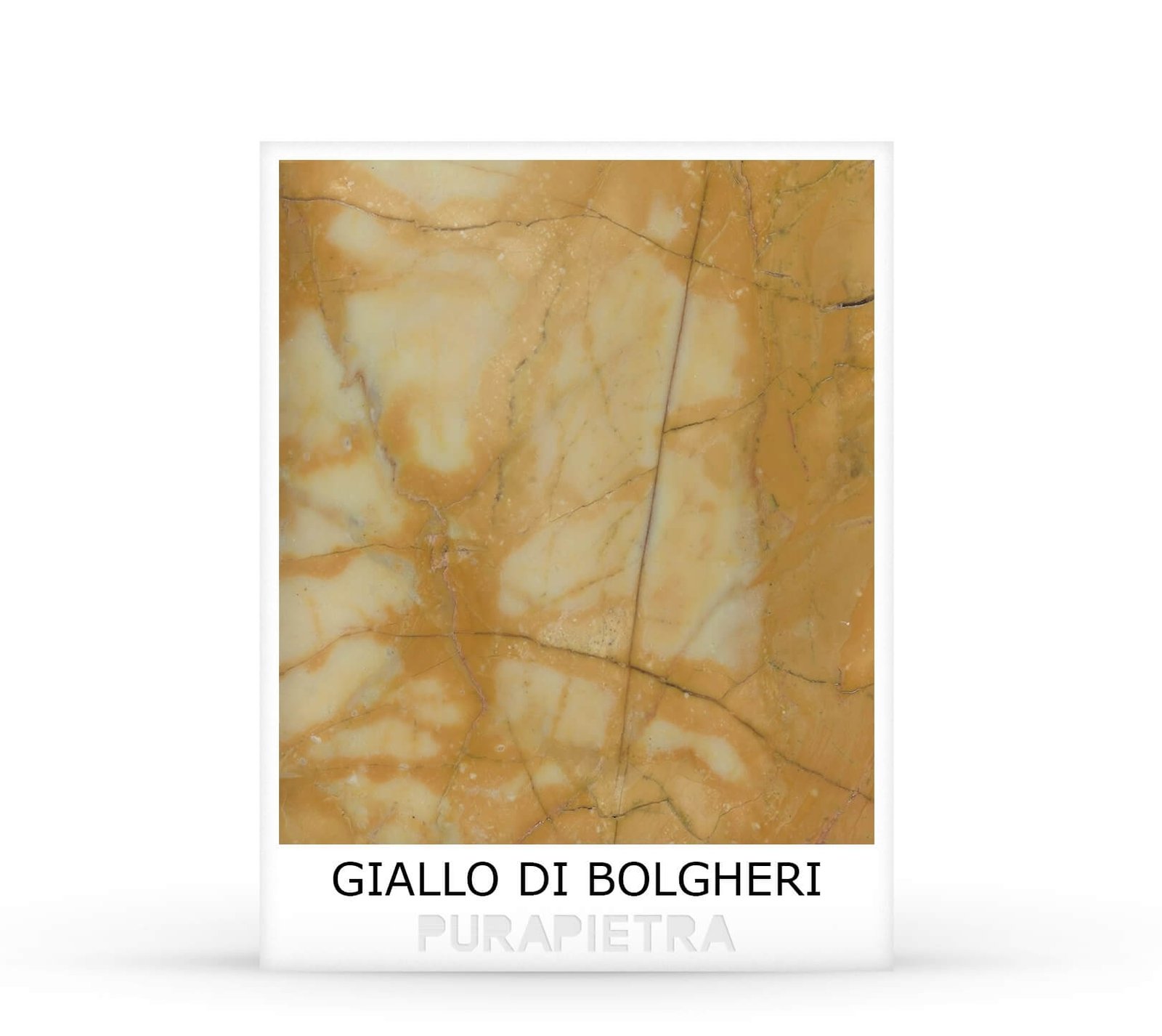
The stone we return to most often is Giallo di Bolgheri, named after the Tuscan coast it comes from. It has a honeyed base crossed by finer ochre and ivory movement, warm without being loud. Under natural light it glows; under a spotlight it deepens. It behaves well under the tools, which matters when a piece is going to be turned, hollowed or given a rounded, sculptural edge in the way our work tends to.
Yellow marble sits at the warm end of a catalogue that runs across every colour family. If you want to see how it reads next to the cool whites, greys and greens, the full range is laid out on our materials page, where you can compare tones side by side before committing to a direction.
Where to use yellow marble in interiors
Yellow marble works best where you want a room to feel warm and quietly expensive rather than sterile. A few places it earns its keep:
Bathrooms
A bathroom is where yellow marble tends to surprise people. Cladding a wall or a vanity in a warm stone turns a functional room into somewhere you actually want to spend time, especially in morning light. A rounded freestanding basin in yellow marble becomes the piece the whole room is arranged around. If you are weighing yellow against a cooler option, our guide to white marble is a useful counterpoint on tone and mood.
Kitchens
Yellow works as an accent in the kitchen more than as a full run of worktop. An island top, a splashback or a shelf in yellow marble warms up the hard lines of contemporary cabinetry. As with any marble in a kitchen, it wants sealing and a little care around acids, which we cover further down.
Cladding, floors and objects
On walls and floors, yellow marble reads as a warm neutral rather than a bold colour, which makes it easier to live with than clients expect. It is also lovely at the scale of an object. Many of our marble vases and trays are made to bring exactly this kind of warmth into a room without any building work at all.
Colour and material pairings
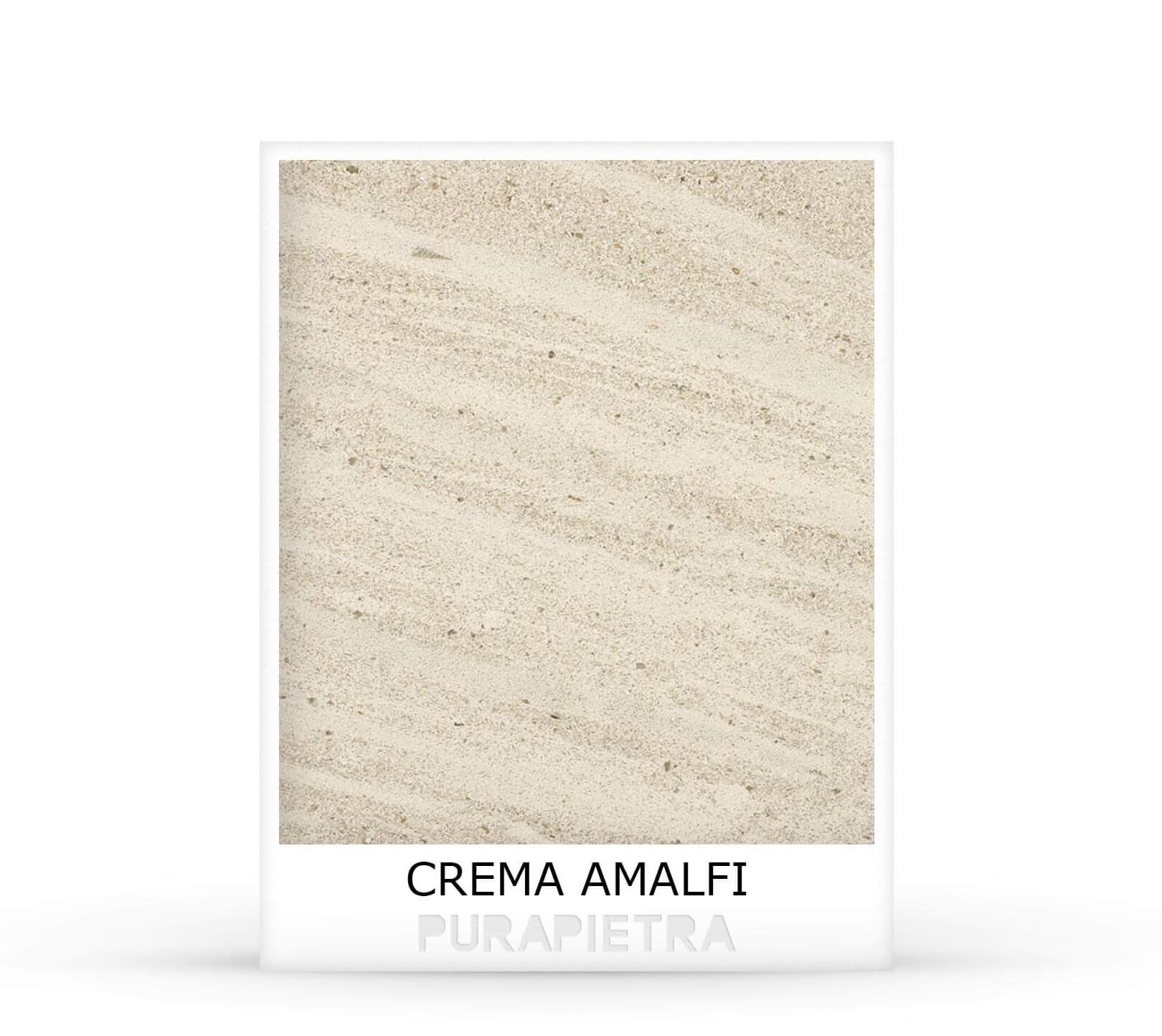
Because yellow marble is already warm and saturated, the surfaces around it should mostly support rather than compete. A few combinations we keep coming back to:
Warm metals are the natural partners. Brass, bronze and aged gold pick up the ochre notes and make the whole scheme feel intentional. Cool chrome, by contrast, tends to fight the stone.
For wood, walnut and oiled oak sit comfortably beside yellow; their grain echoes the movement in the stone. Very pale woods can look washed out next to it.
If you want to keep the room calm, ground the yellow with soft greens or deep charcoals rather than more warm colour. Our green marble pieces, for example, make a considered companion to a yellow surface, one warm and one cool, both natural.
Care, maintenance and durability
Yellow marble is a calcite-based stone, so it behaves like other marbles: hard-wearing but reactive to acid. Lemon, wine and vinegar can etch a dull mark if they sit on an unsealed surface. The fixes are simple. Seal the stone on installation and refresh the sealant periodically, wipe spills quickly, and clean with a pH-neutral product rather than anything acidic or abrasive.
Used this way, yellow marble lasts for generations. The warm tone is stable and does not fade in daylight the way some pigments do, because the colour is mineral, not a coating. A surface installed today will read the same decades from now, which is part of why natural stone rewards the initial investment.
How to choose the right yellow marble
Choosing yellow marble is less about the name on the slab and more about the specific block in front of you. A few things worth doing before you decide:
See the actual slab, not a sample. Yellow varies more than most colours from block to block, and a small chip cannot show you how the veining will run across a finished top or panel. Ask to view the full slab and, ideally, to mark the section that will be used.
Match the finish to the room. A polished finish deepens the yellow and adds shine, which suits a formal bathroom or a statement object. A honed, matte finish reads softer and more contemporary and hides everyday marks better in a kitchen.
Think about quantity. A little yellow reads as luxury; a lot can read as heavy. If in doubt, use it where the eye lands first and let calmer materials do the rest of the work.
If you are still comparing colour families, it helps to read across the range before narrowing down. Our overview of the black marble collection sits at the opposite end of the spectrum and is a good way to test how bold you actually want the room to feel.
A warm surface, made to last
Yellow marble is not the safe choice, and that is exactly its appeal. It brings warmth, rarity and a made-by-hand quality that a manufactured surface cannot fake. Chosen well and cared for simply, a yellow slab becomes the quiet centre of a room. If you would like to see Giallo di Bolgheri in person or talk through a bespoke piece, a sample request is the easiest place to start.
For background on how these stones form and why colour varies so much between quarries, the Wikipedia entry on marble is a solid primer.
Frequently asked questions
What gives yellow marble its colour?
The warm tone comes from iron oxides and clay minerals that were present in the original limestone before it recrystallised into marble. The exact shade, from pale straw to deep amber, depends on the concentration of those minerals and varies from quarry to quarry and even block to block.
Is yellow marble suitable for bathrooms?
Yes. Yellow marble is a favourite for bathrooms because it turns a cool, functional room into a warm one, especially in natural light. It should be sealed on installation and cleaned with a pH-neutral product, since like all calcite marbles it can etch if acids are left on the surface.
What colours go well with yellow marble?
Warm metals such as brass and bronze, mid-to-dark woods like walnut and oiled oak, and grounding tones such as soft green or deep charcoal. Cool chrome and very pale woods tend to fight the warmth of the stone rather than support it.
Which yellow marble does Purapietra work with?
Our signature yellow is Giallo di Bolgheri, a honeyed Tuscan marble with fine ochre and ivory veining. It carves and turns well, which suits the rounded, sculptural pieces we make. You can see it alongside the rest of the collection on the materials page.
How do I care for a yellow marble surface?
Seal it on installation and refresh the sealant periodically, wipe spills promptly, and use only a pH-neutral cleaner. Avoid acidic or abrasive products. Treated this way, the surface stays warm and unmarked for generations.
Keep exploring the Purapietra magazine. See also our guides to white marble, green marble and black marble, or browse the full materials collection.